
ᐅ Solid Construction - Choosing the "Right" Type of Masonry Unit
Created on: 5 Jan 2019 00:31
B
BauMixxHello everyone,
First of all, I have to admit that I am quite a layperson when it comes to construction and apologize in advance if my question seems a bit basic.
My wife and I have purchased a plot of land in Baden-Württemberg and are now planning to build a solid single-family house, fully basemented, with a detached double garage next to the house. During our initial talks with various builders, we encountered very conflicting opinions regarding the question: Which type of block do you recommend for building the house?
The construction will definitely have a 36.5 cm (14.5 inches) wall thickness WITHOUT external thermal insulation composite system (ETICS). It does not necessarily have to be a KfW 55 or even KfW 40 energy-efficient house. Unfortunately, the recommendations ranged widely, with arguments varying between "we recommend the hollow clay block (Hochlochziegel)" and "we have always built with aerated concrete (=Ytong)" and have never had moisture problems with it.
Regarding clay blocks, the T10 block was repeatedly mentioned. Reasons given in favor of the red clay block included:
- better indoor climate
- lower moisture absorption by the block (if it gets wet during construction, it doesn’t absorb as much)
- more natural, as it is fired clay
- less residual moisture than aerated concrete
- better sound insulation
For the white aerated concrete block, the advantages listed were:
- cheaper than red clay
- better thermal insulation
- easier to work with
- no red dust when drilling holes
- better stability since there are no fragile webs that can break out
Please excuse my somewhat simplified summary, but this roughly reflects the builders’ statements. We would be very grateful for any input regarding the choice of block. (If relevant: We do not necessarily want to install a mechanical ventilation system with heat recovery, but are considering trickle vents in the window frames and air extraction in wet rooms and the basement. We have not made a final decision on this yet.)
Thank you in advance for your experience and advice.
First of all, I have to admit that I am quite a layperson when it comes to construction and apologize in advance if my question seems a bit basic.
My wife and I have purchased a plot of land in Baden-Württemberg and are now planning to build a solid single-family house, fully basemented, with a detached double garage next to the house. During our initial talks with various builders, we encountered very conflicting opinions regarding the question: Which type of block do you recommend for building the house?
The construction will definitely have a 36.5 cm (14.5 inches) wall thickness WITHOUT external thermal insulation composite system (ETICS). It does not necessarily have to be a KfW 55 or even KfW 40 energy-efficient house. Unfortunately, the recommendations ranged widely, with arguments varying between "we recommend the hollow clay block (Hochlochziegel)" and "we have always built with aerated concrete (=Ytong)" and have never had moisture problems with it.
Regarding clay blocks, the T10 block was repeatedly mentioned. Reasons given in favor of the red clay block included:
- better indoor climate
- lower moisture absorption by the block (if it gets wet during construction, it doesn’t absorb as much)
- more natural, as it is fired clay
- less residual moisture than aerated concrete
- better sound insulation
For the white aerated concrete block, the advantages listed were:
- cheaper than red clay
- better thermal insulation
- easier to work with
- no red dust when drilling holes
- better stability since there are no fragile webs that can break out
Please excuse my somewhat simplified summary, but this roughly reflects the builders’ statements. We would be very grateful for any input regarding the choice of block. (If relevant: We do not necessarily want to install a mechanical ventilation system with heat recovery, but are considering trickle vents in the window frames and air extraction in wet rooms and the basement. We have not made a final decision on this yet.)
Thank you in advance for your experience and advice.
It hardly matters unless you have specific requirements for sound insulation. In that case, neither of these would be the best choice; instead, calcium silicate bricks plus insulation would be preferable. You can find various threads about this here in the forum.
Whether you use aerated concrete or clay blocks, with or without additional thermal insulation, it has no effect on the indoor climate. Nowadays, every house must be built airtight, which is verified with a blower door test. Walls do not breathe.
Regarding the central ventilation system, I would reconsider if I were you. It is certainly not economical but offers a significant increase in comfort and is not really feasible to add later (except for decentralized systems, which have considerable drawbacks).
Whether you use aerated concrete or clay blocks, with or without additional thermal insulation, it has no effect on the indoor climate. Nowadays, every house must be built airtight, which is verified with a blower door test. Walls do not breathe.
Regarding the central ventilation system, I would reconsider if I were you. It is certainly not economical but offers a significant increase in comfort and is not really feasible to add later (except for decentralized systems, which have considerable drawbacks).
Tego12 schrieb:
Whether it’s aerated concrete or clay blocks, with or without additional thermal insulation, it makes no difference to the indoor climate. Nowadays, every house must be built airtight… and this is verified by the blower door test. Walls cannot breathe. This is obviously incorrect. Plaster and walls do regulate moisture differently. The summer thermal protection also varies.
I would recommend an unfilled 42.5 cm (17 inches) brick. It always provides good margins, especially when 36.5 cm (14 inches) walls are sometimes borderline.
Unfortunately, the discussion tends to become almost religious. Under normal conditions, there is no knockout criterion against any of the systems, not even against ETICS (external thermal insulation composite systems). If someone argues using hazardous waste as a point, you might as well switch off mentally. Choose a general contractor and go with what they prefer to install and what feels right to you.
The same applies to mechanical ventilation with heat recovery. Reflect on your actual use and ventilation habits, then decide. Don’t let anyone convince you that it is only possible to build with such systems. It is certainly possible without them, although in my opinion, deciding on this is more difficult than choosing the building material.
The same applies to mechanical ventilation with heat recovery. Reflect on your actual use and ventilation habits, then decide. Don’t let anyone convince you that it is only possible to build with such systems. It is certainly possible without them, although in my opinion, deciding on this is more difficult than choosing the building material.
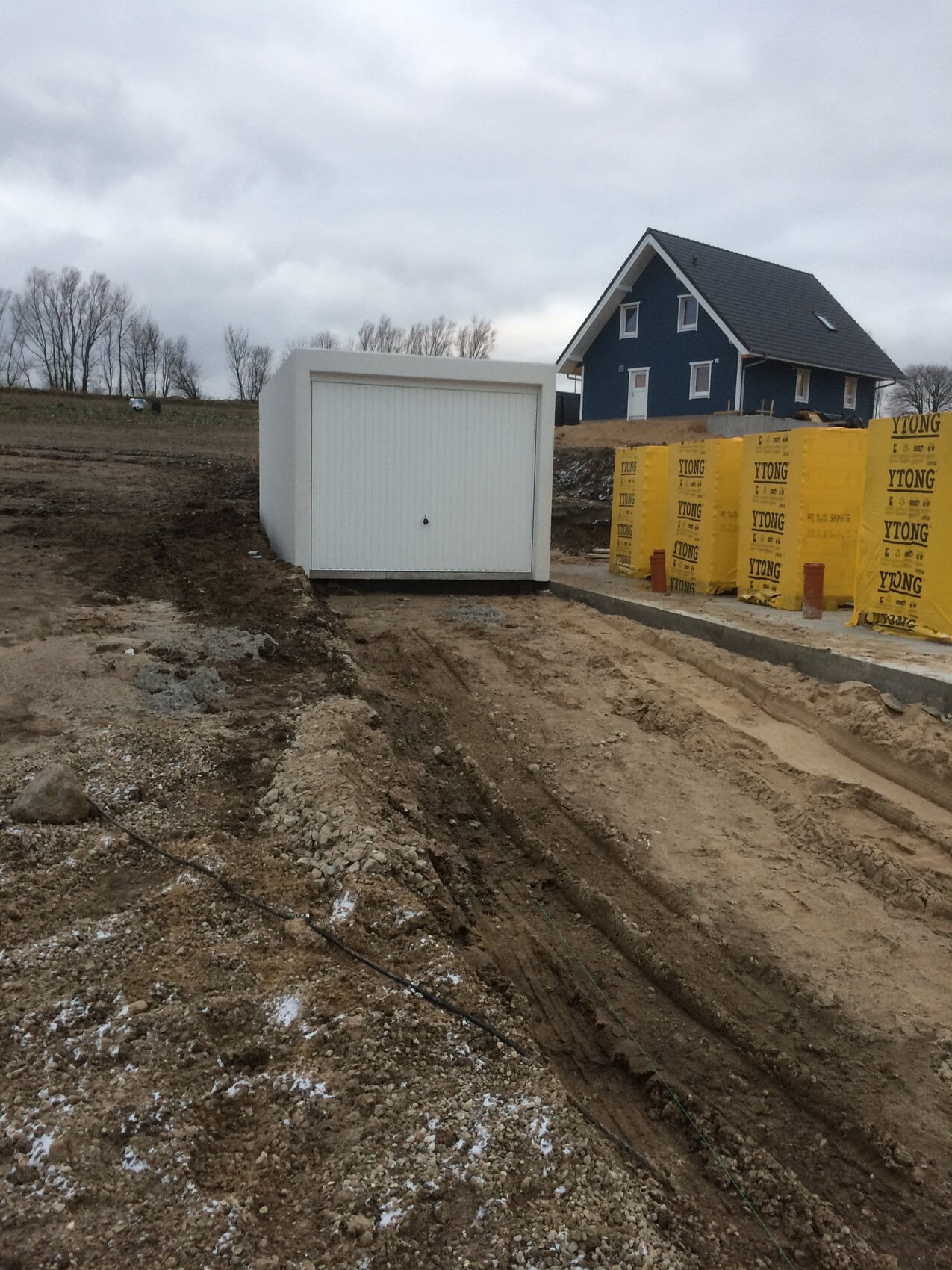
I live in Ytong blocks without external thermal insulation composite systems (ETICS). And that is fine. Dry, warm, and cost-effective. Also, drilling into the walls works well.
Note: This is not a statement claiming that living in Poroton would be worse. I would let sympathy for the company and price decide.
Note: This is not a statement claiming that living in Poroton would be worse. I would let sympathy for the company and price decide.
Similar topics