
Hello everyone,
I have a small problem: the latch of the front door lock no longer retracts when the handle is operated – so currently the door can only be opened with a key (even from the inside).
I would like to replace the lock – the front door itself is planned to be replaced in 2020, as some preliminary work on the house is needed.
The front door (and the handle) date back to 1980, so they are quite old.
Here’s what I’ve done so far: I used a key to remove the small screw that holds the handle in place. Unfortunately, I still can’t pull off the handle. It seems to be held by something else. However, I can’t find any additional screws or similar fasteners.
My questions are:
- Force? Pros and cons (compared to the handle :-D Should I possibly try stronger tools?)
- Lubrication? Would WD40 help?
- Cutting it off?
How would you approach this – of course, the damage should be kept as minimal as possible.
Best regards and a Happy New Year :-)
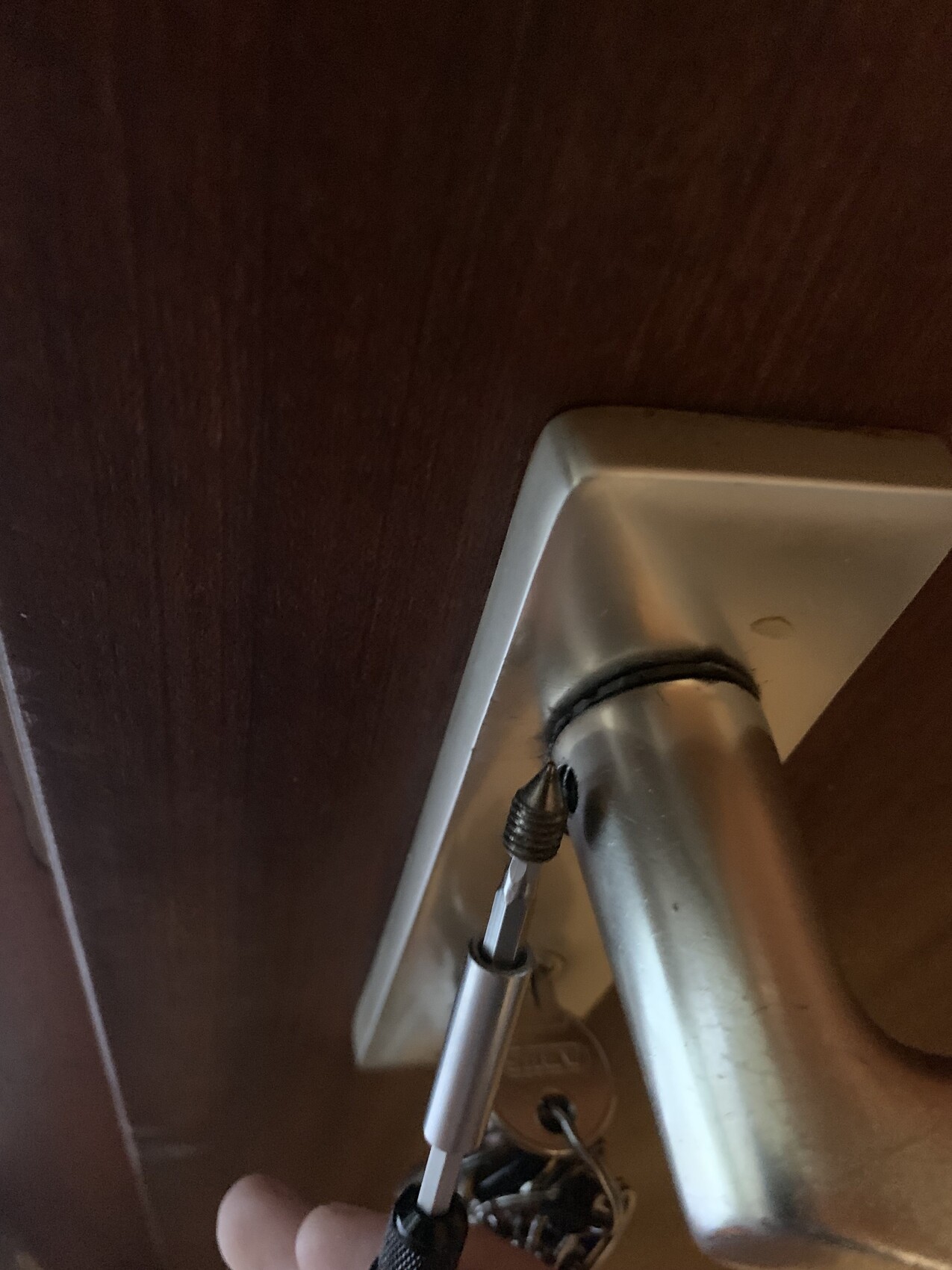
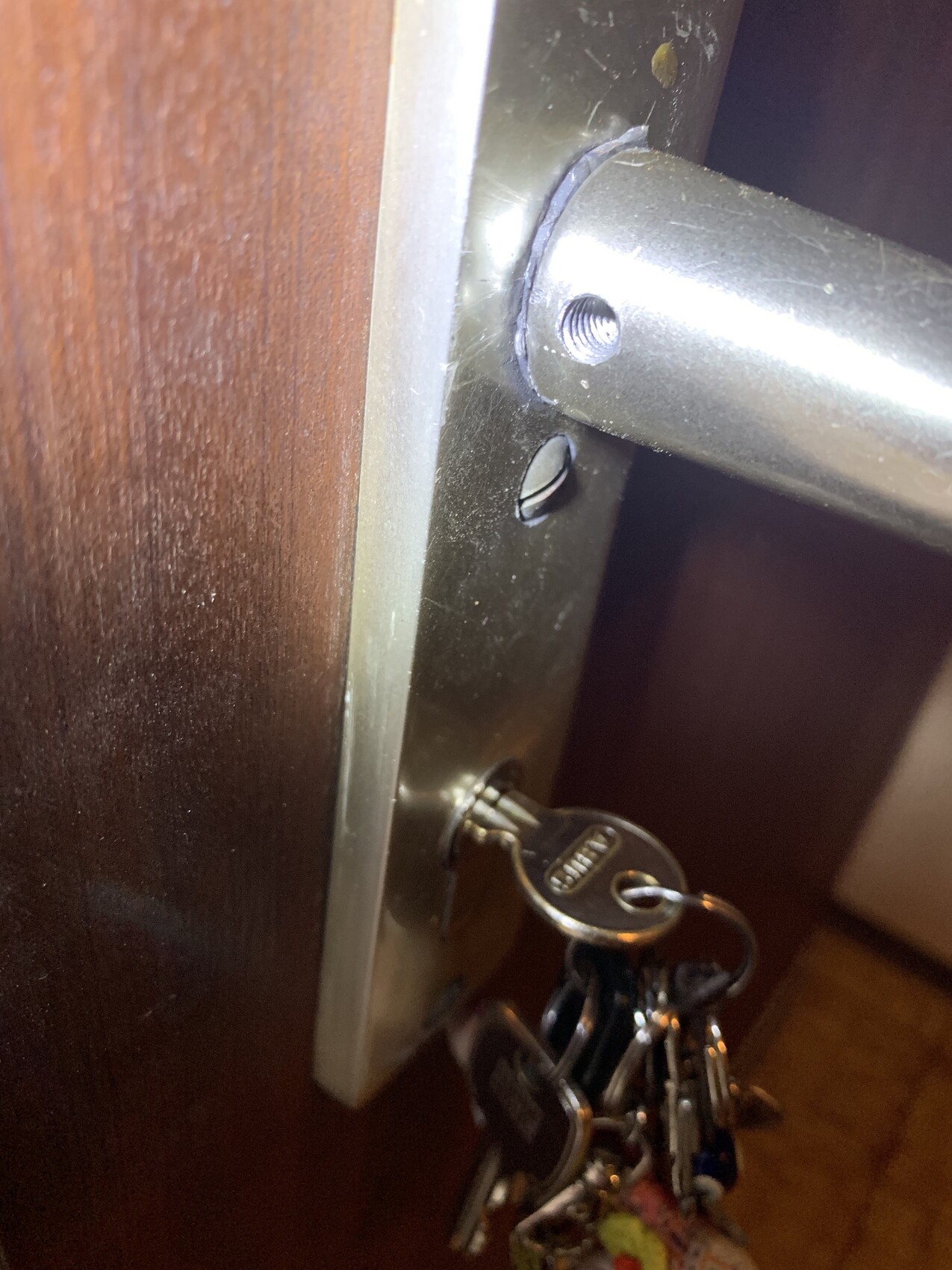
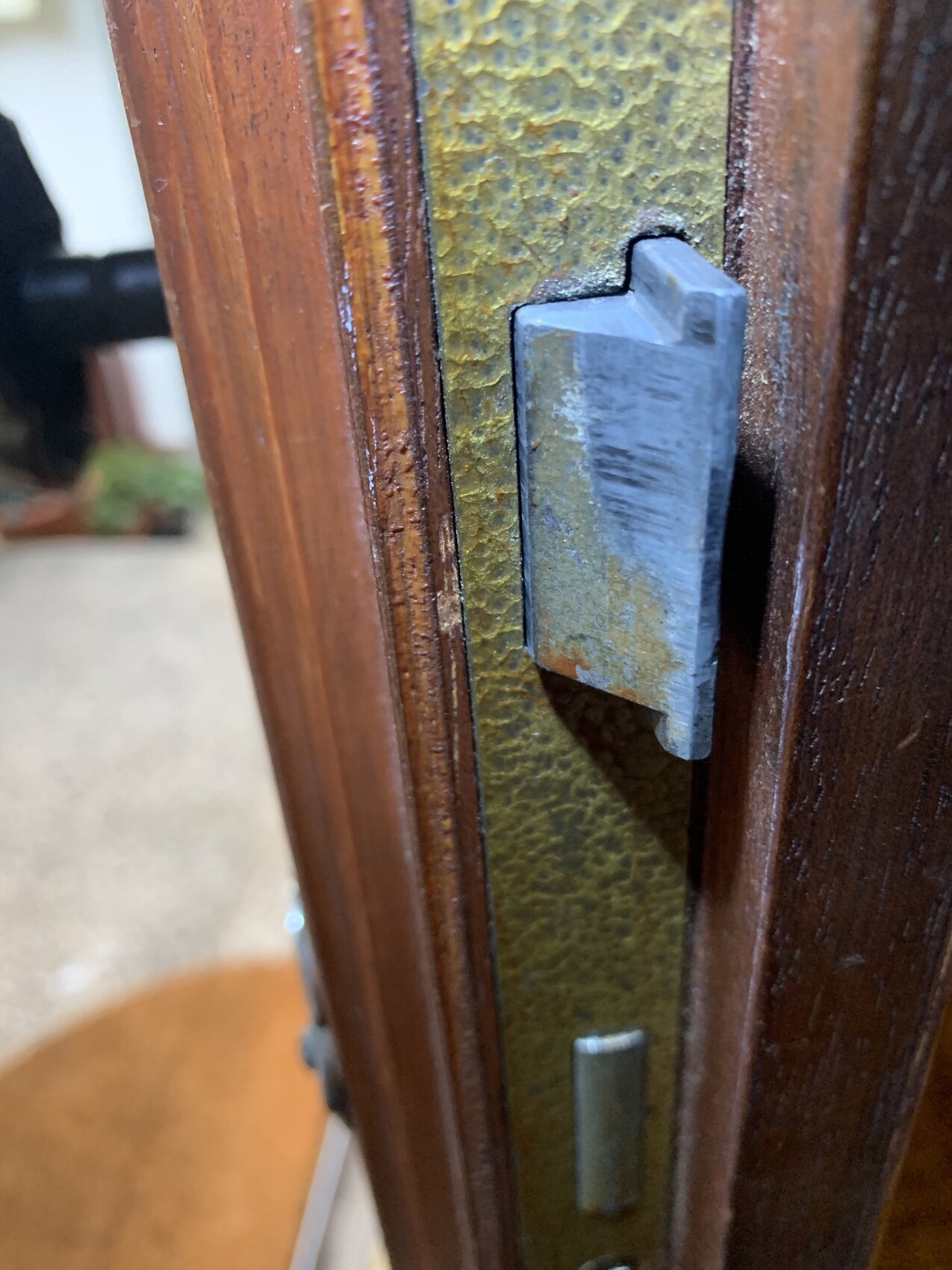
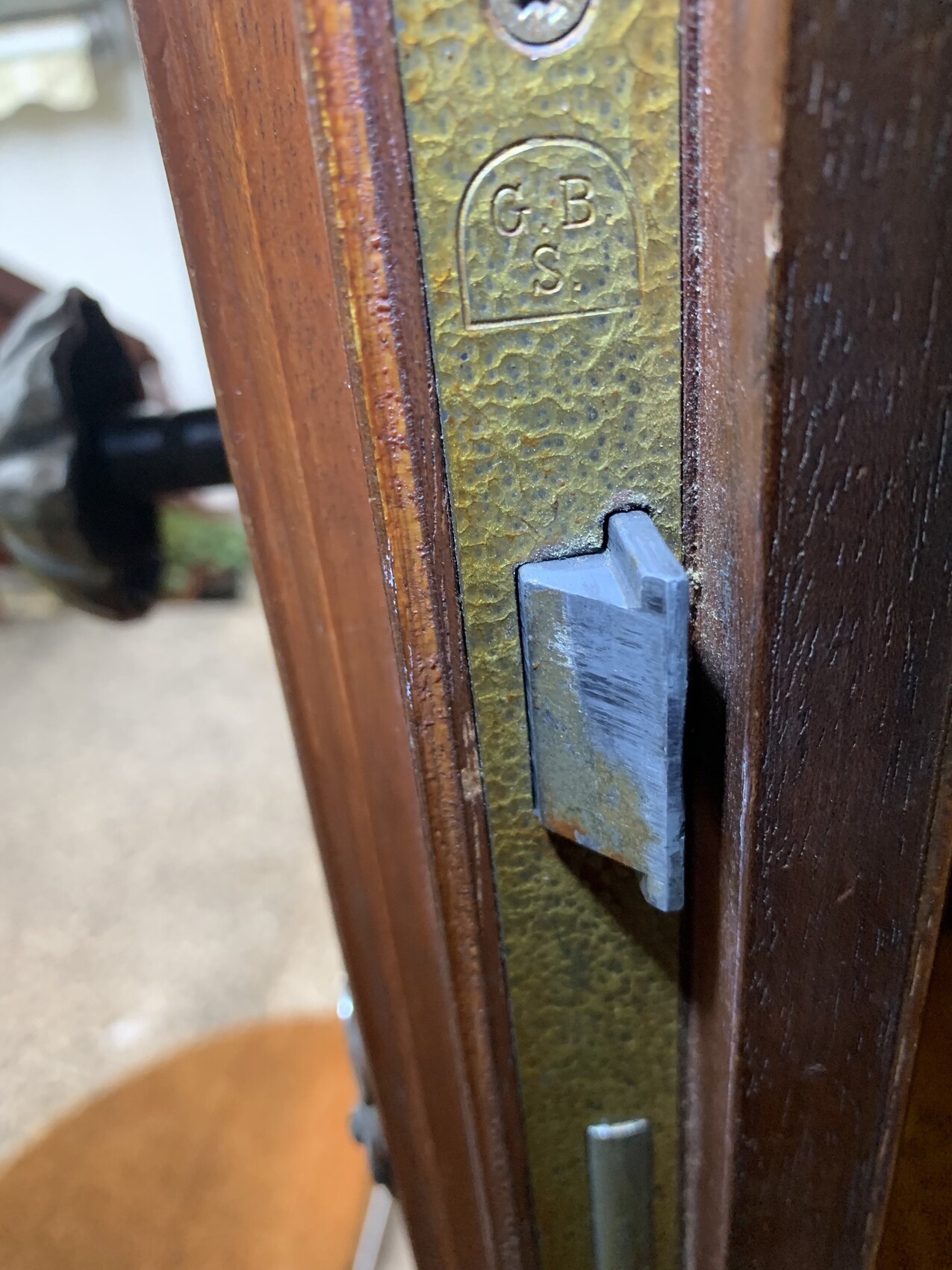
I have a small problem: the latch of the front door lock no longer retracts when the handle is operated – so currently the door can only be opened with a key (even from the inside).
I would like to replace the lock – the front door itself is planned to be replaced in 2020, as some preliminary work on the house is needed.
The front door (and the handle) date back to 1980, so they are quite old.
Here’s what I’ve done so far: I used a key to remove the small screw that holds the handle in place. Unfortunately, I still can’t pull off the handle. It seems to be held by something else. However, I can’t find any additional screws or similar fasteners.
My questions are:
- Force? Pros and cons (compared to the handle :-D Should I possibly try stronger tools?)
- Lubrication? Would WD40 help?
- Cutting it off?
How would you approach this – of course, the damage should be kept as minimal as possible.
Best regards and a Happy New Year :-)

DerRoman schrieb:
It seems as if it is held in place by something else as well. The spindle is inserted about 5cm (2 inches) deep into a square shaft and is likely firmly secured there with resin. Together with this and the screws of the inner plate, it holds the outer plate, which is typically cast as one piece with the knob. The square shaft is adjustably seated with a reducer piece in the center of the knob. A slight twisting movement of the handle within this bearing is possible. I wouldn’t overestimate the effect of lubricant migration. Continuous patience is basically a mild form of force ;-)
After decades, it can easily take hours. When you unscrew the cylinder, the play in the entire assembly increases slightly.
https://www.instagram.com/11antgmxde/
https://www.linkedin.com/company/bauen-jetzt/
11ant schrieb:
Constant patience is like violence in homeopathic form ;-)Indeed :-) It finally worked. Thank you very much! :-)
Similar topics