
H
HausbauTiNa16 Dec 2018 12:31Hello everyone,
Our house construction has started, and the initial steps such as earthworks and strip footings have already been completed. The slab has been prepared for concreting.
I have the following questions:
Earthworks:
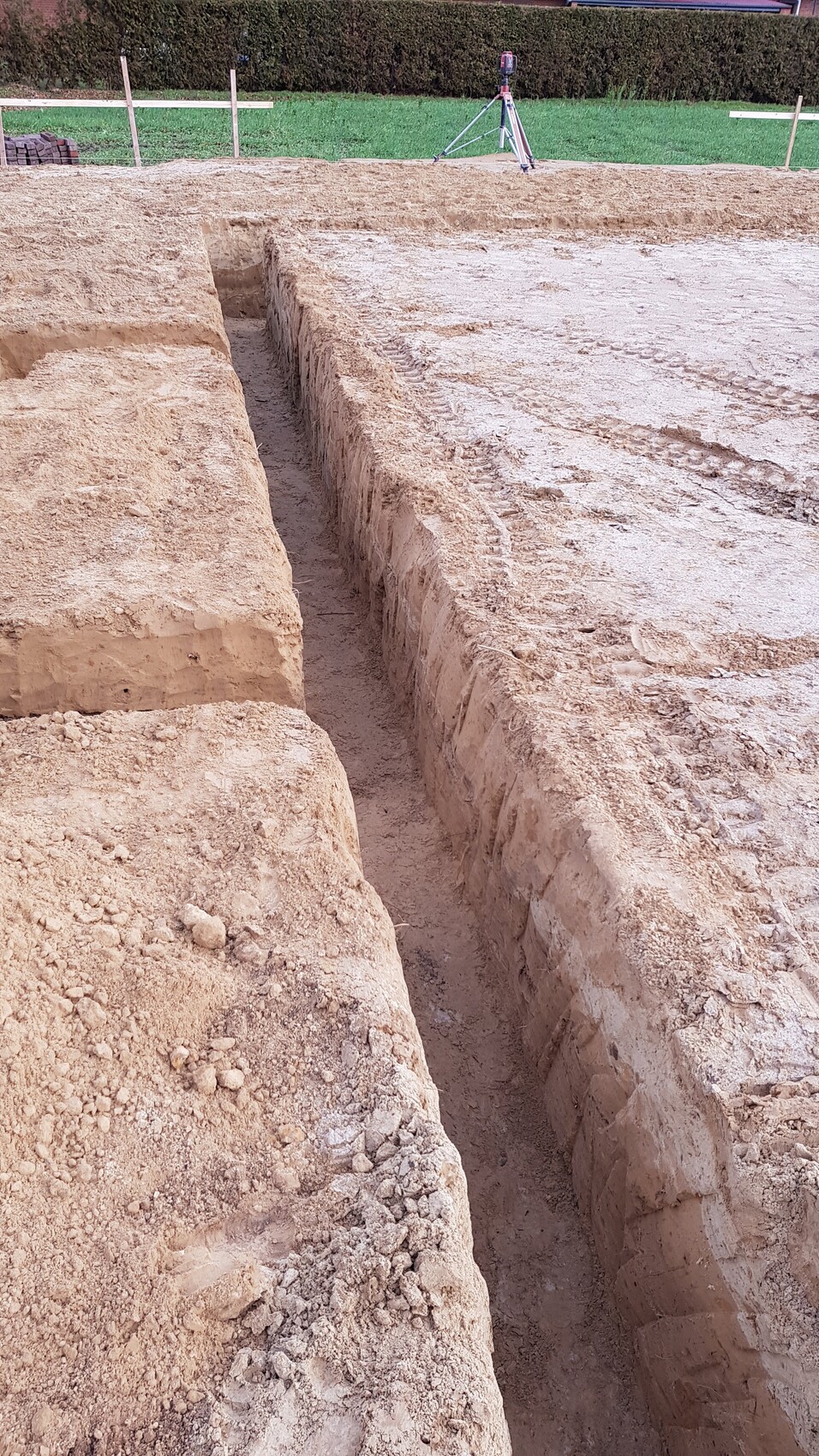
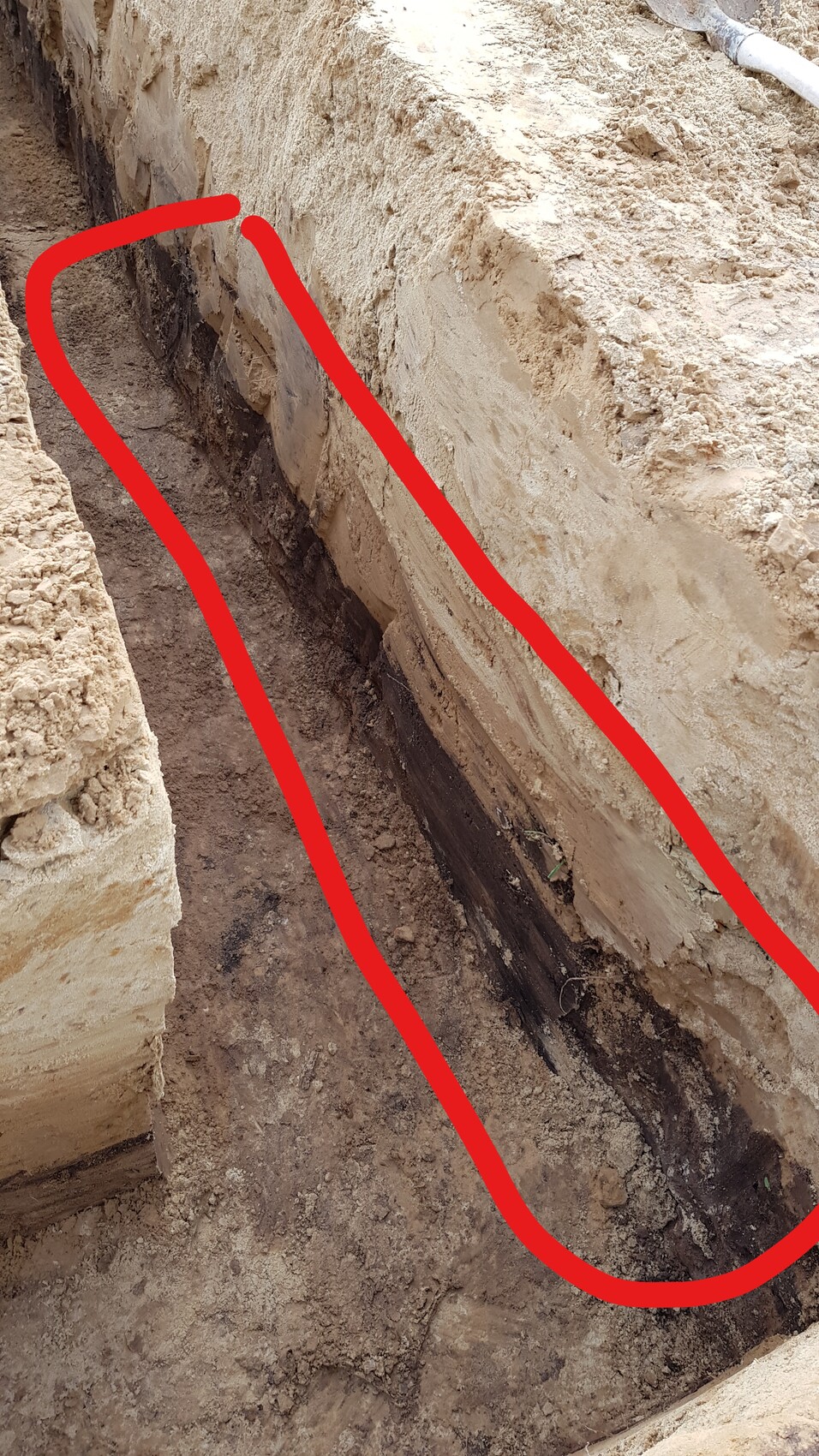
According to the soil investigation, 60 cm (24 inches) of topsoil was removed and replaced with fill sand, which was compacted accordingly. However, it has been observed that on one side of the house, around the strip footing area, about 10 cm (4 inches) less soil was removed (see attached photo). How critical do you consider this?
Strip footings:
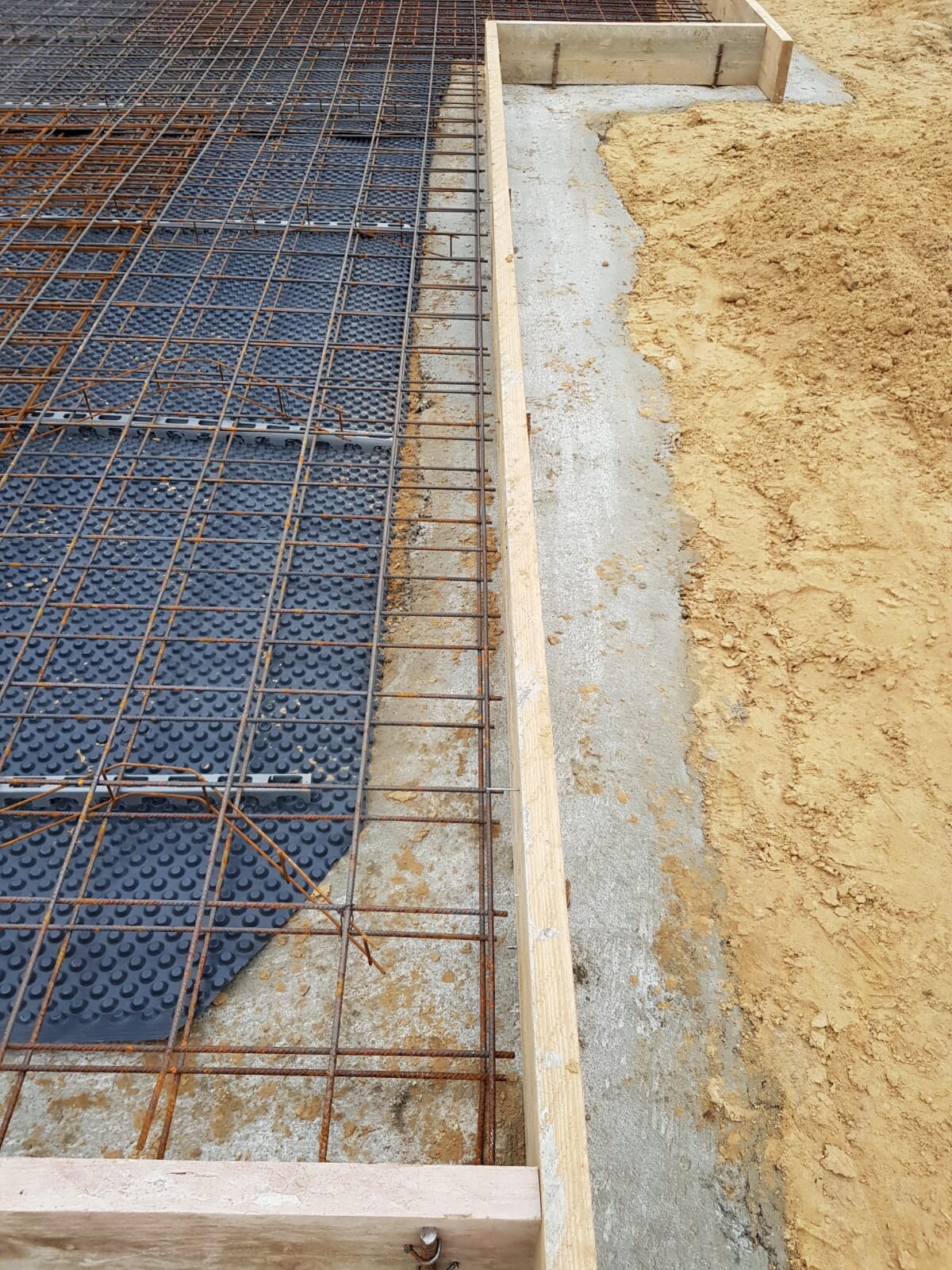
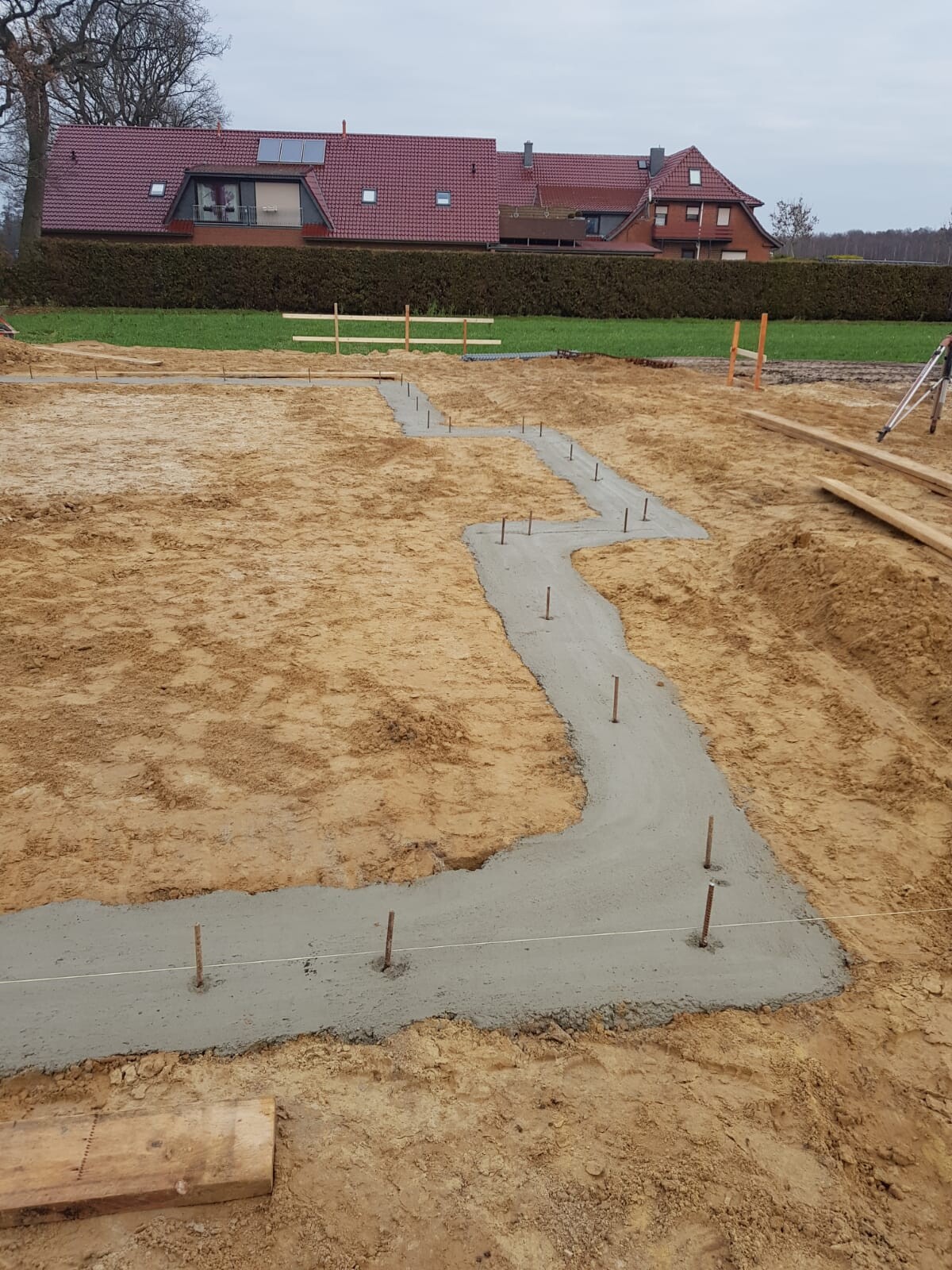
The strip footings (80 cm (31.5 inches) deep with round reinforcement cages) were not shuttered. Without a clean edge, how can the damp-proof course be properly applied later? What do you think about the steel rods currently used as formwork holders?
Slab:
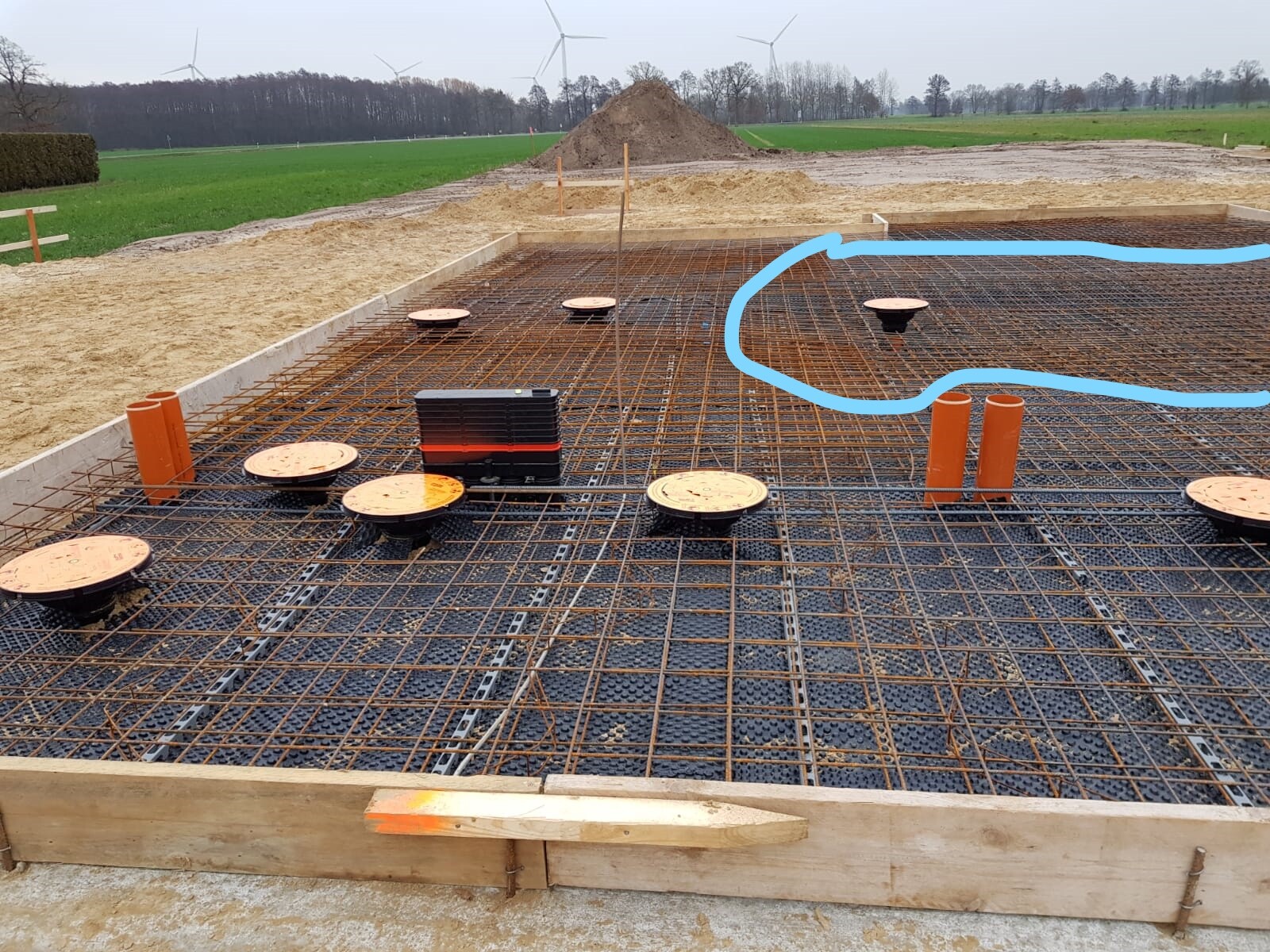
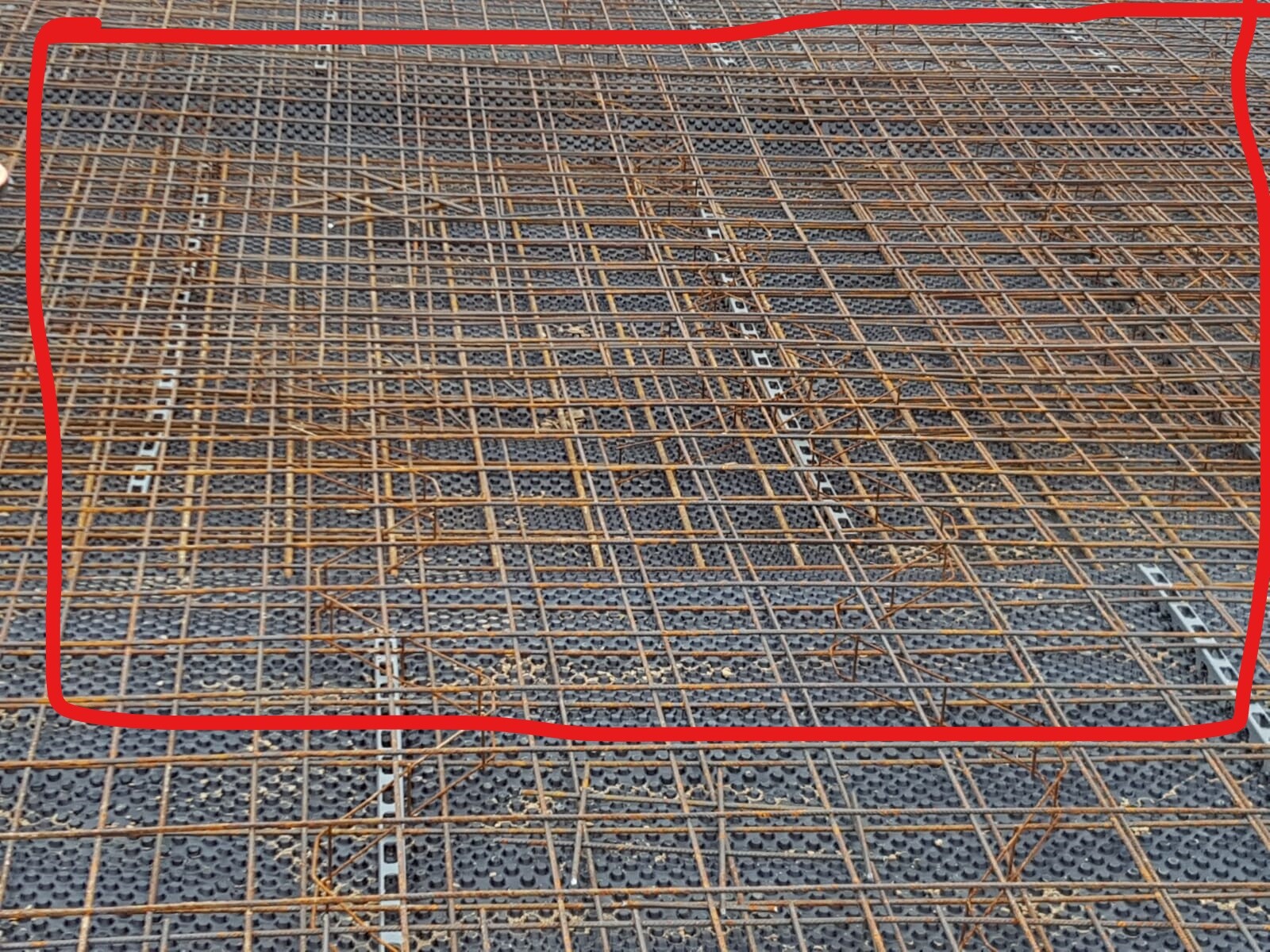
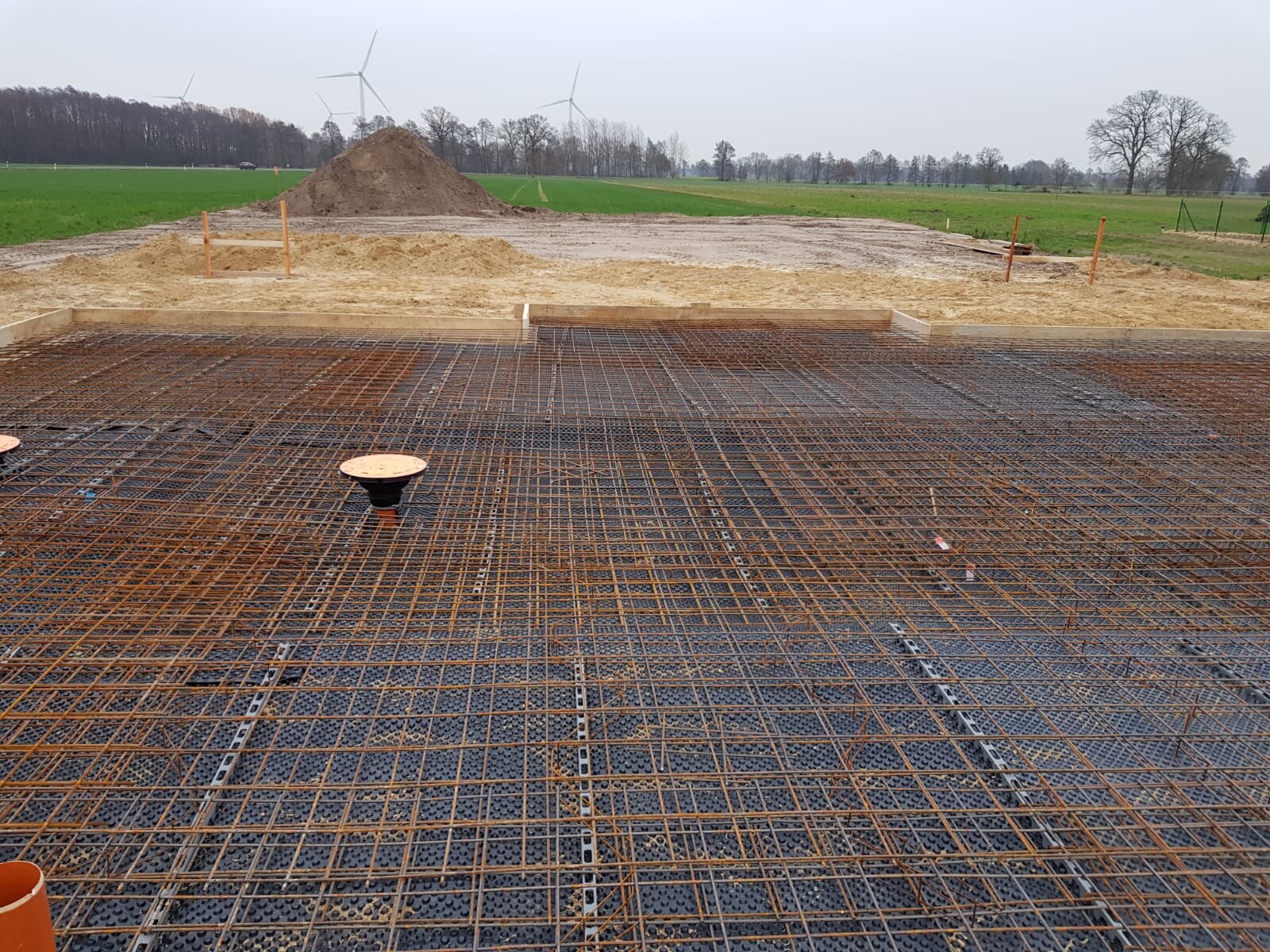
For the slab, pipe penetrations for wastewater from Hauff were installed, which I view positively. However, it is also visually apparent that there is a significant depression in the sand bed in the middle of the slab. Upon closer inspection, extra thick reinforcement is visible there. Could this possibly relate to load-bearing walls?
I look forward to your answers, as the slab is scheduled to be concreted on 17.12.2018.
What is your overall visual impression?
Thank you very much
Our house construction has started, and the initial steps such as earthworks and strip footings have already been completed. The slab has been prepared for concreting.
I have the following questions:
Earthworks:
According to the soil investigation, 60 cm (24 inches) of topsoil was removed and replaced with fill sand, which was compacted accordingly. However, it has been observed that on one side of the house, around the strip footing area, about 10 cm (4 inches) less soil was removed (see attached photo). How critical do you consider this?
Strip footings:
The strip footings (80 cm (31.5 inches) deep with round reinforcement cages) were not shuttered. Without a clean edge, how can the damp-proof course be properly applied later? What do you think about the steel rods currently used as formwork holders?
Slab:
For the slab, pipe penetrations for wastewater from Hauff were installed, which I view positively. However, it is also visually apparent that there is a significant depression in the sand bed in the middle of the slab. Upon closer inspection, extra thick reinforcement is visible there. Could this possibly relate to load-bearing walls?
I look forward to your answers, as the slab is scheduled to be concreted on 17.12.2018.
What is your overall visual impression?
Thank you very much
H
HausbauTiNa16 Dec 2018 13:47@Bookstar
This response doesn’t help me unless there are fundamental reasons.
I do believe that we are quite capable of managing the house construction. However, it is another matter that it will be demanding.
My concern here is to get an assessment on the aforementioned topics from third parties.
Due to our professions, we have some experience, but there are technical areas, as mentioned above, where I would like to hear a different opinion.
Regarding the subject of experts:
We had discussions, but they were far from convincing. One even went as far as saying that I have to work with much more responsibility in my own profession than he does. The experts we met (incidentally from the Homebuilders’ Association, which we are now leaving) were also unable to clearly explain a reasonable staging of the payment schedule or address additional construction priorities.
This response doesn’t help me unless there are fundamental reasons.
I do believe that we are quite capable of managing the house construction. However, it is another matter that it will be demanding.
My concern here is to get an assessment on the aforementioned topics from third parties.
Due to our professions, we have some experience, but there are technical areas, as mentioned above, where I would like to hear a different opinion.
Regarding the subject of experts:
We had discussions, but they were far from convincing. One even went as far as saying that I have to work with much more responsibility in my own profession than he does. The experts we met (incidentally from the Homebuilders’ Association, which we are now leaving) were also unable to clearly explain a reasonable staging of the payment schedule or address additional construction priorities.
Hi,
Giving a diagnosis from a distance is always difficult. To me, everything looks normal so far. Since your slab is in direct contact with the ground, a vapor barrier will be installed underneath anyway. The connection to the foundation should not be a problem, and the few reinforcing bars shouldn’t cause any major issues. The fact that less topsoil was removed than agreed should be addressed in the invoice. Topsoil settles significantly less than fill material, even when compacted. The depression is not a serious issue—it just means more concrete will be poured, which is the contractor’s responsibility. It’s also interesting that there apparently is no insulation under the slab. That usually isn’t done nowadays.
As an electrician, I find the grounding / equipotential bonding topic more interesting. Normally, the reinforcing mesh must be included in the grounding system. Usually, a steel tape is laid around the perimeter and connected to the reinforcing mesh every 2 meters (6.5 feet). This is regulated by DIN 18015-1. You should take a look at that before they pour your slab tomorrow.
And now, the installation and documentation must be done by an electrician, not simply by the bricklayer like in the past.
Otherwise, I wish you lots of fun with your house building project!!
Giving a diagnosis from a distance is always difficult. To me, everything looks normal so far. Since your slab is in direct contact with the ground, a vapor barrier will be installed underneath anyway. The connection to the foundation should not be a problem, and the few reinforcing bars shouldn’t cause any major issues. The fact that less topsoil was removed than agreed should be addressed in the invoice. Topsoil settles significantly less than fill material, even when compacted. The depression is not a serious issue—it just means more concrete will be poured, which is the contractor’s responsibility. It’s also interesting that there apparently is no insulation under the slab. That usually isn’t done nowadays.
As an electrician, I find the grounding / equipotential bonding topic more interesting. Normally, the reinforcing mesh must be included in the grounding system. Usually, a steel tape is laid around the perimeter and connected to the reinforcing mesh every 2 meters (6.5 feet). This is regulated by DIN 18015-1. You should take a look at that before they pour your slab tomorrow.
And now, the installation and documentation must be done by an electrician, not simply by the bricklayer like in the past.
Otherwise, I wish you lots of fun with your house building project!!
H
HausbauTiNa16 Dec 2018 16:52Tom1607 schrieb:
Hi,
Diagnosing from a distance is always difficult. To me, everything looks normal so far. Since your slab is a ground-contact element, a vapor barrier will be installed inside anyway. The connection to the foundation should not be a problem, and the few reinforcing bars should not cause any major issues. The fact that less topsoil was removed than agreed upon should be an issue for the invoice. Topsoil settles significantly less than fill material, even when compacted. The depression is not a problem; more concrete will just be poured there, which is a cost for the builder. It’s also interesting that there apparently is no insulation under the slab. That is not common practice anymore.
As an electrician, I find the grounding/potential equalization topic more interesting. Normally, the reinforcing steel mesh must be included in the grounding system. Usually, a flat steel strip is laid all around and connected to the reinforcing mesh every 2 meters (about 6.5 feet). This is regulated in DIN18015-1. You should check that before they pour your slab tomorrow.
Also, an electrical installer (EFK) must install and document this nowadays, not just the mason as it used to be.
Other than that, good luck with your house building project!!Hello Tom,
Thank you very much for your response and good wishes.
We have decided to skip the insulation.
The grounding strip is continuous in the strip foundation and also connected.
Hi,
Our house was also built on strip foundations, and there is nothing negative to say about the steel reinforcement used. Our site manager from Prime Massivhaus told us that it is important for the steel to be fully encased in concrete so it cannot rust. So, I wouldn’t worry about this issue.
Our house was also built on strip foundations, and there is nothing negative to say about the steel reinforcement used. Our site manager from Prime Massivhaus told us that it is important for the steel to be fully encased in concrete so it cannot rust. So, I wouldn’t worry about this issue.
Similar topics