
ᐅ Ideas for Outdoor Spaces, Gardens, and Landscaping – Suggestions and Tips?
Created on: 24 Nov 2018 01:34
Z
zizzi
Hello,
I am slowly starting to plan the outdoor area and would appreciate any advice from you. We want to focus first on thorough and essential tasks, such as:
1. Connecting the wastewater system + inspection chamber
2. Pipes for rainwater + infiltration system + inspection and flushing chamber
3. Transporting the topsoil as excess excavated soil
4. Dimpled membrane (dimpled sheet membrane?). Here I have a question about this topic.
I want to do the rest myself. Only for the paving work will I hire an experienced professional.
5. Gravel for paved areas
6. Paving work
7. Garden soil, leveling, lawn, flower beds
8. Enclosure, fence, gate…
The photos show the current status of the house, and on the floor plan I’ve drawn my initial ideas for the garden and paved areas.
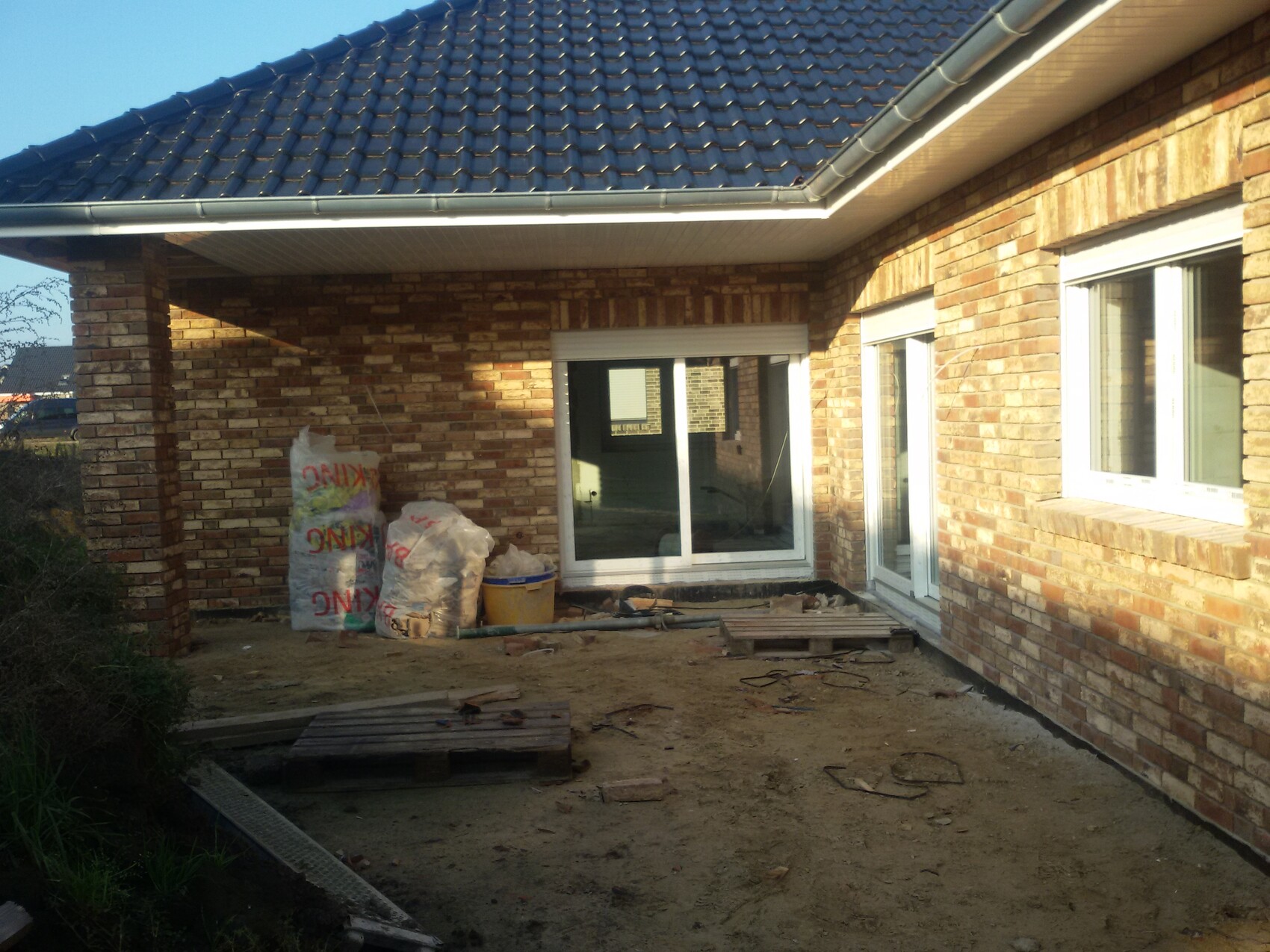
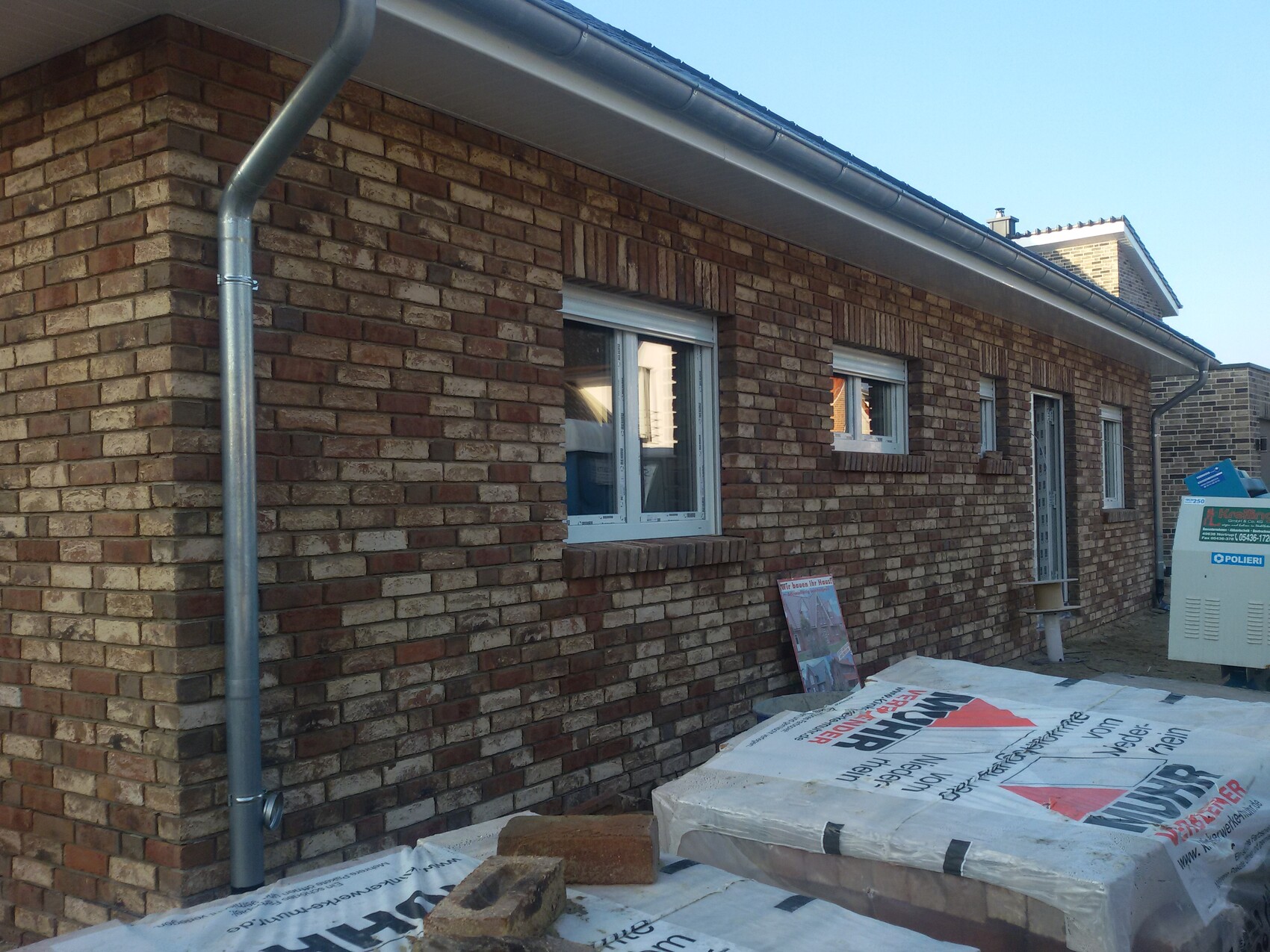
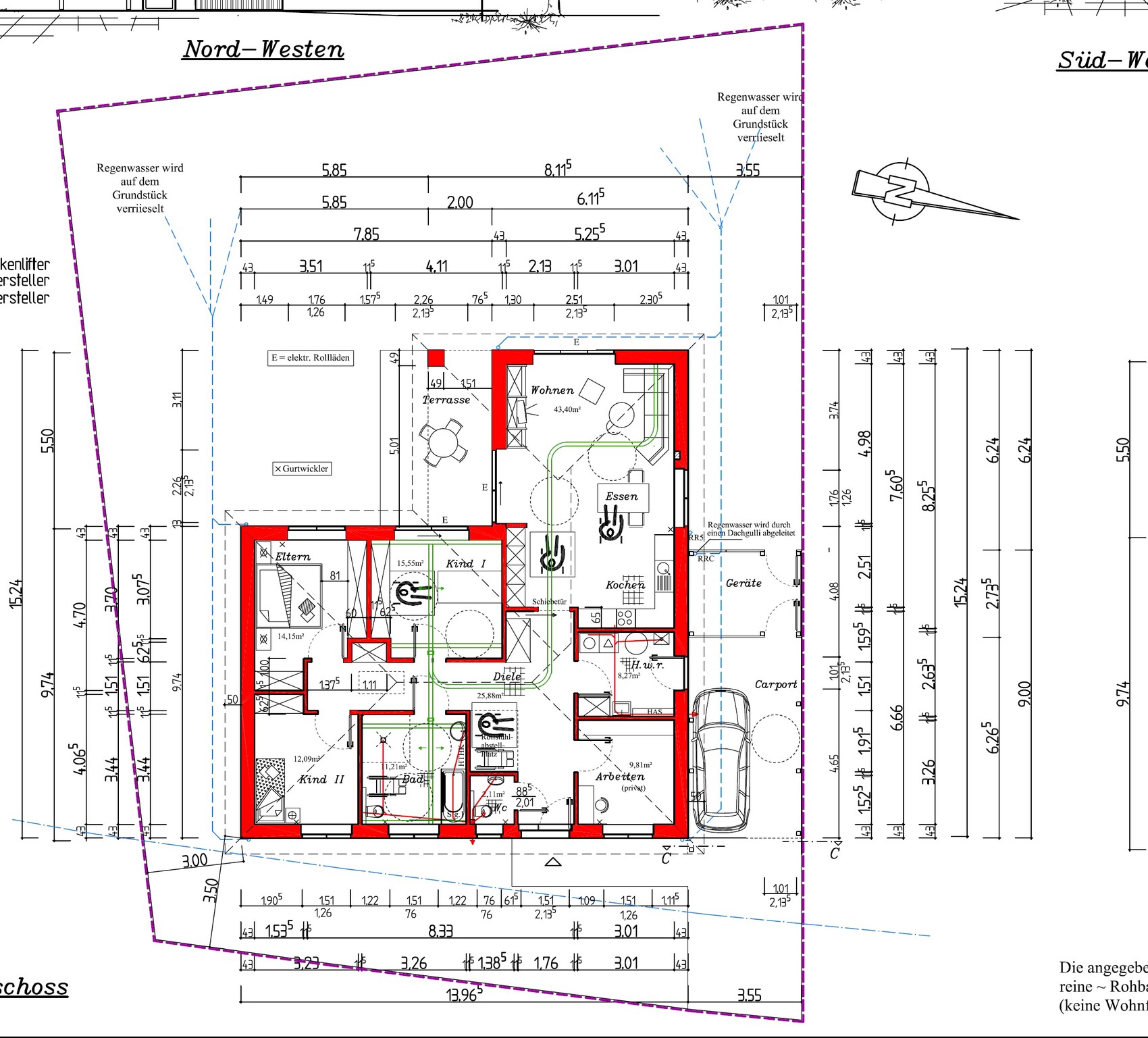
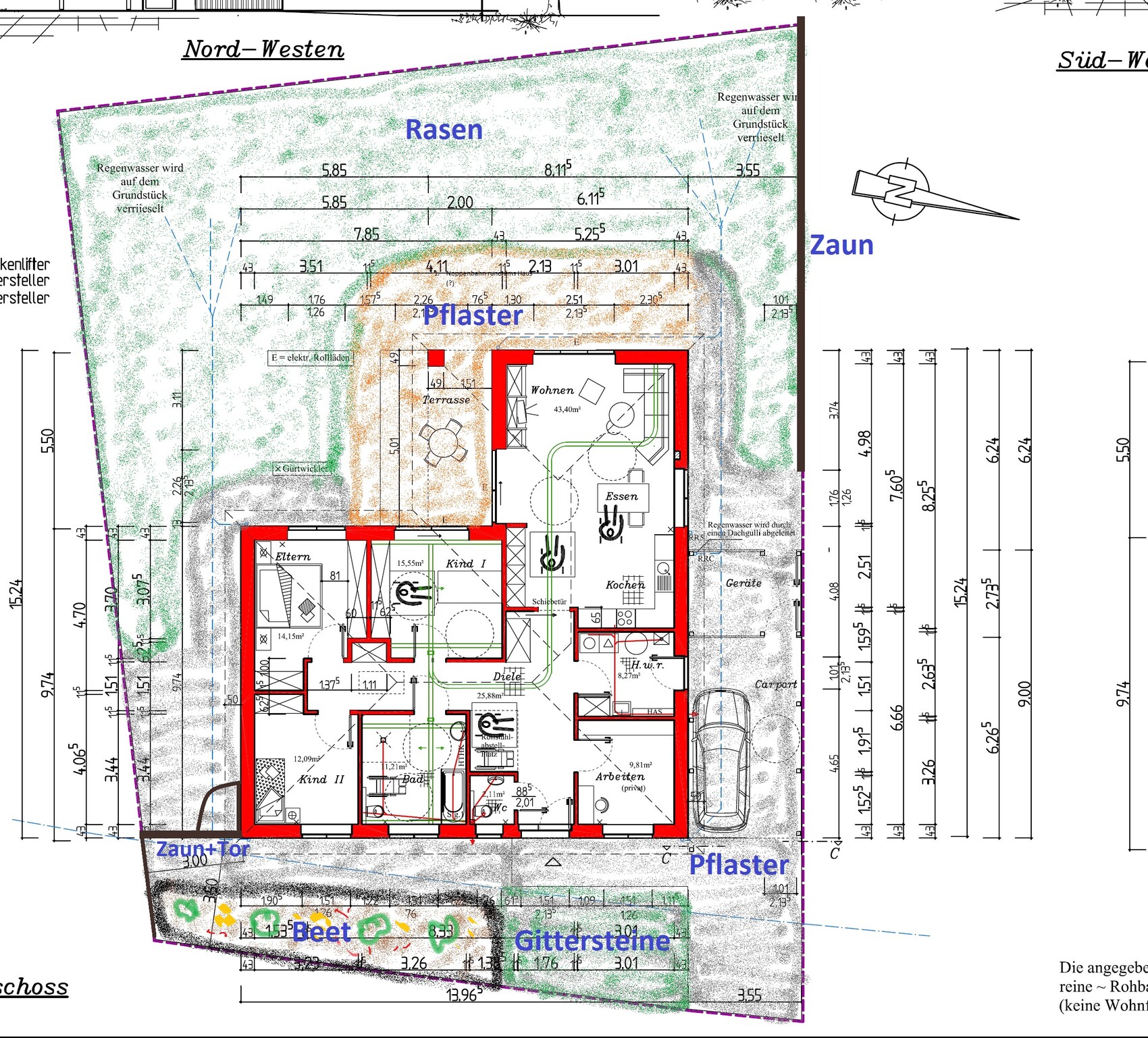
Around the house I plan to have 1.5 m (5 feet) of paving. On the right side (behind the storage room) and the left side of the house, I have planned slightly larger paved areas for storage, e.g., for bicycles, trash bins, etc. In front of the main entrance, I want to use grid paving or paving stones as an additional parking option.
What is your opinion on this plan? Suggestions or improvements? Of course, some things like a sandbox, raised herb beds, etc., will be figured out over time to find the best locations.
Best regards
I am slowly starting to plan the outdoor area and would appreciate any advice from you. We want to focus first on thorough and essential tasks, such as:
1. Connecting the wastewater system + inspection chamber
2. Pipes for rainwater + infiltration system + inspection and flushing chamber
3. Transporting the topsoil as excess excavated soil
4. Dimpled membrane (dimpled sheet membrane?). Here I have a question about this topic.
I want to do the rest myself. Only for the paving work will I hire an experienced professional.
5. Gravel for paved areas
6. Paving work
7. Garden soil, leveling, lawn, flower beds
8. Enclosure, fence, gate…
The photos show the current status of the house, and on the floor plan I’ve drawn my initial ideas for the garden and paved areas.
Around the house I plan to have 1.5 m (5 feet) of paving. On the right side (behind the storage room) and the left side of the house, I have planned slightly larger paved areas for storage, e.g., for bicycles, trash bins, etc. In front of the main entrance, I want to use grid paving or paving stones as an additional parking option.
What is your opinion on this plan? Suggestions or improvements? Of course, some things like a sandbox, raised herb beds, etc., will be figured out over time to find the best locations.
Best regards
My hedges also look bare. That’s just how it is in autumn.
I hope the voles stay away.
I plan for thinning as well. You can always replant if too much gets damaged. You never know what might affect them, whether it’s voles, severe frost, drought, or simply nutrient deficiency (I have to restore the natural environment).
I hope the voles stay away.
I plan for thinning as well. You can always replant if too much gets damaged. You never know what might affect them, whether it’s voles, severe frost, drought, or simply nutrient deficiency (I have to restore the natural environment).
haydee schrieb:
I hope the moles stay away. Thank you, I do too. You’ll find out!
F
fach1werk28 Nov 2018 09:02Prairie Garden or Beds:
These consist of grasses and perennials, both long-lasting. Mostly, hardy plants with a wildflower character are used.
In our case, the construction company started about six months later. During that time, we were able to focus on gardening, and I did some craftwork.
Our beds are only 1m (3 feet) wide strips along the boundary. Contrary to the common belief that prairie gardens require large parks, this works very well and allows good access to the area. We did not cover the open ground under the plants (no mulch or gravel), but we avoid hoeing. Hoeing tends to bury weed seeds. We pull out weeds by hand and try to disturb the increasingly firm surface as little as possible.
In winter, we leave all plants standing, only cutting back the very decayed ones, which we occasionally cannot tolerate. The remaining plants look surprisingly good in winter, especially with snow on them. In early spring, everything is cut back once to about a hand span in height. You can even use a string trimmer or brush cutter for this.
All plants come from a grower in a similar climate, not from a retailer. Each year, I added a few plants from garden centers, but none survived.
We preferred wild-like varieties for all plants. They are much more resilient and, after many years of conventional garden care, have proven particularly attractive to us.
Prairie gardens remain visually appealing well into autumn, long after conventional gardens have lost their charm.
We only have a fence on the street side. The two prairie garden sides have no fences. Instead, there are two stacked rows of planting rings, which were necessary due to the shape of the property. These mark the boundary, and basically, no one crosses through the beds. This way, both neighbors enjoy the planted boundary from their own gardens. For example, my neighbor has many beautiful roses and a lot of annual flowers, which I do not have, yet I can enjoy the sight. She feels the same. Of course, we often have visits from neighborhood cats.
To develop a concept, it is recommended to visit one of the four demonstration gardens. For us, that was the Hermannshof. And in the Netherlands, there is a very special gardener with a huge show garden: Lianne Pot in the Groninger Heide, whose reputation and expertise are legendary: Liannes Siergrassen, NL 9367 TE De Wilp. You can also browse online under “Siergras” with the NL tag.
There are tested, vigorous, and balanced plant mixes for different soils, light exposures, and color families. The care time per square meter per year is even specified. This information can be found in a brochure from the Information Service for Nutrition, Agriculture, and Consumer Protection, called “Perennial Mixed Plantings.” The head of Hermannshof also contributed to this publication. It costs about €6.50, ISBN 978-3-8308-0975-3.
Our mix was further adapted to local conditions and our preferences by the Gaissmaier nursery from Illertissen. Their organic plants were not more expensive, just much better. Visiting is also a nice trip. The advice is worthwhile because, for some grasses, there are over 100 subspecies. Some grow too large for small areas, others never flower here, some are not sterile and produce seeds that spread into the neighbor’s garden, and even water and soil requirements vary within a single species.
The photos show the progress within the planting year. Planting on Maundy Thursday, i.e., before Easter. The second picture is from July of the same year. The third and fourth pictures are from September of the same year.
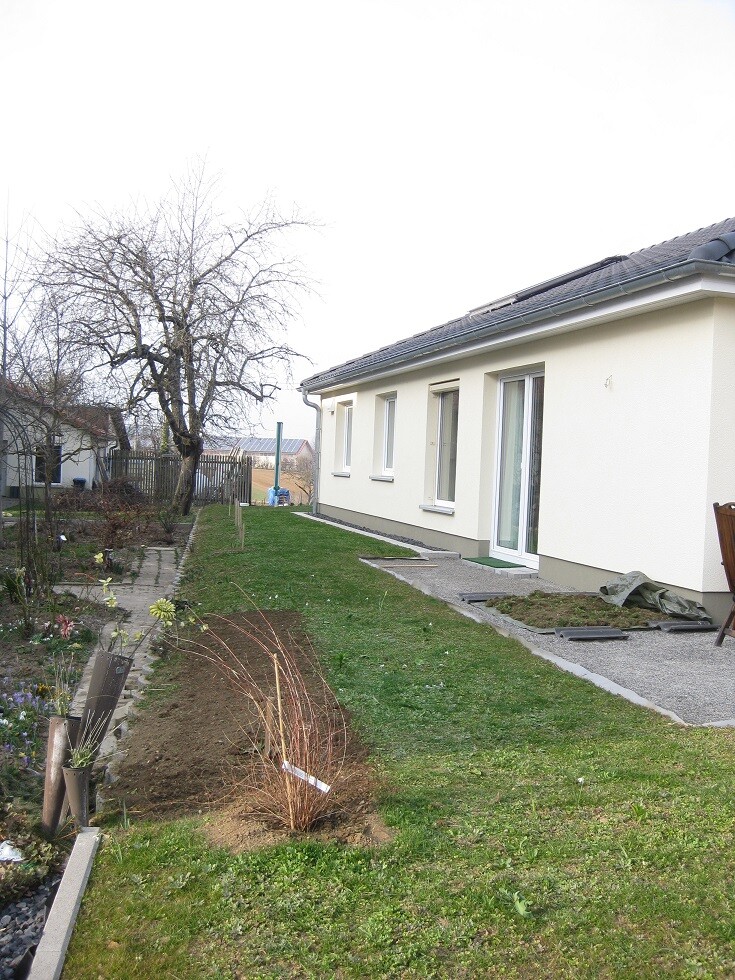
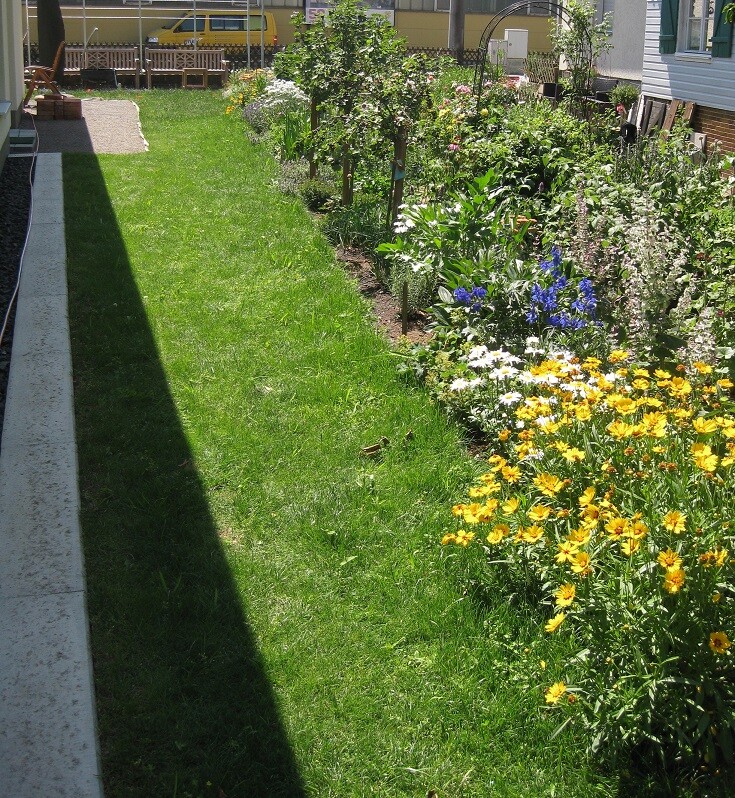
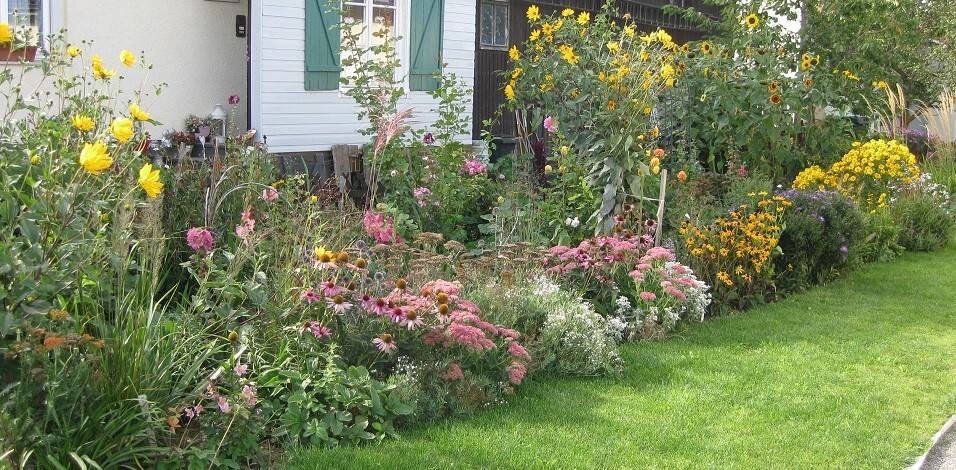
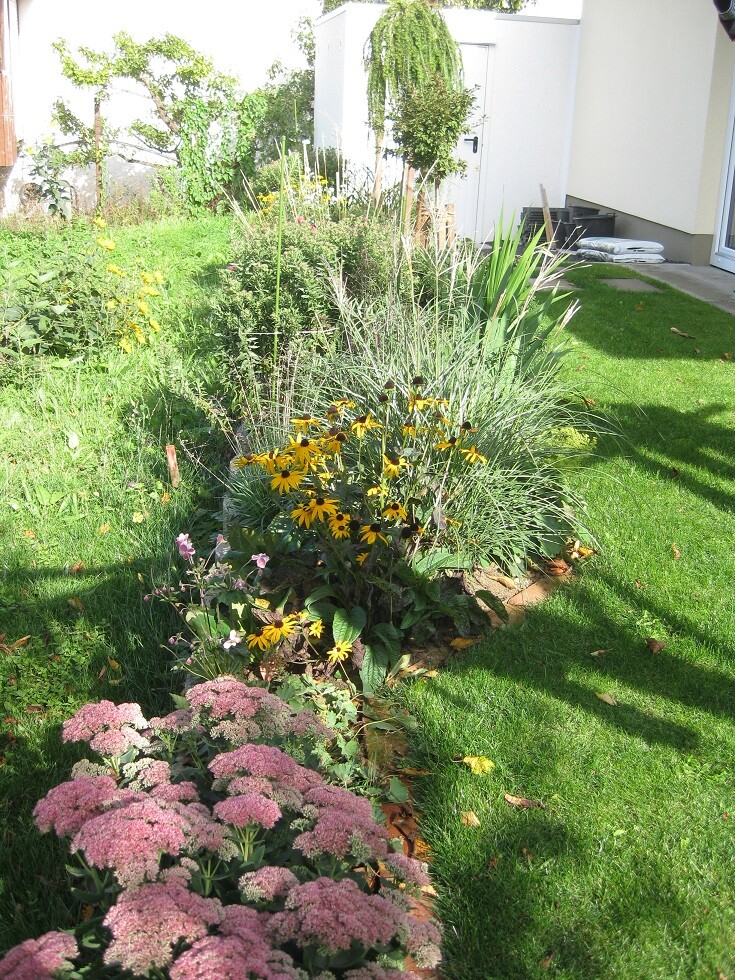
These consist of grasses and perennials, both long-lasting. Mostly, hardy plants with a wildflower character are used.
In our case, the construction company started about six months later. During that time, we were able to focus on gardening, and I did some craftwork.
Our beds are only 1m (3 feet) wide strips along the boundary. Contrary to the common belief that prairie gardens require large parks, this works very well and allows good access to the area. We did not cover the open ground under the plants (no mulch or gravel), but we avoid hoeing. Hoeing tends to bury weed seeds. We pull out weeds by hand and try to disturb the increasingly firm surface as little as possible.
In winter, we leave all plants standing, only cutting back the very decayed ones, which we occasionally cannot tolerate. The remaining plants look surprisingly good in winter, especially with snow on them. In early spring, everything is cut back once to about a hand span in height. You can even use a string trimmer or brush cutter for this.
All plants come from a grower in a similar climate, not from a retailer. Each year, I added a few plants from garden centers, but none survived.
We preferred wild-like varieties for all plants. They are much more resilient and, after many years of conventional garden care, have proven particularly attractive to us.
Prairie gardens remain visually appealing well into autumn, long after conventional gardens have lost their charm.
We only have a fence on the street side. The two prairie garden sides have no fences. Instead, there are two stacked rows of planting rings, which were necessary due to the shape of the property. These mark the boundary, and basically, no one crosses through the beds. This way, both neighbors enjoy the planted boundary from their own gardens. For example, my neighbor has many beautiful roses and a lot of annual flowers, which I do not have, yet I can enjoy the sight. She feels the same. Of course, we often have visits from neighborhood cats.
To develop a concept, it is recommended to visit one of the four demonstration gardens. For us, that was the Hermannshof. And in the Netherlands, there is a very special gardener with a huge show garden: Lianne Pot in the Groninger Heide, whose reputation and expertise are legendary: Liannes Siergrassen, NL 9367 TE De Wilp. You can also browse online under “Siergras” with the NL tag.
There are tested, vigorous, and balanced plant mixes for different soils, light exposures, and color families. The care time per square meter per year is even specified. This information can be found in a brochure from the Information Service for Nutrition, Agriculture, and Consumer Protection, called “Perennial Mixed Plantings.” The head of Hermannshof also contributed to this publication. It costs about €6.50, ISBN 978-3-8308-0975-3.
Our mix was further adapted to local conditions and our preferences by the Gaissmaier nursery from Illertissen. Their organic plants were not more expensive, just much better. Visiting is also a nice trip. The advice is worthwhile because, for some grasses, there are over 100 subspecies. Some grow too large for small areas, others never flower here, some are not sterile and produce seeds that spread into the neighbor’s garden, and even water and soil requirements vary within a single species.
The photos show the progress within the planting year. Planting on Maundy Thursday, i.e., before Easter. The second picture is from July of the same year. The third and fourth pictures are from September of the same year.
F
fach1werk28 Nov 2018 09:30Here are some photos from November 26, 2018:
1st photo: north side, 2nd photo: south side, 3rd photo: south side with the planting stone border.
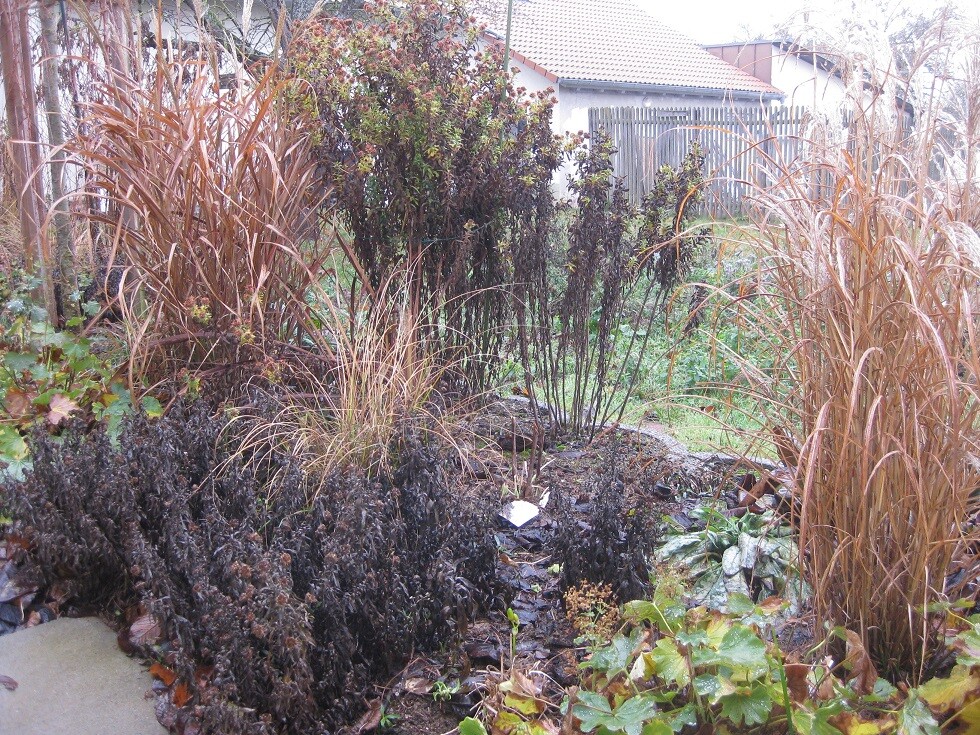
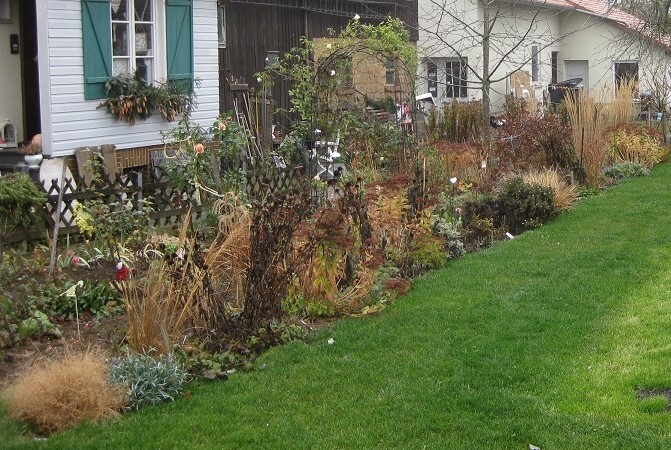
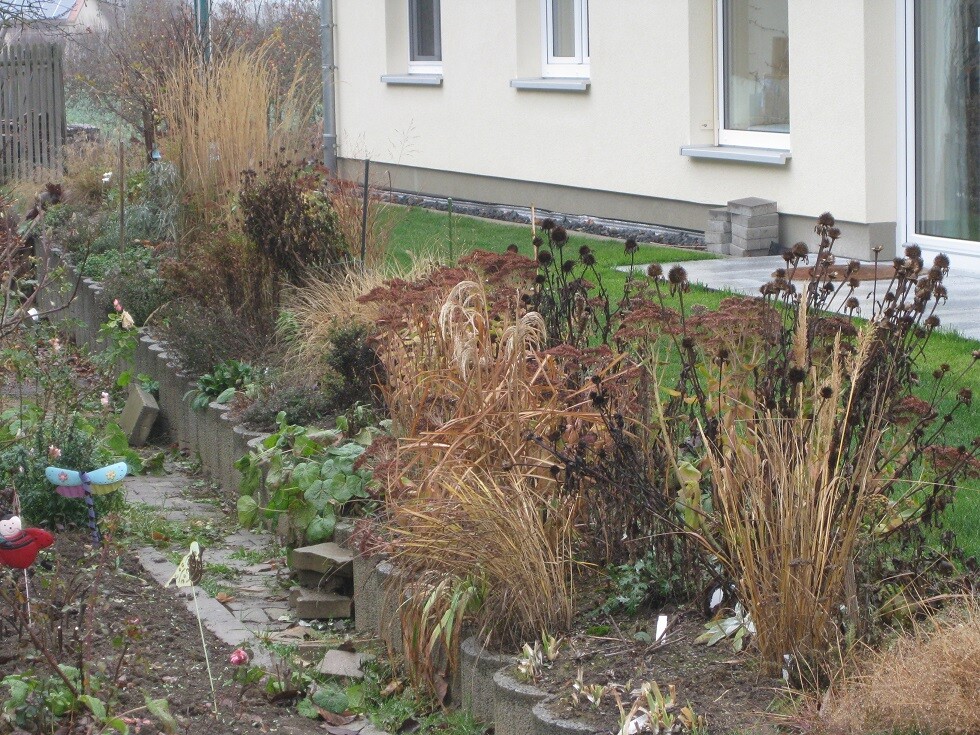 Enjoy your garden planning! Gabriele
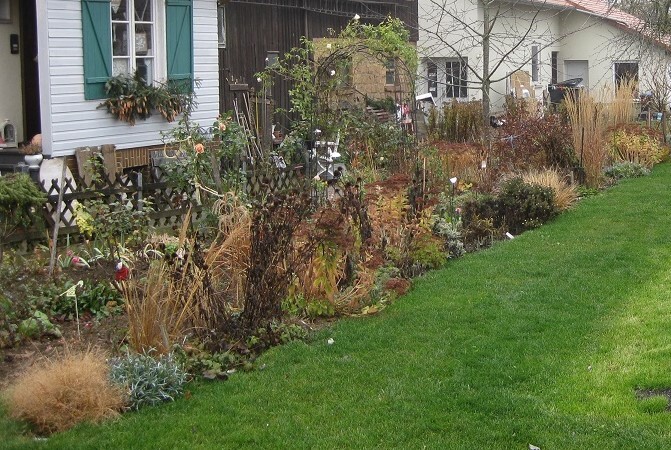
1st photo: north side, 2nd photo: south side, 3rd photo: south side with the planting stone border.
Nordlys schrieb:
Ah, the rural ornamental garden that my wife, who came into the marriage with 42 hectares (105 acres), has cared for since childhood is now called a prairie garden. Well, times change.My grandmother would have called that garden “gespinn.” It has nothing to do with a blooming cottage garden.