
ᐅ Ideas for Outdoor Spaces, Gardens, and Landscaping – Suggestions and Tips?
Created on: 24 Nov 2018 01:34
Z
zizzi
Hello,
I am slowly starting to plan the outdoor area and would appreciate any advice from you. We want to focus first on thorough and essential tasks, such as:
1. Connecting the wastewater system + inspection chamber
2. Pipes for rainwater + infiltration system + inspection and flushing chamber
3. Transporting the topsoil as excess excavated soil
4. Dimpled membrane (dimpled sheet membrane?). Here I have a question about this topic.
I want to do the rest myself. Only for the paving work will I hire an experienced professional.
5. Gravel for paved areas
6. Paving work
7. Garden soil, leveling, lawn, flower beds
8. Enclosure, fence, gate…
The photos show the current status of the house, and on the floor plan I’ve drawn my initial ideas for the garden and paved areas.
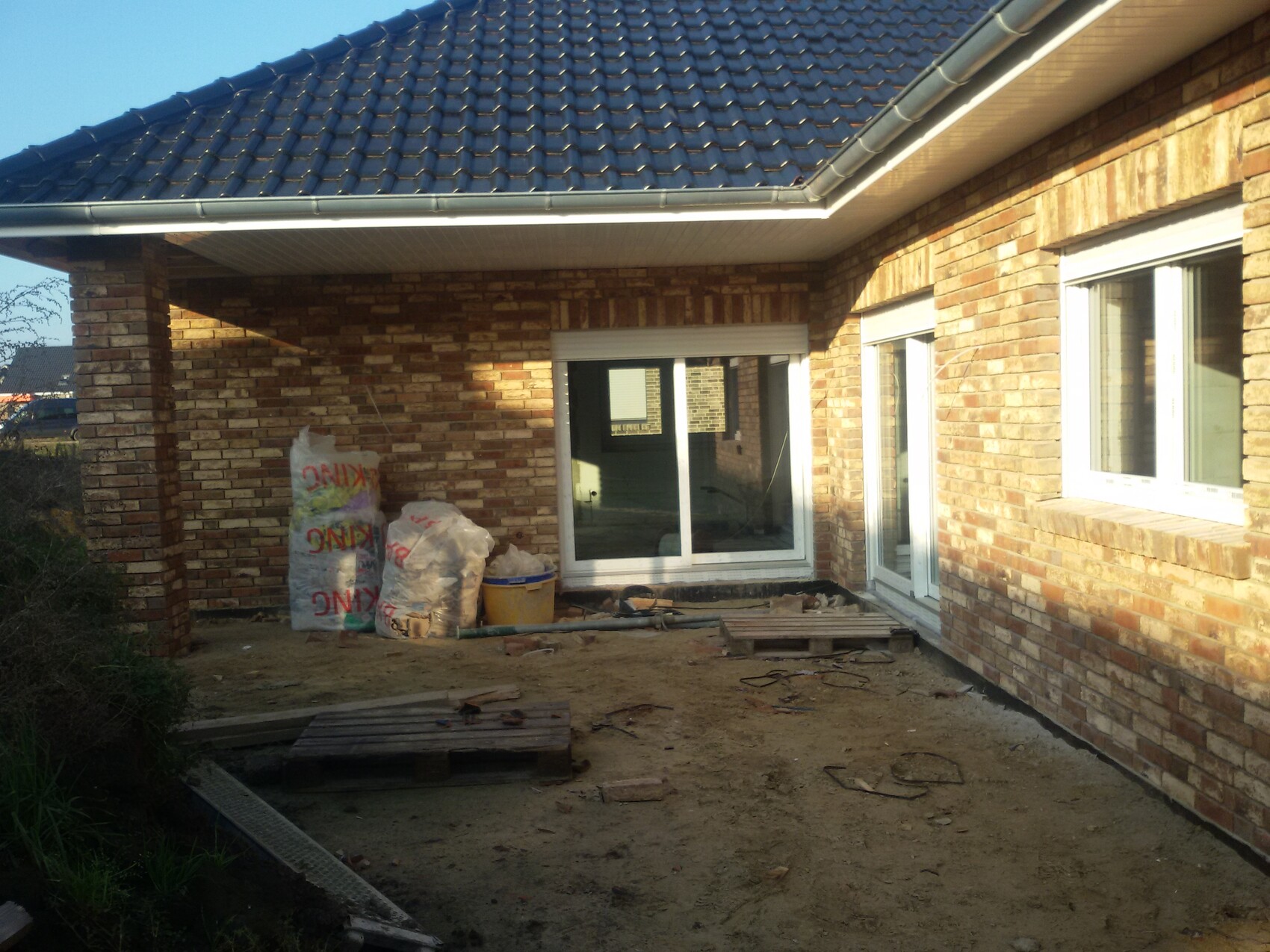
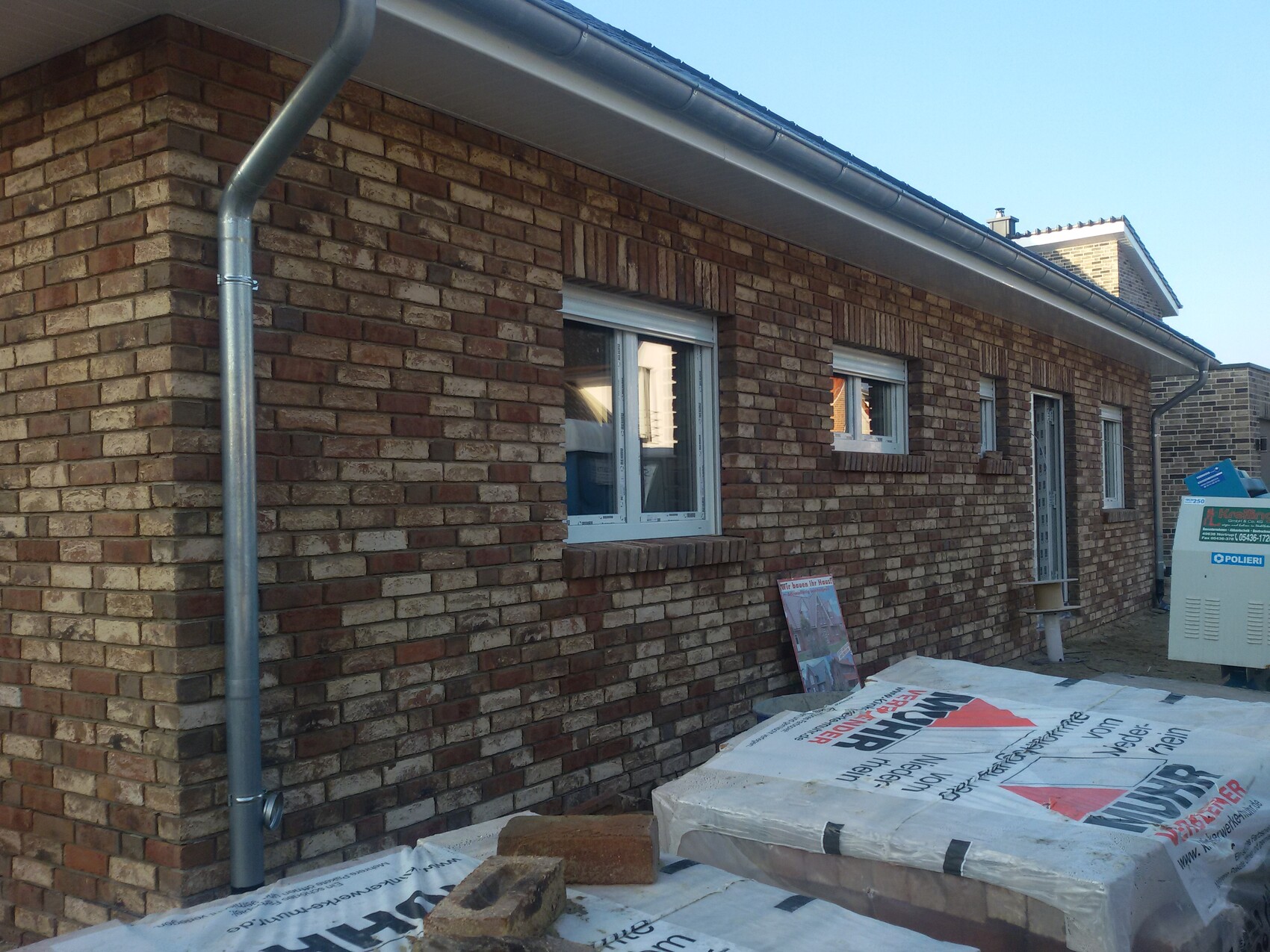
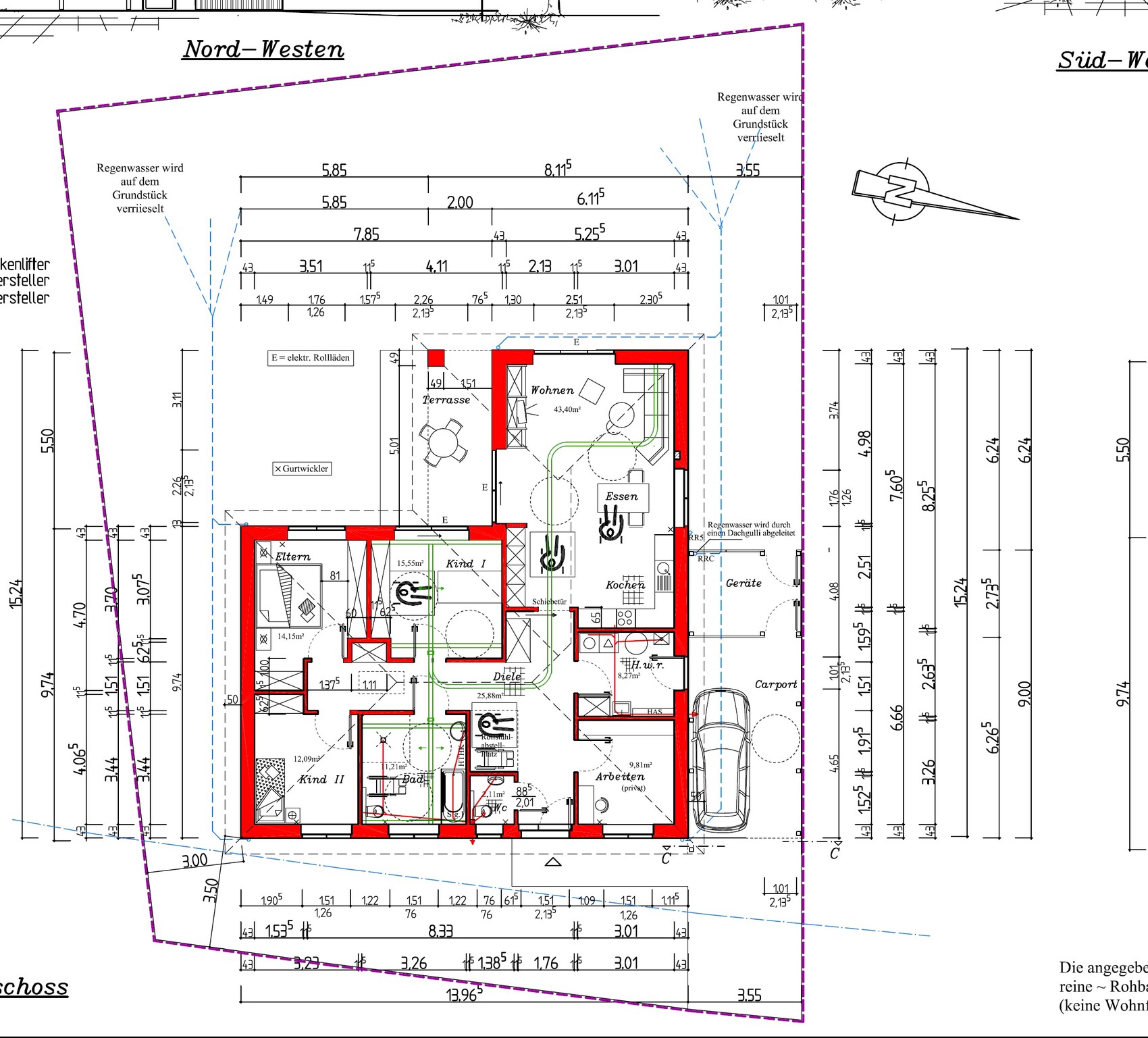
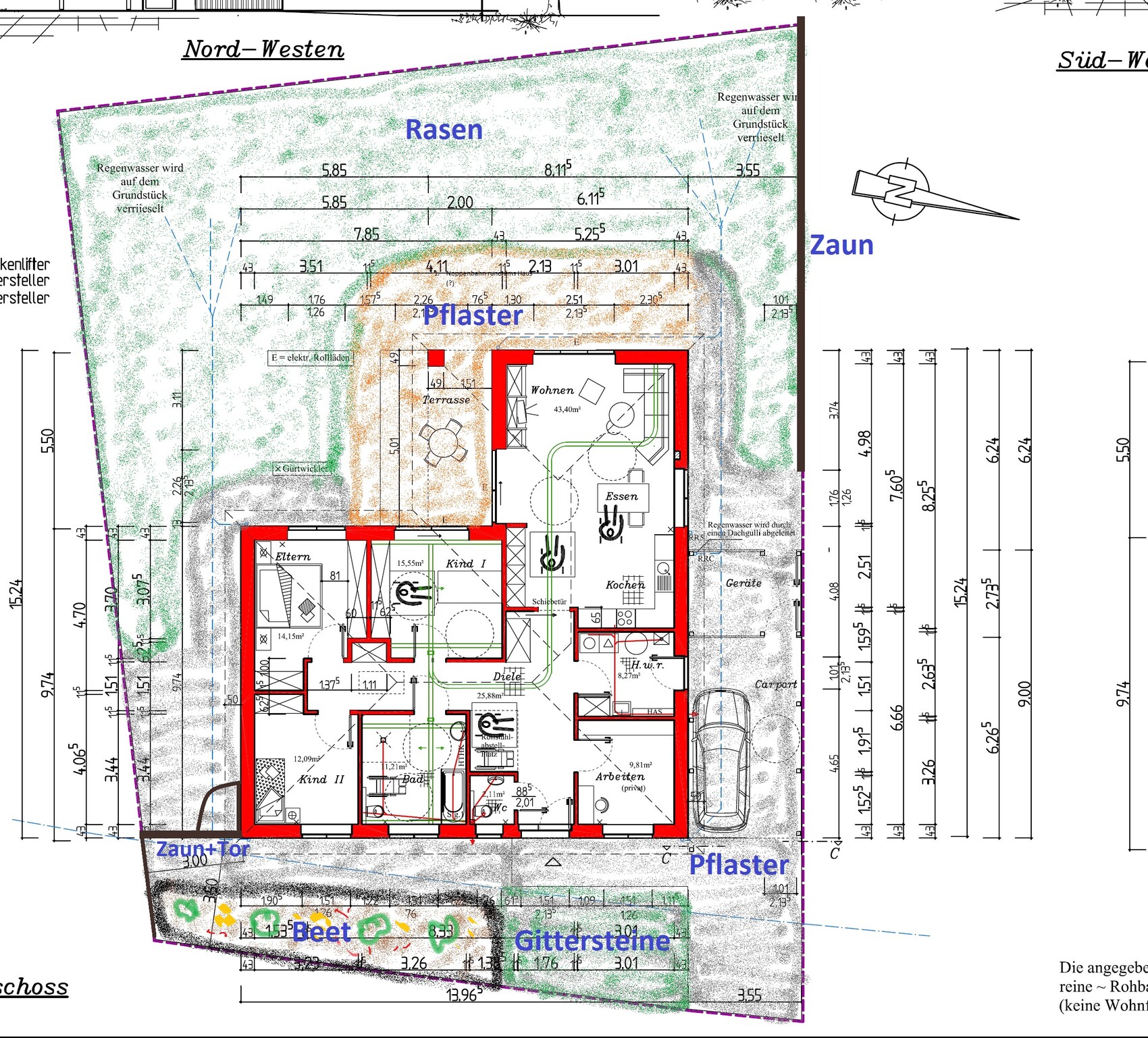
Around the house I plan to have 1.5 m (5 feet) of paving. On the right side (behind the storage room) and the left side of the house, I have planned slightly larger paved areas for storage, e.g., for bicycles, trash bins, etc. In front of the main entrance, I want to use grid paving or paving stones as an additional parking option.
What is your opinion on this plan? Suggestions or improvements? Of course, some things like a sandbox, raised herb beds, etc., will be figured out over time to find the best locations.
Best regards
I am slowly starting to plan the outdoor area and would appreciate any advice from you. We want to focus first on thorough and essential tasks, such as:
1. Connecting the wastewater system + inspection chamber
2. Pipes for rainwater + infiltration system + inspection and flushing chamber
3. Transporting the topsoil as excess excavated soil
4. Dimpled membrane (dimpled sheet membrane?). Here I have a question about this topic.
I want to do the rest myself. Only for the paving work will I hire an experienced professional.
5. Gravel for paved areas
6. Paving work
7. Garden soil, leveling, lawn, flower beds
8. Enclosure, fence, gate…
The photos show the current status of the house, and on the floor plan I’ve drawn my initial ideas for the garden and paved areas.
Around the house I plan to have 1.5 m (5 feet) of paving. On the right side (behind the storage room) and the left side of the house, I have planned slightly larger paved areas for storage, e.g., for bicycles, trash bins, etc. In front of the main entrance, I want to use grid paving or paving stones as an additional parking option.
What is your opinion on this plan? Suggestions or improvements? Of course, some things like a sandbox, raised herb beds, etc., will be figured out over time to find the best locations.
Best regards
Wickie schrieb:
“Low-maintenance” always sounds so negative when talking about gardens. Everyone wants to be close to nature, but not right outside their own door. That’s when paving stones go in, sections get fenced off with welded wire panels, and a few cemetery-style trees are added. Then everyone wonders about the decline of insects and bees.
Every garden requires care, whether it has gravel (in my experience, often even more) or thoughtful planting.
I’m always glad to see a shift in mindset among cities and communities, where property owners are being encouraged through building regulations / planning permissions to include certain types of planting. This also relates to urban heat increase and other issues. Considering the many plans for new developments, this change was long overdue. That’s just my opinion! There’s a page on Facebook called “Save the Front Yard,” where you can see the horrors of supposedly low-maintenance rock gardens up close.
You probably have the added challenge of a wheelchair-accessible garden. I didn’t know that. Still, you can design such a garden to be close to nature!
The coneflower you like is a great start.” In general, I agree with you.
“Low-maintenance” is mostly due to lack of time, which is my situation at the moment. How things will develop later, I don’t know, but I hope to have more time for myself, my family, and the GARDEN in the future. It’s never too late to plant a hedge in front of the fence. I will have a fence anyway (depending on the situation), since I don’t want to watch the neighbor’s dog or cat crossing into the garden while my son is outside, even though he can’t protect himself against a fly.
Rock gardens are also not my thing. They’re becoming more common now because they are considered low-maintenance and modern-looking (again, mostly due to lack of time). But I think they’re not truly low-maintenance—just a bit of leaf litter or debris looks very bad. Ultimately, everyone has to decide for themselves.
If accessibility were not the priority for us and if I had a larger garden, I would prefer a natural garden. I’ve experienced that kind of garden before—I have had bees, chickens, and a dog; raised turtles and leeches; and insects and birds always felt comfortable there. You can work endlessly in such a garden, or you can simply leave it as it is—a natural garden. Especially children in such gardens experience things nowadays seen only on TV, and they occupy themselves naturally.
The fence protects against dogs, but only keeps out cats if there is no vegetation on either side. I would remove some of the plants from the so-called bird protection hedges. Some of them are too thorny for animals and cats.
First, make a plan of what you want and where you will place it in your garden. I don’t think much will be left.
I wouldn’t consider rock gardens low-maintenance. They are easy to care for, yes, but the stones need to be kept clean. You can’t just quickly sweep over them. I find ground cover plants better for that.
First, make a plan of what you want and where you will place it in your garden. I don’t think much will be left.
I wouldn’t consider rock gardens low-maintenance. They are easy to care for, yes, but the stones need to be kept clean. You can’t just quickly sweep over them. I find ground cover plants better for that.
F
fach1werk25 Nov 2018 22:34I can only share positive experiences with the prairie garden:
Our basic conditions:
Clay soil but unused, rectangular plot, with a well-defined prairie bed strip about 1 meter (3 feet) wide on two sides.
- Only in the first year did I have to weed regularly. By the second year, the planting largely suppressed the weeds on its own.
- After three weeks without any maintenance, the beds do not show any noticeable signs of neglect.
- We now water the beds very rarely, perhaps once every three weeks during last summer. The lawn required much more water.
- Even in the first year, the prairie beds looked great—not sparse or weak. In the second spring, we actually had to prune some plants quite a bit.
- I had planned for a dry lawn, which grows slowly and only needs mowing 2-3 times during the summer. It tends to look a bit patchy, though. During the garden design phase, this was replaced by a conventional sports lawn. Now, 90% of the garden work goes into lawn care. It looks good, but there was potential to save a lot of work here.
Enjoy your garden!
Gabriele
Our basic conditions:
Clay soil but unused, rectangular plot, with a well-defined prairie bed strip about 1 meter (3 feet) wide on two sides.
- Only in the first year did I have to weed regularly. By the second year, the planting largely suppressed the weeds on its own.
- After three weeks without any maintenance, the beds do not show any noticeable signs of neglect.
- We now water the beds very rarely, perhaps once every three weeks during last summer. The lawn required much more water.
- Even in the first year, the prairie beds looked great—not sparse or weak. In the second spring, we actually had to prune some plants quite a bit.
- I had planned for a dry lawn, which grows slowly and only needs mowing 2-3 times during the summer. It tends to look a bit patchy, though. During the garden design phase, this was replaced by a conventional sports lawn. Now, 90% of the garden work goes into lawn care. It looks good, but there was potential to save a lot of work here.
Enjoy your garden!
Gabriele
Similar topics