
By installing a cistern with an emergency overflow connected to the sewage system, we can reduce the rainwater charge to 10% of the usual estimated amount. If the overflow is directed to infiltration, it can even be reduced to 0%. This would save us about €250-300 per year, which is why we are interested in installing a cistern.
Unfortunately, there are many different suppliers, options, and prices available here, so my question is: What did you pay attention to when purchasing, what can you recommend or not recommend, and what were your prices?
Our key requirements:
- We would like a capacity of around 6000-7000 liters (1600-1850 gallons), as we have a large garden with many beds.
- A convenient withdrawal point is essential for us; preferably a pump with good pressure and a type of faucet that can be mounted at waist height.
- So far, I am leaning toward a concrete cistern.
Unfortunately, there are many different suppliers, options, and prices available here, so my question is: What did you pay attention to when purchasing, what can you recommend or not recommend, and what were your prices?
Our key requirements:
- We would like a capacity of around 6000-7000 liters (1600-1850 gallons), as we have a large garden with many beds.
- A convenient withdrawal point is essential for us; preferably a pump with good pressure and a type of faucet that can be mounted at waist height.
- So far, I am leaning toward a concrete cistern.
Hello Changeling
2,500 euros for the cistern including transport is a good price.
But 500 euros for a "calmed inflow" is almost robbery.
The few meters of KG pipes and the inflow should not cost more than 50 euros. I would install that part myself. Check online—there are good pictures showing how to do it.
Steven
2,500 euros for the cistern including transport is a good price.
But 500 euros for a "calmed inflow" is almost robbery.
The few meters of KG pipes and the inflow should not cost more than 50 euros. I would install that part myself. Check online—there are good pictures showing how to do it.
Steven
C
Changeling24 Aug 2018 10:09Hi @Steven, sorry for the confusion. By "full price," I meant the total comes to €2500; the additional cost for the inflow is €115. This is the difference in price between the "Garden" and "Black" versions of the rainwater collectors, depending on the size (the price is shown on the website).
I would then choose the version with the controlled inflow and connect the overflow to a drainage pipe (how long?), which I will lay in the garden. This way, I can completely avoid stormwater fees. Thank you!
I would then choose the version with the controlled inflow and connect the overflow to a drainage pipe (how long?), which I will lay in the garden. This way, I can completely avoid stormwater fees. Thank you!
Changeling schrieb:
Hi @Steven, sorry for the confusion. By "fully covering the price," I meant reaching the 2500€ (about $2700) mark; the extra cost for the inlet is 115€ (about $125). That’s the difference in size between the "Garden" and "Black" variants of the rainwater collectors (prices are shown on the website).
In that case, I would choose the variant with the flow control inlet and connect the overflow to a drainage pipe (how long?), which I would install in the garden. That way, I would completely avoid the stormwater fees. Thanks!Two years ago, I ordered a cistern from the rainwater collectors. The entire ordering process, delivery, points of contact, etc., were very good. What was not good was the slot filter.
Based on the information on the website, I believe the filter installed in my system is the same one. It consists of closely spaced metal slats set at an angle, which, according to the promotional video, clean themselves automatically. The gaps are so narrow, and this self-cleaning function is only realistically effective under laboratory conditions with a continuous water flow.
In short, the filter is really rubbish. It even clogs with pollen and causes all the rainwater to just flow away into the sewer system. As soon as the water flow stops due to no rain, dirt settles in the indentations, and the water seeps through very slowly, causing the dirt to stick and crust onto the slats.
I have now removed the filter and simply let the water flow through the flow control inlet into the cistern. I have only installed mesh guards on the gutters to prevent coarse leaves and rodents or similar animals from entering.
If I were to do it again, I would choose the simplest filter version or none at all, and instead opt for the largest possible volume. A certain amount of dirt and sediment in a cistern can even be beneficial, as microorganisms live there that improve water quality. Of course, this only applies if the water is used exclusively for the garden.
In my opinion, a cistern can never be too large, because in the worst case, the water simply does not overflow. If fresh water does not flow in due to lack of rainfall, resulting in oxygen depletion, this also happens with a smaller cistern. Some users online have solved this by installing an aquarium pump to aerate the cistern water and prevent it from turning stagnant.
For the pump, I use the submersible pressure pump GARDENA 6000/5 automatic, which has been in the cistern year-round (already through two winters), and I am very satisfied with it. It automatically starts when water is drawn (pressure drops in the line) and stops again when the drawing ends.
C
Changeling25 Oct 2018 18:29So, the rainwater tank project is finished. In the end, we installed a 9100-liter (2400-gallon) tank, the Blue model from the rainwater collectors, featuring a filter basket and a slow inlet. Based on the experience shared by @jfkgerd, I will keep a close eye on the filter.
The rainwater collectors act mainly as intermediaries for the tank: we received a branded tank from Mall! And even cheaper than buying directly from Mall (€2005 including delivery). The local concrete plant couldn’t compete with their prices either.
We will buy the pump separately since the rainwater collectors charge significantly more than usual online retailers. It will cost around €300, but that should get us a good model (not decided yet).
For the excavation, we paid an additional €2000 (including adding sand and partially removing the excavated material), and we also had an infiltration trench dug by an excavator at the same time. We filled the trench with 30 meters (100 feet) of drain pipe (from a hardware store, €60), 16 tons of drainage gravel (16/32 mm, €400 including delivery), and wrapped it with suitable geotextile fabric (€70).
Overall, the project turned out to be quite expensive and will only pay off after 15–20 years, depending on how rainwater fees develop. However, we enjoy the small luxury of an almost always full water tank and are quite glad we did this, especially considering the prospect of increasingly warm and dry summers.
The rainwater collectors act mainly as intermediaries for the tank: we received a branded tank from Mall! And even cheaper than buying directly from Mall (€2005 including delivery). The local concrete plant couldn’t compete with their prices either.
We will buy the pump separately since the rainwater collectors charge significantly more than usual online retailers. It will cost around €300, but that should get us a good model (not decided yet).
For the excavation, we paid an additional €2000 (including adding sand and partially removing the excavated material), and we also had an infiltration trench dug by an excavator at the same time. We filled the trench with 30 meters (100 feet) of drain pipe (from a hardware store, €60), 16 tons of drainage gravel (16/32 mm, €400 including delivery), and wrapped it with suitable geotextile fabric (€70).
Overall, the project turned out to be quite expensive and will only pay off after 15–20 years, depending on how rainwater fees develop. However, we enjoy the small luxury of an almost always full water tank and are quite glad we did this, especially considering the prospect of increasingly warm and dry summers.

@Changeling
Can you now share a brief experience report about your Mall cistern?
I’m currently in the decision-making phase and feel completely overwhelmed. Mall will be the choice because my excavation contractor gets very good prices there (compared to the online price). But the filter issue is driving me crazy… We only want to use it to irrigate the garden, so no domestic water system.
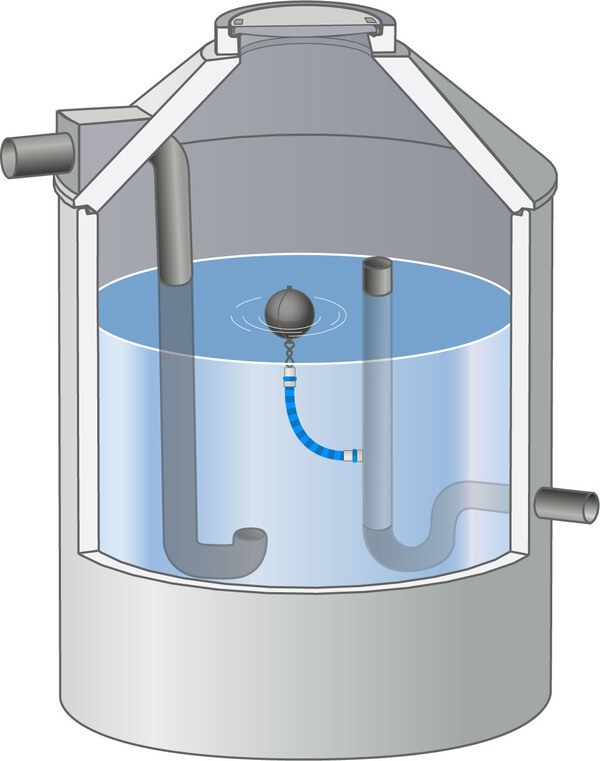
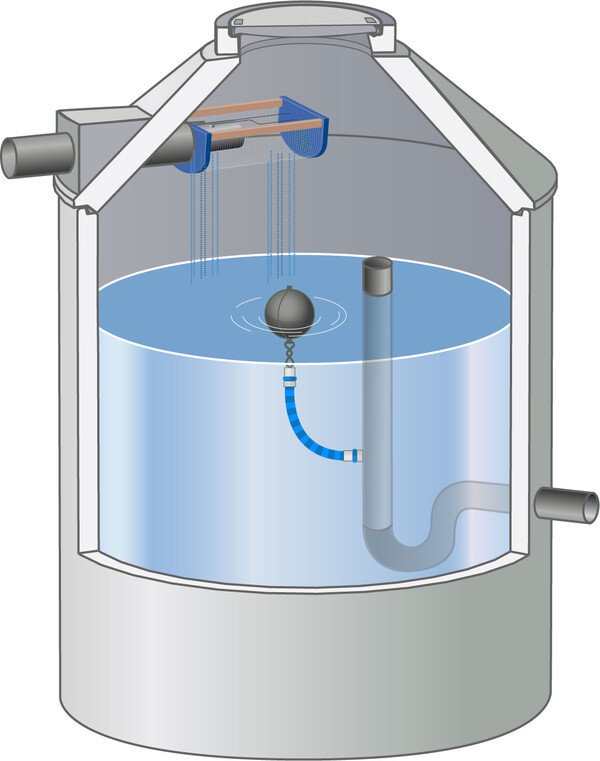
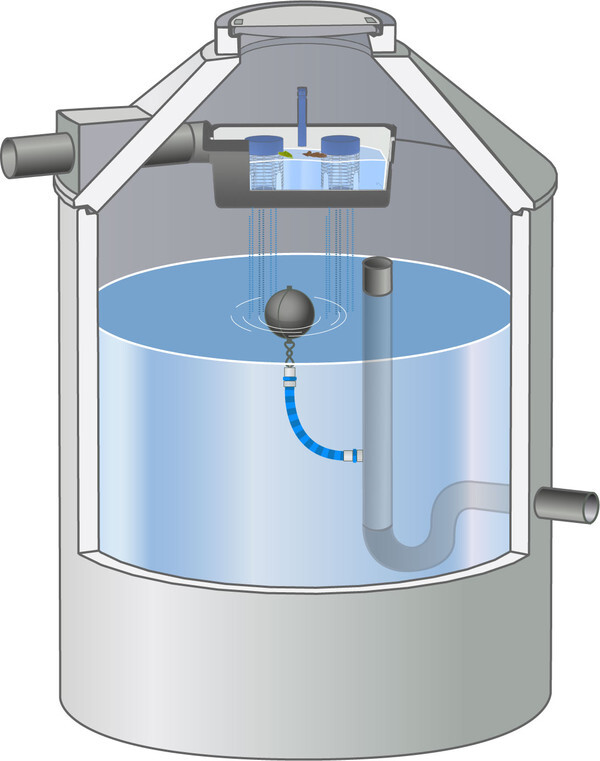
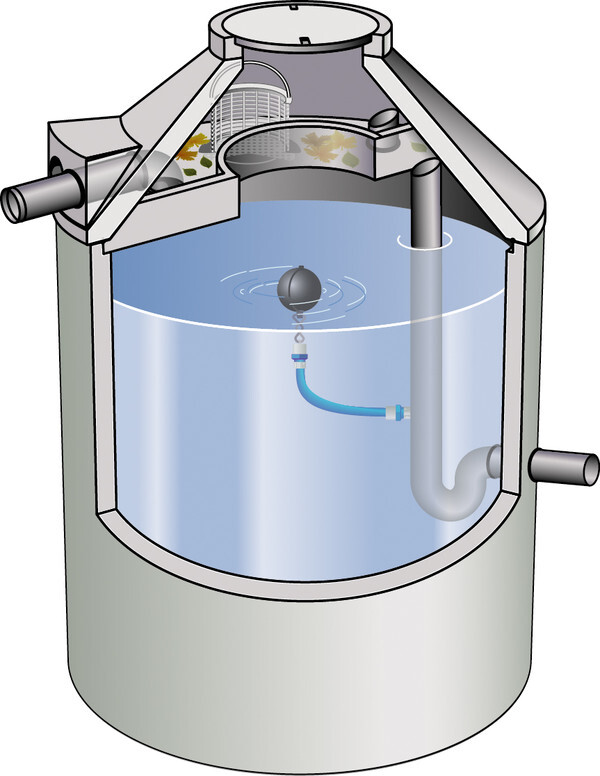
Now, there are four different types of filtering for a concrete cistern. Unfortunately, the Mall catalog doesn’t explain it well enough for me, so I’ll list them:
1. The simplest and cheapest option.
2. A basic filter (1.0mm fine).
3. With slot screen filter (0.8mm fine).
4. With filter basket (0.4mm fine).
Here is also a screenshot for comparison:
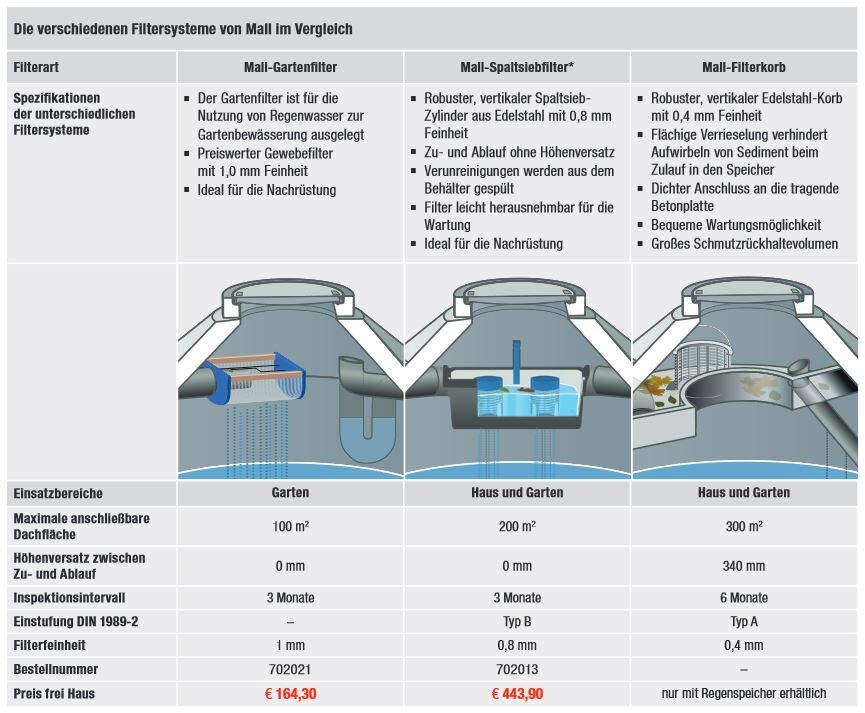
I’ve read repeatedly that the simplest option actually has the advantage of adding oxygen to the water. So why are the other filters all top-fed and also more expensive?
Can someone clarify this?
I see the advantage of the filter basket in that the inspection interval is supposed to be twice as long, and since I’m not getting younger, maybe that makes it advisable.
I would appreciate any advice or experiences from you all.
(It should be mentioned that the pictures show retention cisterns because we have to do that, but the filtering and pricing are completely analogous to regular cisterns.)
Regards
Can you now share a brief experience report about your Mall cistern?
I’m currently in the decision-making phase and feel completely overwhelmed. Mall will be the choice because my excavation contractor gets very good prices there (compared to the online price). But the filter issue is driving me crazy… We only want to use it to irrigate the garden, so no domestic water system.
Now, there are four different types of filtering for a concrete cistern. Unfortunately, the Mall catalog doesn’t explain it well enough for me, so I’ll list them:
1. The simplest and cheapest option.
2. A basic filter (1.0mm fine).
3. With slot screen filter (0.8mm fine).
4. With filter basket (0.4mm fine).
Here is also a screenshot for comparison:
I’ve read repeatedly that the simplest option actually has the advantage of adding oxygen to the water. So why are the other filters all top-fed and also more expensive?
Can someone clarify this?
I see the advantage of the filter basket in that the inspection interval is supposed to be twice as long, and since I’m not getting younger, maybe that makes it advisable.
I would appreciate any advice or experiences from you all.
(It should be mentioned that the pictures show retention cisterns because we have to do that, but the filtering and pricing are completely analogous to regular cisterns.)
Regards
Similar topics