
ᐅ 160 m² single-family house with timber frame construction on a north-facing slope, including a basement
Created on: 26 Aug 2018 17:03
L
Lbx
Hello,
below you will find our (almost) final floor plan. Only a few adjustments and changes to the windows are still being made. We would appreciate your feedback.
Development Plan / Restrictions
Construction according to Paragraph 34 of the Building Code. Neighboring buildings are 1.5 to 2 stories with pitched roofs.
Plot Size
3000m2 (approximately 0.74 acres), building area around 600m2 (0.15 acres) along the street
Slope
Approximately 2m (6.6 feet) diagonal incline where the house will be located, rising from southwest to northeast
Orientation
South (uphill side)
Client Requirements: Style, Roof Type, Building Type
Single-family house, pitched roof (most cost-effective), rather open design
Basement, Floors
Full basement + 2 floors
Number of Occupants, Age
2 adults + 2 children (planned)
Room Requirements on Ground Floor and Upper Floor
Open kitchen + dining area + living room, pantry, study, guest WC, parents’ area (bedroom, walk-in closet, bathroom), children’s area (2 bedrooms + bathroom), garage, utility room, storage room
Office: Family use or home office?
Family use + emergency children’s bedroom
Overnight Guests per Year
1-2
Open or Closed Architecture
Rather open
Conservative or Modern Building Style
Rather modern
Open Kitchen, Kitchen Island
Open kitchen, island not necessary
Number of Dining Seats
6
Fireplace
No
Music / Stereo Wall
5.1 surround, approx. 3 meters (10 feet) for TV, etc.
Balcony, Roof Terrace
No
Garage, Carport
In the basement
House Design
Who Created the Plan:
Floor plan from a construction company, modified according to our wishes by the planner of a prefab house company (structural engineer)
What Do You Like Especially? Why?
- Separate parents’ area
- Open design with living room accessible from two sides
- Staircase on the north side, where the street is
- Garage inside the house
- Large windows facing south
- Living room + kitchen + dining areas facing south
- Open ridge ceiling on the upper floor
What Do You Dislike? Why?
- Low, small windows on the upper floor due to the 1.8m (5.9 feet) knee wall height – we will probably raise this to 2.10m (6.9 feet)
- Boring exterior appearance
- Small study room, but currently the best compromise for us
- Kitchen windows not floor-to-ceiling, will be changed
- Possibly too few windows
Cost Estimate from Architect / Planner:
Approximately 400,000 Euro turnkey, including photovoltaic system and natural fiber insulation (ecological) fixed-price offer including basement, electric garage door, etc.
Laminate flooring
External roller blinds in living/kitchen/dining areas
No controlled mechanical ventilation.
No waterproof concrete basement (no “white tank” system).
Personal Price Limit for the House, Including Equipment:
House including all ancillary costs 470,000 Euro
Preferred Heating Technology:
Air-to-water heat pump + photovoltaic system
If You Had to Cut Back, Which Details / Extensions Could You Forgo:
Basement, but due to the slope it does not make much economic sense. Otherwise, we have already cut back as much as we can imagine.
Why Does the Design Look Like It Does Now?
We liked the design from the start, especially the south orientation of all main rooms suits the plot very well.
What Is the Most Important / Basic Question About the Floor Plan in 130 Characters or Less?
1. From what knee wall height do windows including rolling shutters below the knee wall really make sense? At 1.8m (5.9 feet) knee wall, windows would be at hip height, which is not a solution for us. For example, in the children’s room, a desk should fit underneath.
2. According to the soil report, we have about 1m (3.3 feet) of soil class 4 and below that soil class 5-6. What costs could be expected for earthworks on a sloped site?
3. Do you think a mechanical ventilation system is essential in a timber frame house? According to two reputable prefab house providers, it is mostly unnecessary and mainly important only for allergy sufferers.
A small note on the attached files: in the Google Maps image, south is at the top and the plot is where the two yellow markers are. In the views, I sketched around a bit unfortunately.
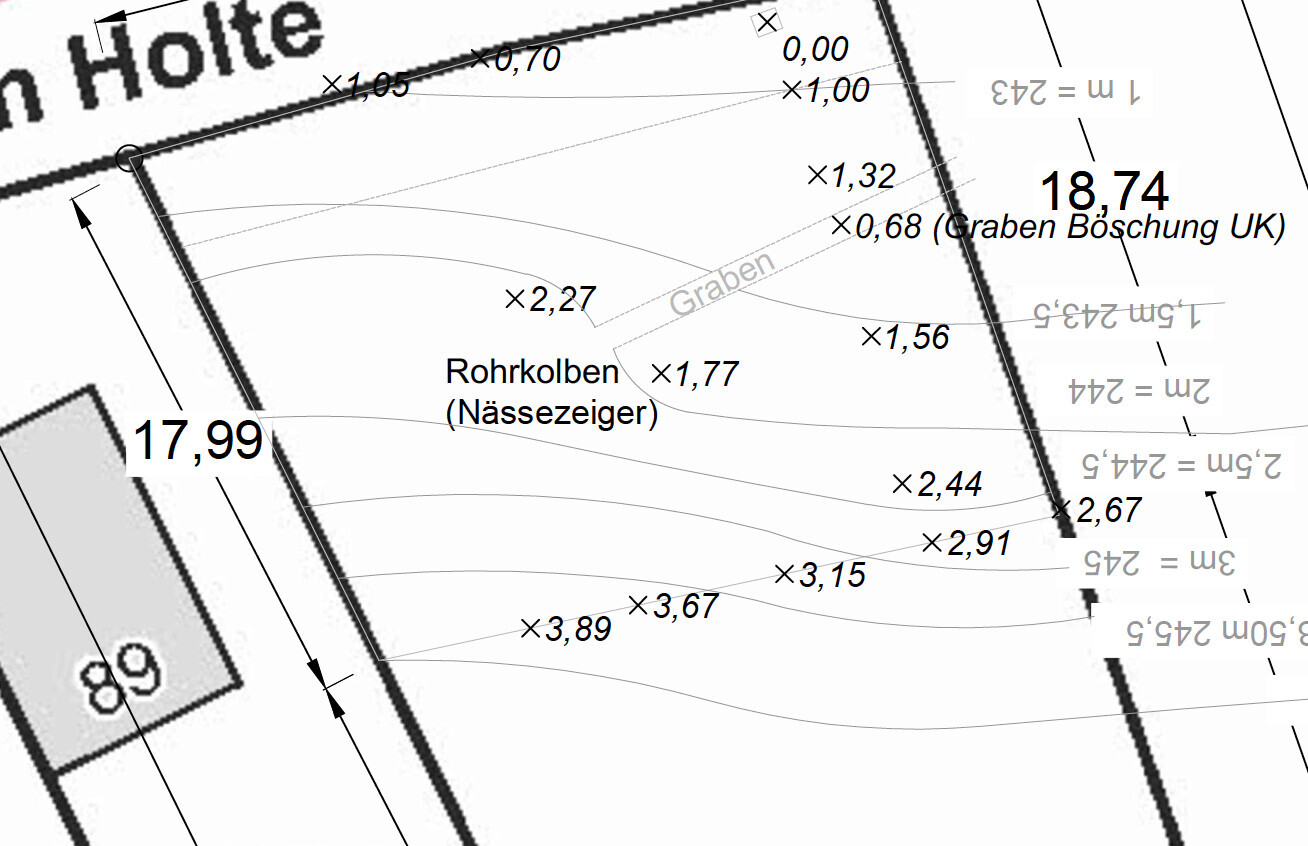
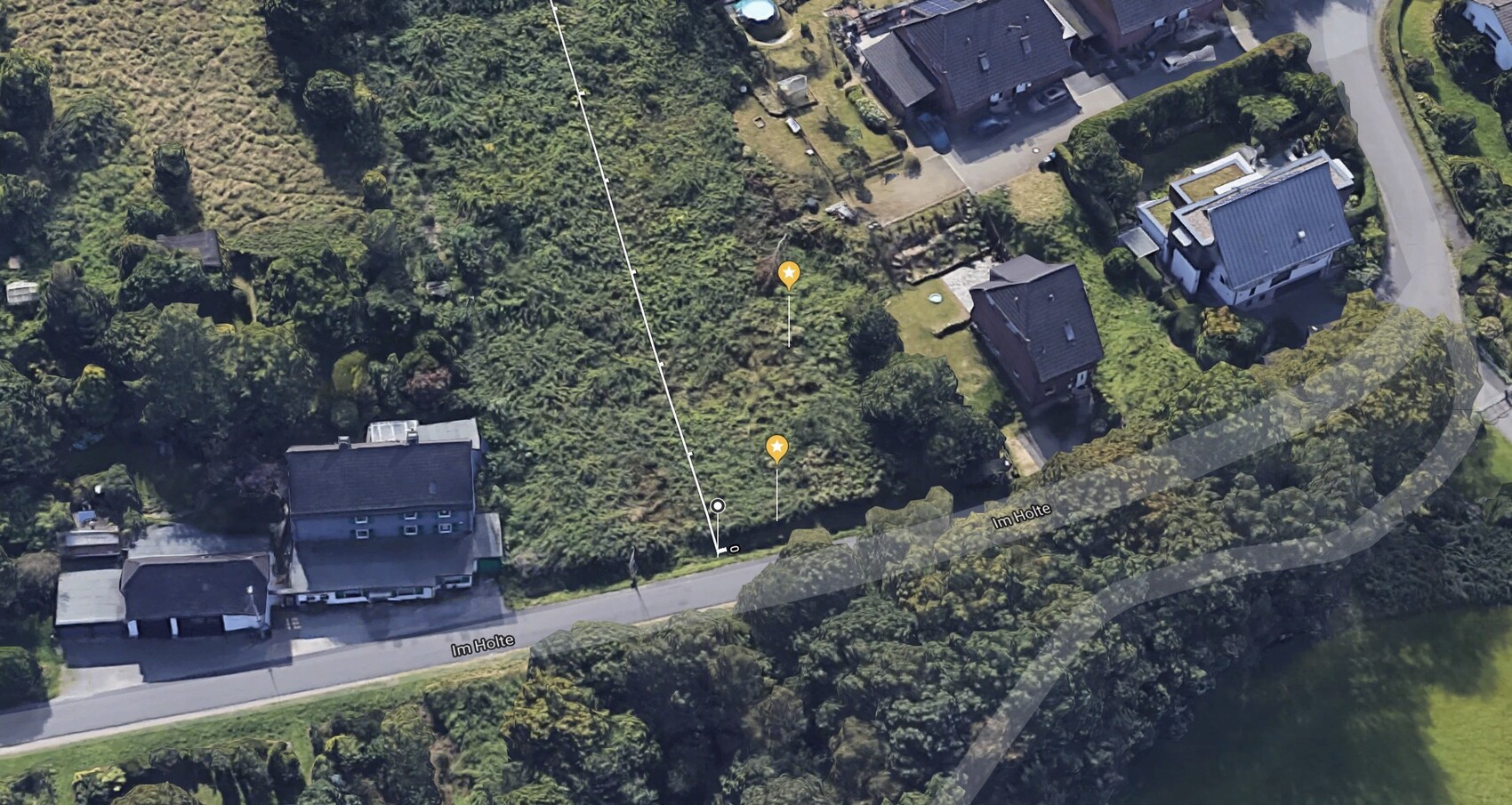
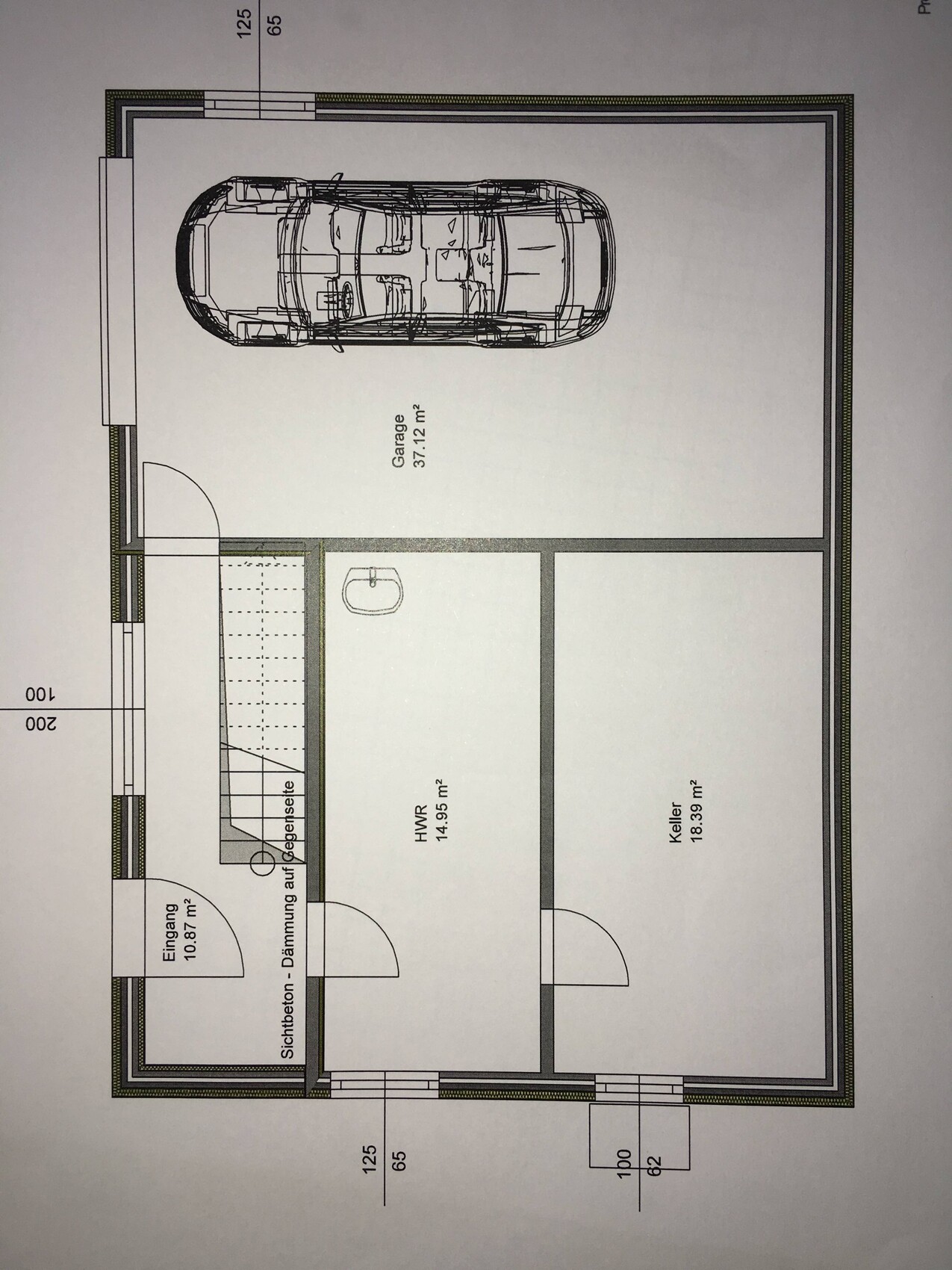
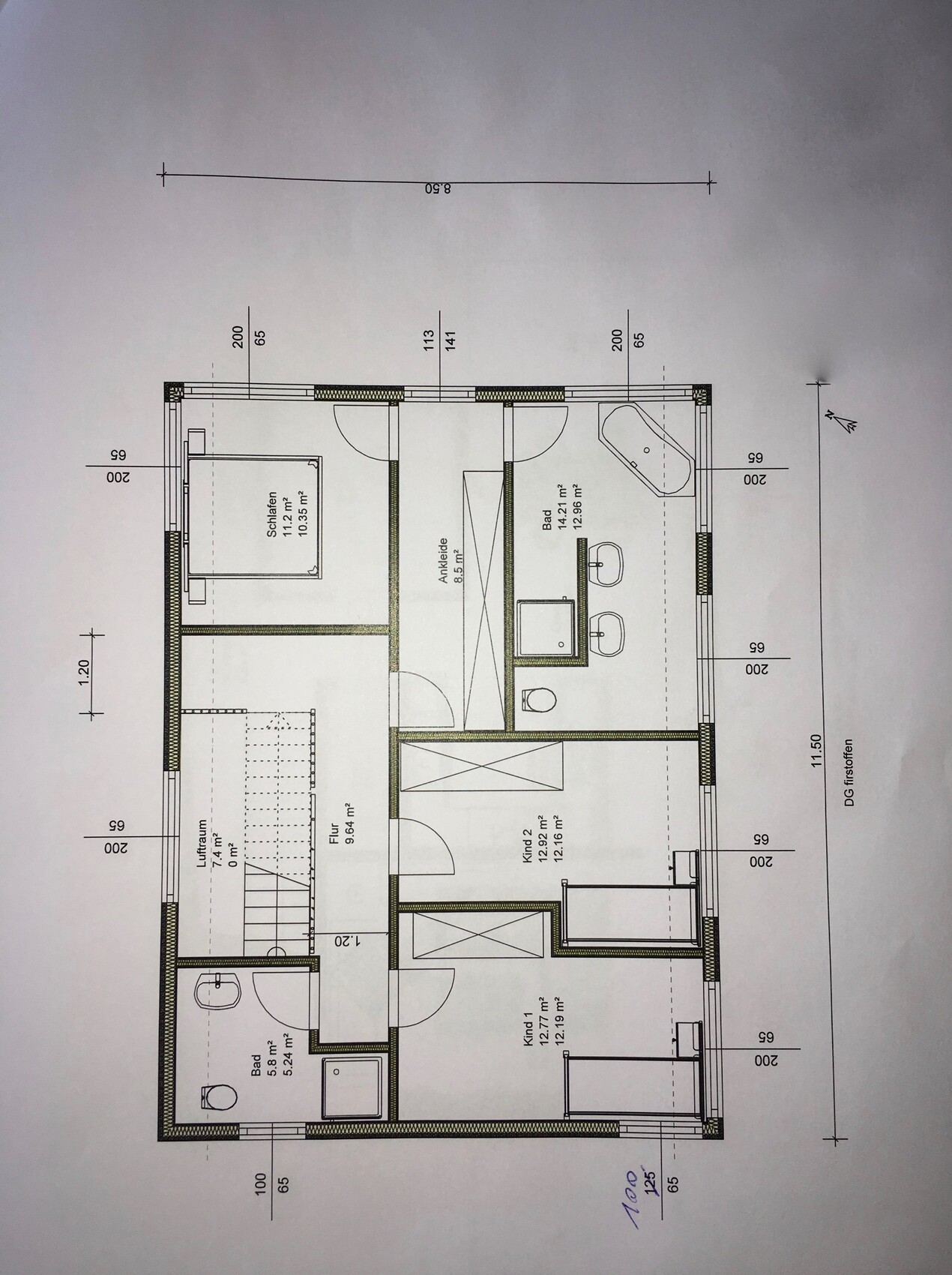
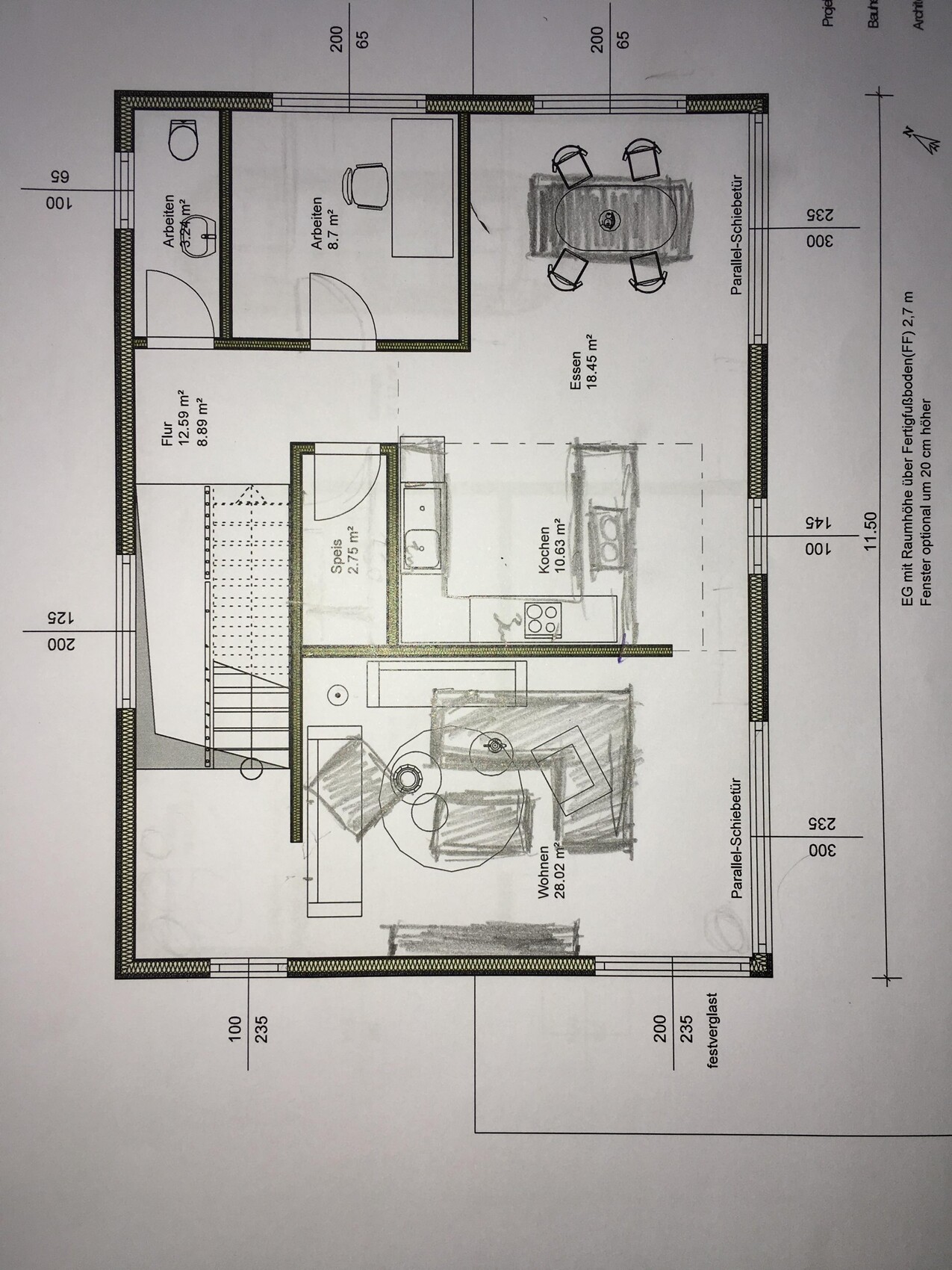
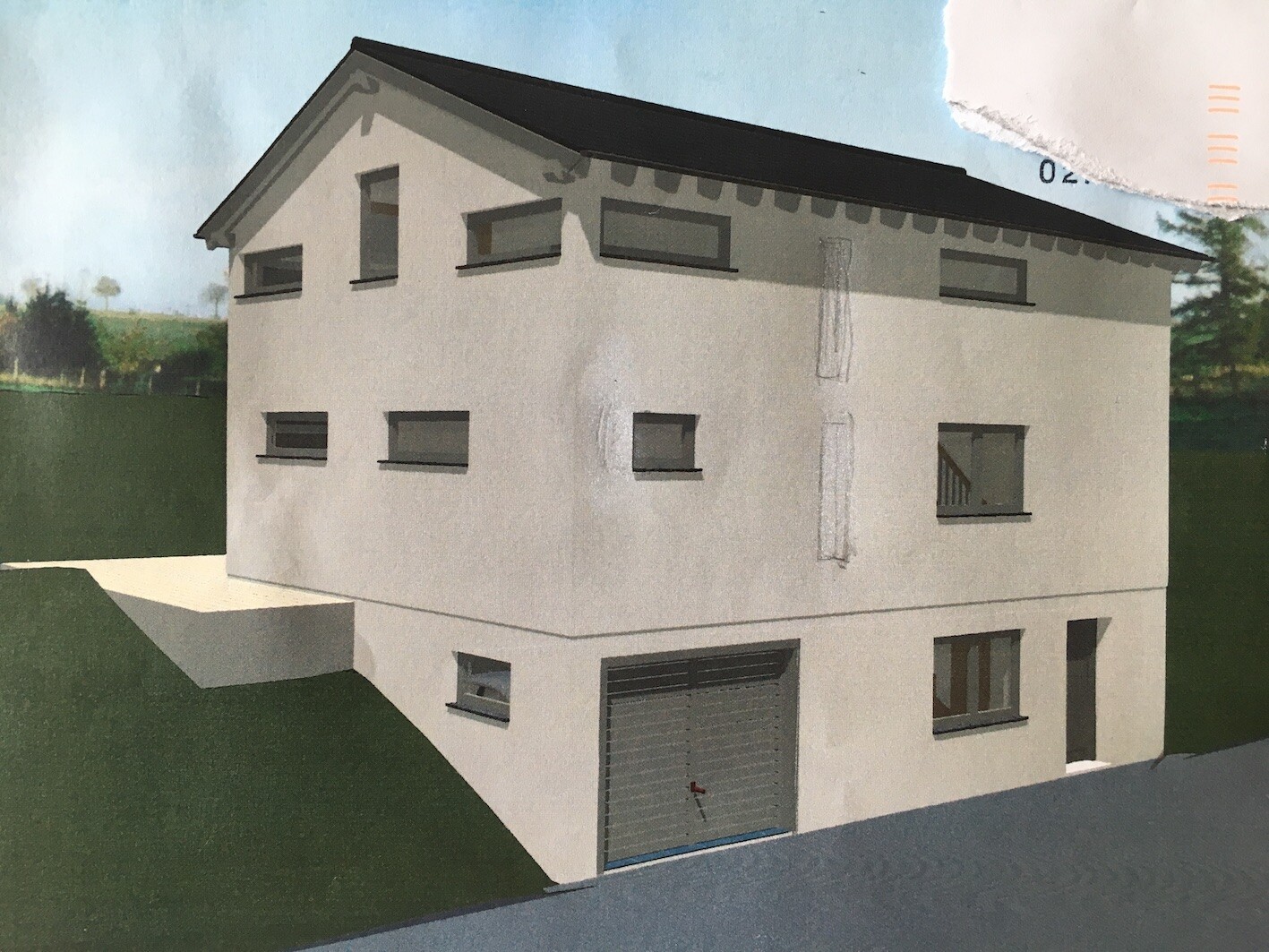
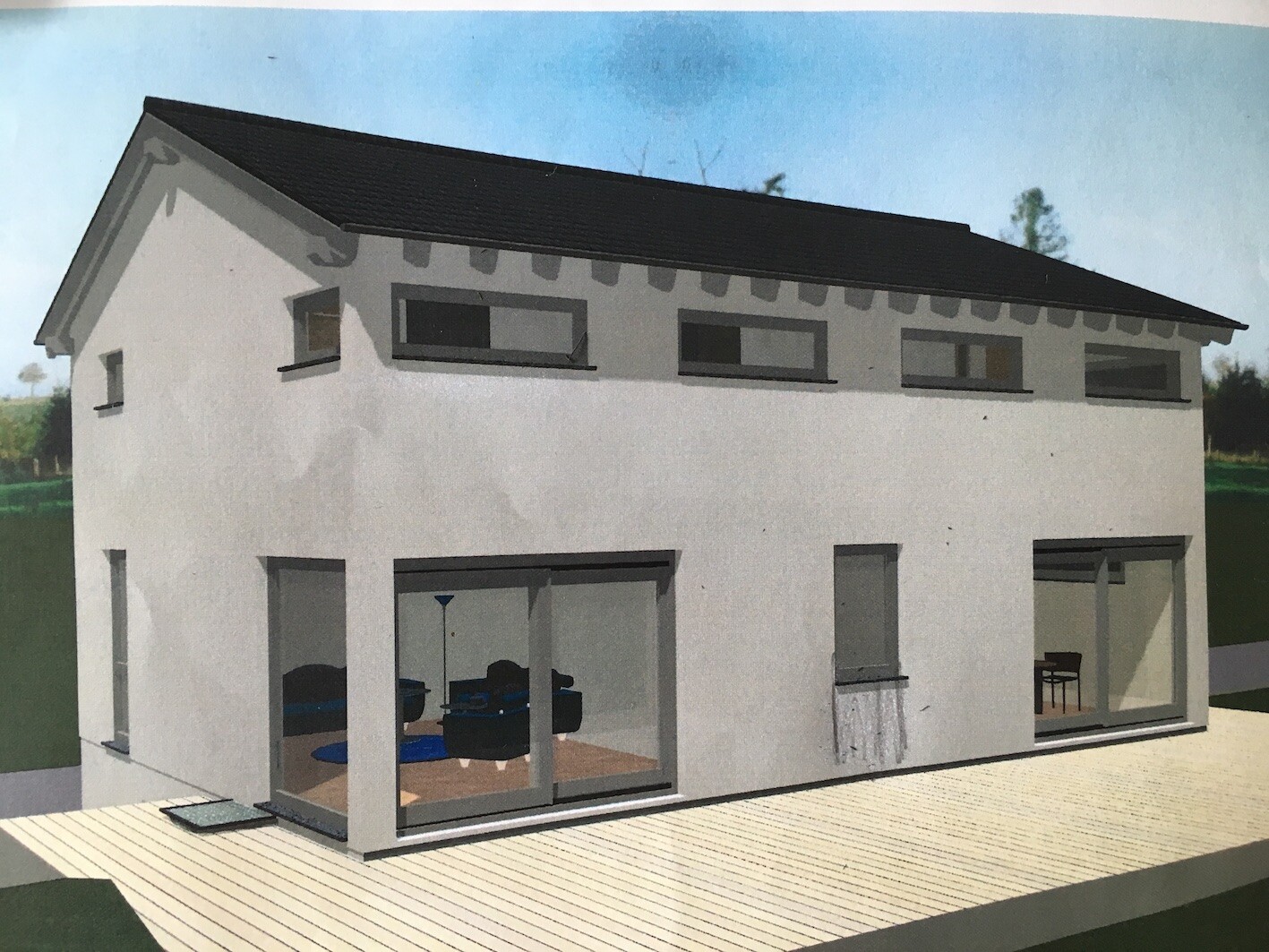
below you will find our (almost) final floor plan. Only a few adjustments and changes to the windows are still being made. We would appreciate your feedback.
Development Plan / Restrictions
Construction according to Paragraph 34 of the Building Code. Neighboring buildings are 1.5 to 2 stories with pitched roofs.
Plot Size
3000m2 (approximately 0.74 acres), building area around 600m2 (0.15 acres) along the street
Slope
Approximately 2m (6.6 feet) diagonal incline where the house will be located, rising from southwest to northeast
Orientation
South (uphill side)
Client Requirements: Style, Roof Type, Building Type
Single-family house, pitched roof (most cost-effective), rather open design
Basement, Floors
Full basement + 2 floors
Number of Occupants, Age
2 adults + 2 children (planned)
Room Requirements on Ground Floor and Upper Floor
Open kitchen + dining area + living room, pantry, study, guest WC, parents’ area (bedroom, walk-in closet, bathroom), children’s area (2 bedrooms + bathroom), garage, utility room, storage room
Office: Family use or home office?
Family use + emergency children’s bedroom
Overnight Guests per Year
1-2
Open or Closed Architecture
Rather open
Conservative or Modern Building Style
Rather modern
Open Kitchen, Kitchen Island
Open kitchen, island not necessary
Number of Dining Seats
6
Fireplace
No
Music / Stereo Wall
5.1 surround, approx. 3 meters (10 feet) for TV, etc.
Balcony, Roof Terrace
No
Garage, Carport
In the basement
House Design
Who Created the Plan:
Floor plan from a construction company, modified according to our wishes by the planner of a prefab house company (structural engineer)
What Do You Like Especially? Why?
- Separate parents’ area
- Open design with living room accessible from two sides
- Staircase on the north side, where the street is
- Garage inside the house
- Large windows facing south
- Living room + kitchen + dining areas facing south
- Open ridge ceiling on the upper floor
What Do You Dislike? Why?
- Low, small windows on the upper floor due to the 1.8m (5.9 feet) knee wall height – we will probably raise this to 2.10m (6.9 feet)
- Boring exterior appearance
- Small study room, but currently the best compromise for us
- Kitchen windows not floor-to-ceiling, will be changed
- Possibly too few windows
Cost Estimate from Architect / Planner:
Approximately 400,000 Euro turnkey, including photovoltaic system and natural fiber insulation (ecological) fixed-price offer including basement, electric garage door, etc.
Laminate flooring
External roller blinds in living/kitchen/dining areas
No controlled mechanical ventilation.
No waterproof concrete basement (no “white tank” system).
Personal Price Limit for the House, Including Equipment:
House including all ancillary costs 470,000 Euro
Preferred Heating Technology:
Air-to-water heat pump + photovoltaic system
If You Had to Cut Back, Which Details / Extensions Could You Forgo:
Basement, but due to the slope it does not make much economic sense. Otherwise, we have already cut back as much as we can imagine.
Why Does the Design Look Like It Does Now?
We liked the design from the start, especially the south orientation of all main rooms suits the plot very well.
What Is the Most Important / Basic Question About the Floor Plan in 130 Characters or Less?
1. From what knee wall height do windows including rolling shutters below the knee wall really make sense? At 1.8m (5.9 feet) knee wall, windows would be at hip height, which is not a solution for us. For example, in the children’s room, a desk should fit underneath.
2. According to the soil report, we have about 1m (3.3 feet) of soil class 4 and below that soil class 5-6. What costs could be expected for earthworks on a sloped site?
3. Do you think a mechanical ventilation system is essential in a timber frame house? According to two reputable prefab house providers, it is mostly unnecessary and mainly important only for allergy sufferers.
A small note on the attached files: in the Google Maps image, south is at the top and the plot is where the two yellow markers are. In the views, I sketched around a bit unfortunately.
M
Matthew0328 Aug 2018 12:36Yes, that’s what I meant; for me, it counts as living space. So far, only the utility room and "basement" are planned downstairs.
Matthew03 schrieb:
Yes, that's what I meant; to me, it counts as living space. So far, only the utility room and "basement" are planned downstairs.Yes, it's the entrance, so it should feel comfortable.
And the utility room and storage are currently somewhat oversized, as it’s a bit unplanned. Instead of the office on the ground floor, a pantry or storage room could be integrated there.
But I guess the original poster doesn’t want to hear these suggestions????

montessalet schrieb:
Today’s timber frame constructions are comparable to solid buildings. I basically agree with you, but: a sales price or auction result must be realized on the market, and there are still a significant number of buyers who consider a prefabricated house basically a cardboard box.
In addition, the construction is often insufficiently documented. A second owner often has renovation wishes that are easier to carry out and to assess structurally in advance in (at least: monolithic) solid construction. This tends to make bidding wars noticeably less intense.
https://www.instagram.com/11antgmxde/
https://www.linkedin.com/company/bauen-jetzt/
 montessalet28 Aug 2018 14:23
11ant schrieb:
Basically, I agree with you, but: a sale or auction price has to be realized on the market, and there are still quite a few buyers out there who basically consider prefab houses to be just cardboard boxes.
Additionally, the construction is often poorly documented. A second owner often has renovation requests that are easier to implement and structurally verify in advance in (at least monolithic) solid construction. This tends to make the bidding battle noticeably less intense.Many prefab houses were and still are partly "cardboard boxes." Not as extreme as before, but you can’t completely dismiss that perception. However, there are definitely manufacturers whose trades easily match those of solid construction. And the documentation issue can be managed properly.
It doesn’t surprise me that banks sometimes struggle with this – they often have little to no building knowledge (even though they regularly issue loans).
Today is a seller’s market. Demand is (still) huge, supply is rather limited, and prices tend to rise faster rather than slower. I have been monitoring the market in southern RLP for almost 15 years. The price developments during that time are almost unbelievable. That is partly why we are looking further north for options. There, too, it will only be a matter of time before prices take off as well.
Expensive building land inevitably leads to cost savings during house construction: and that’s when "cardboard boxes" appear. Almost no one can arbitrarily increase their total available budget. And with plot prices over 500€/m2 (about $54 per ft2), it becomes quite difficult.

montessalet schrieb:
Expensive land inevitably leads to cost-cutting during house construction: and that’s how "cardboard boxes" come about. Almost nobody can arbitrarily increase the total budget available. With plot prices over 500€/m2 (approximately $55 per sq ft), it becomes very challenging. Yes, I think this whole situation is becoming quite odd when a family of five near Munich squeezes into a Flair 113 on a slab foundation.
On the other hand, it’s probably still better than living in an equally overpriced apartment of only 70m2 (approximately 750 sq ft).
montessalet schrieb:
And handling the documentation is definitely doable. However, the client must actively request it. I expect a bit more mergers and/or portfolio consolidation among prefab house manufacturers, and then often no one feels responsible for the drawing archives.
montessalet schrieb:
Sometimes a reason for us to look further north for options. Subjectively (not measured), I get the impression that in North Rhine-Westphalia a plot around 650 sqm (7,000 sq ft) is already at higher risk of being subdivided for a semi-detached house.
https://www.instagram.com/11antgmxde/
https://www.linkedin.com/company/bauen-jetzt/