
ᐅ Floor plan design shortly before submitting the building permit application
Created on: 2 Oct 2017 23:25
R
R.Hotzenplotz
Hello everyone!
As some users have requested before, I’m now starting a new thread with the current planning of our detached house, which is about to be finalized.
These are the preliminary drawings for the building permit / planning permission application, and I have one last chance to review them and point out any issues.
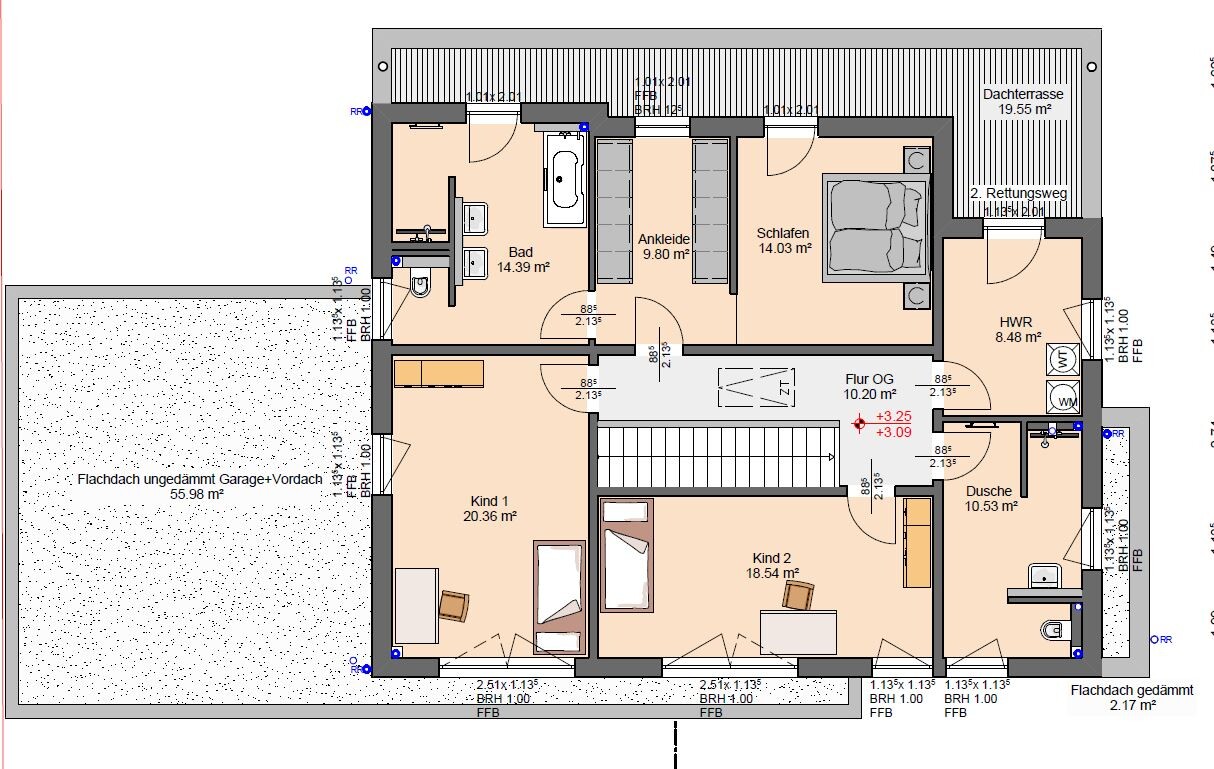
It still seems to me that there is less than 1.20m (4 feet) of space between the two wardrobes in the dressing room. Or am I seeing this wrong? Apparently, the rooms on the left and right were overlooked and not adjusted accordingly.
Two Velux ceiling spotlights are still planned to illuminate the upper floor hallway.
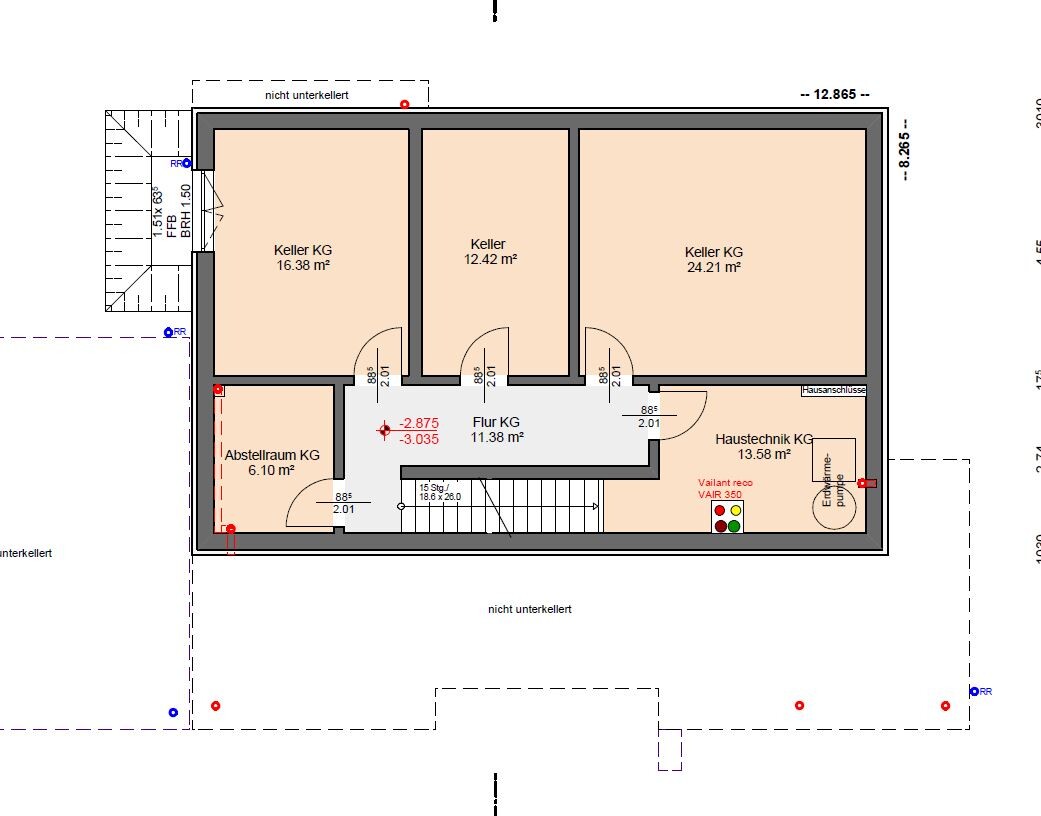
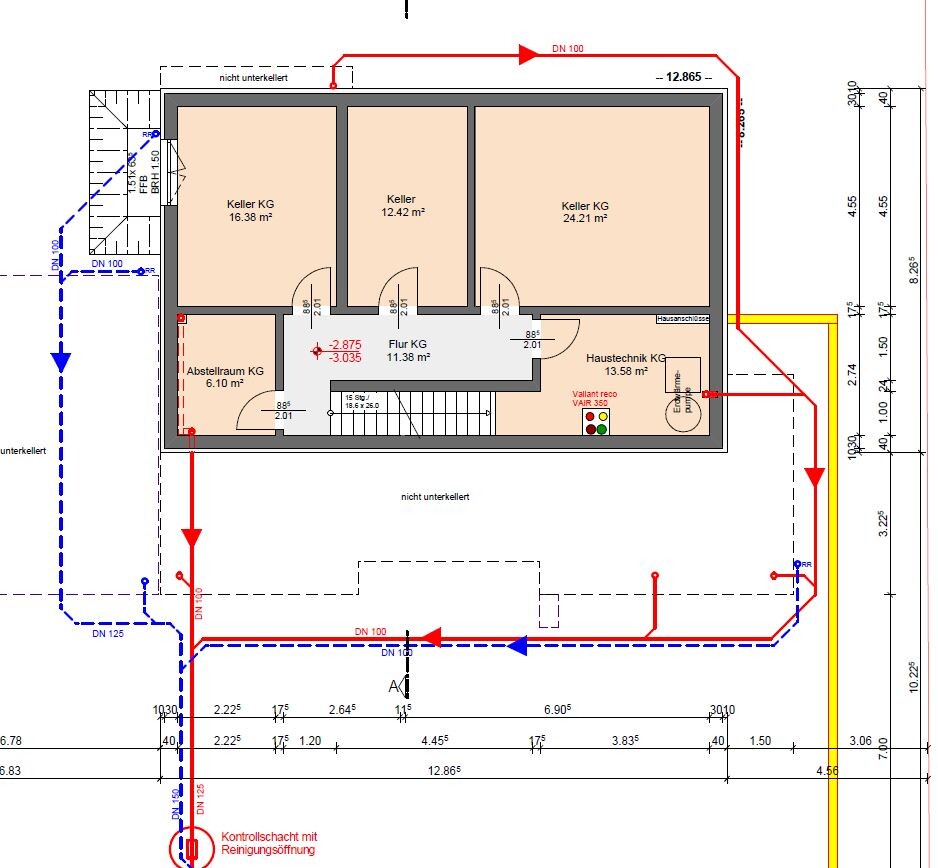
In the basement, on the right side in the upper room, a window similar to the one on the left basement side is an option.
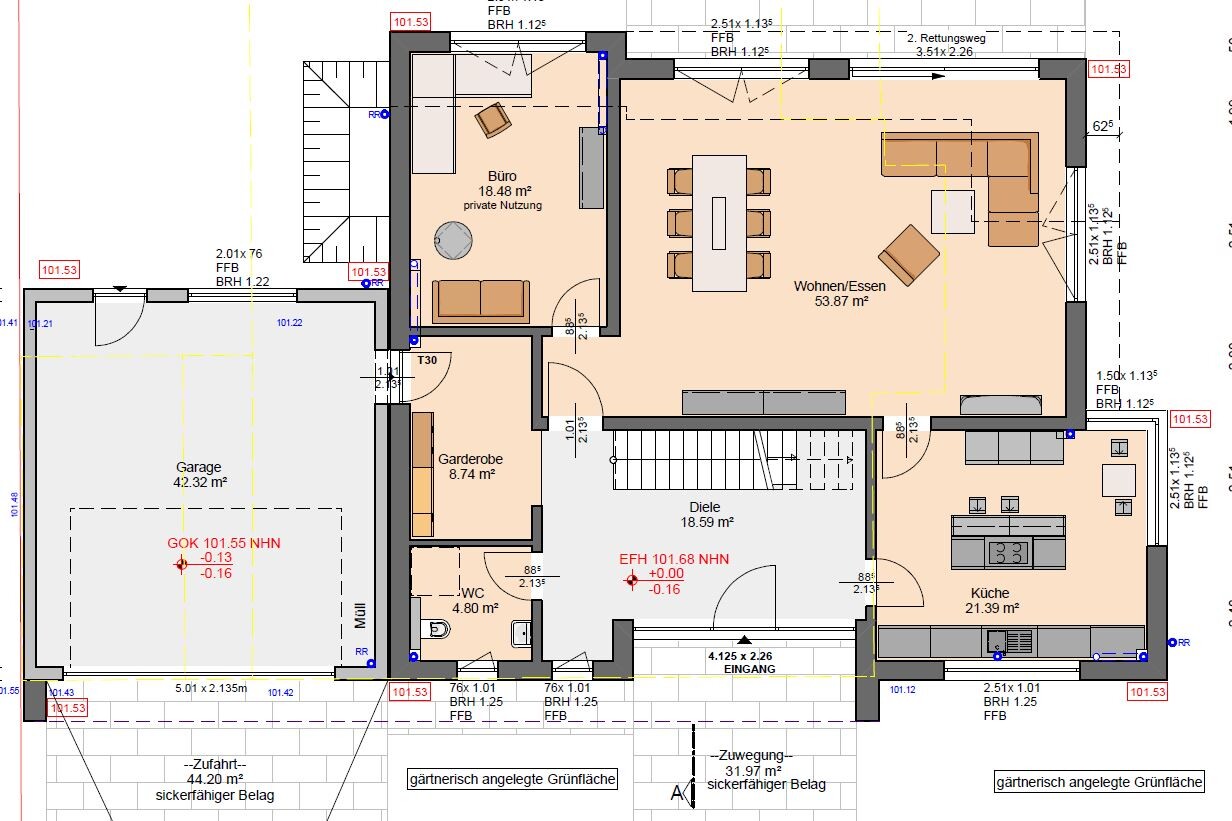
We still haven’t decided on the T30 fire-rated door to the garage, even though it is shown in the plans. Most likely, for safety reasons and the limited use of the kitchen at the other end of the house, we will eventually forgo it.
User 11ant pointed out that the right window in child’s room 2 is suboptimally positioned. However, this could still be changed after submitting the building permit / planning permission application. Our architect thinks moving the window to the left would negatively affect the house’s exterior appearance. We’ll have to see about that.
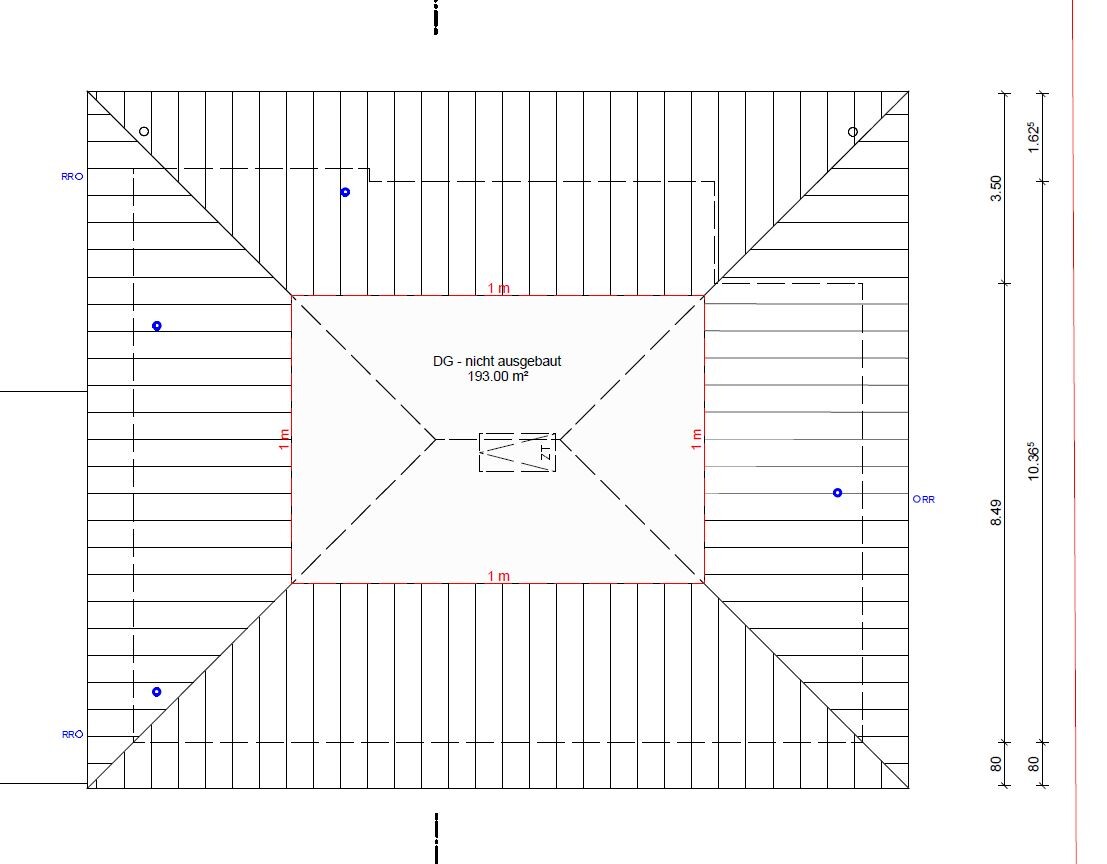
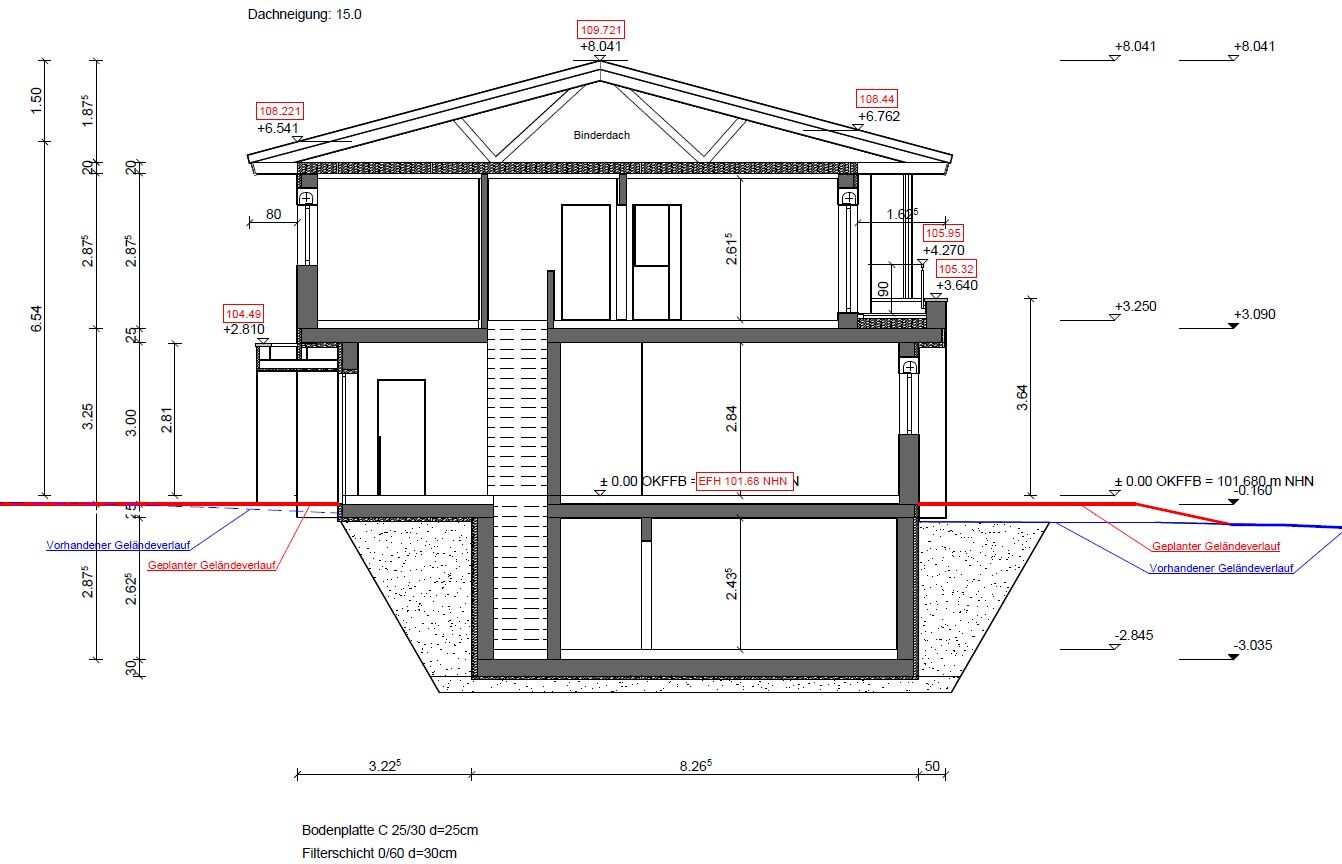

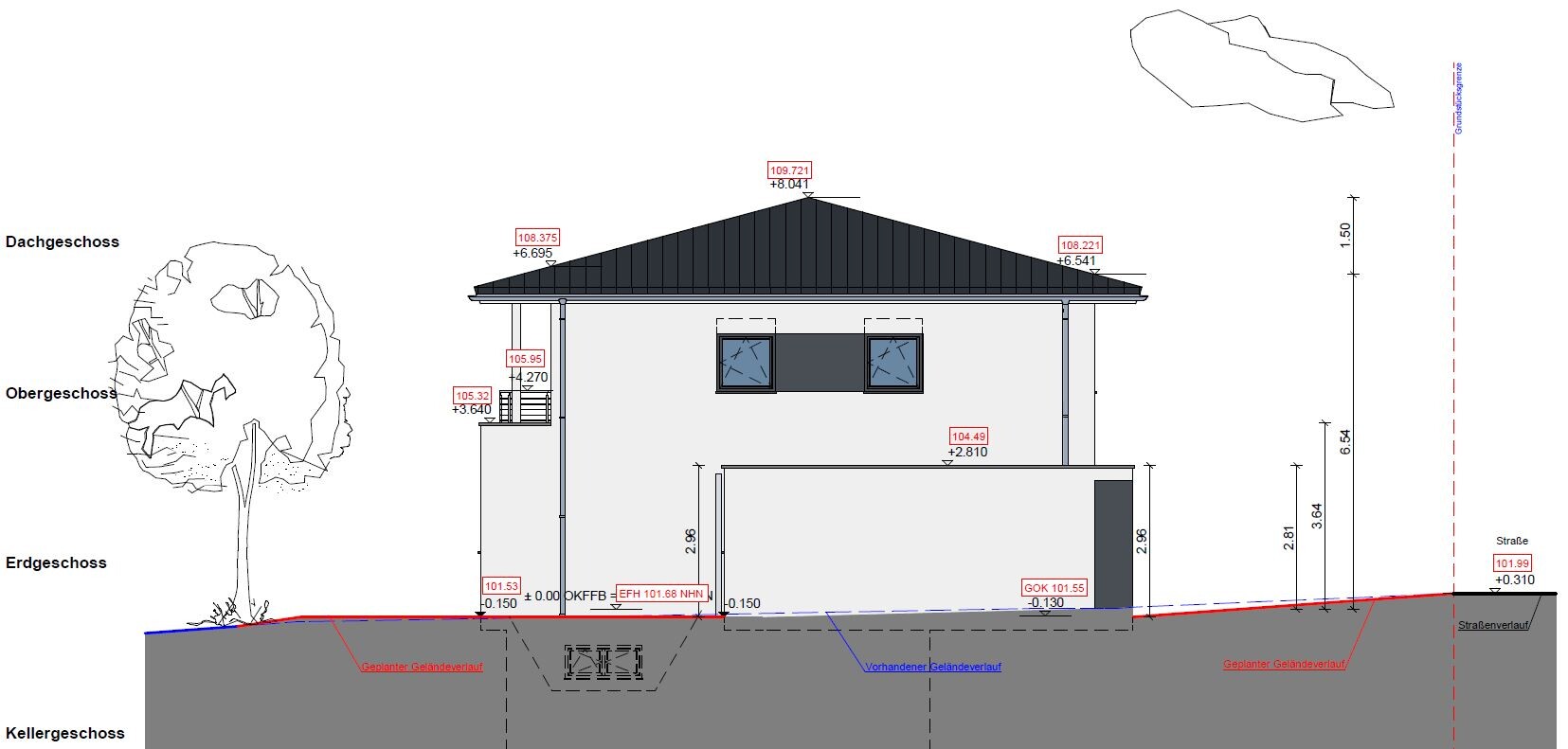
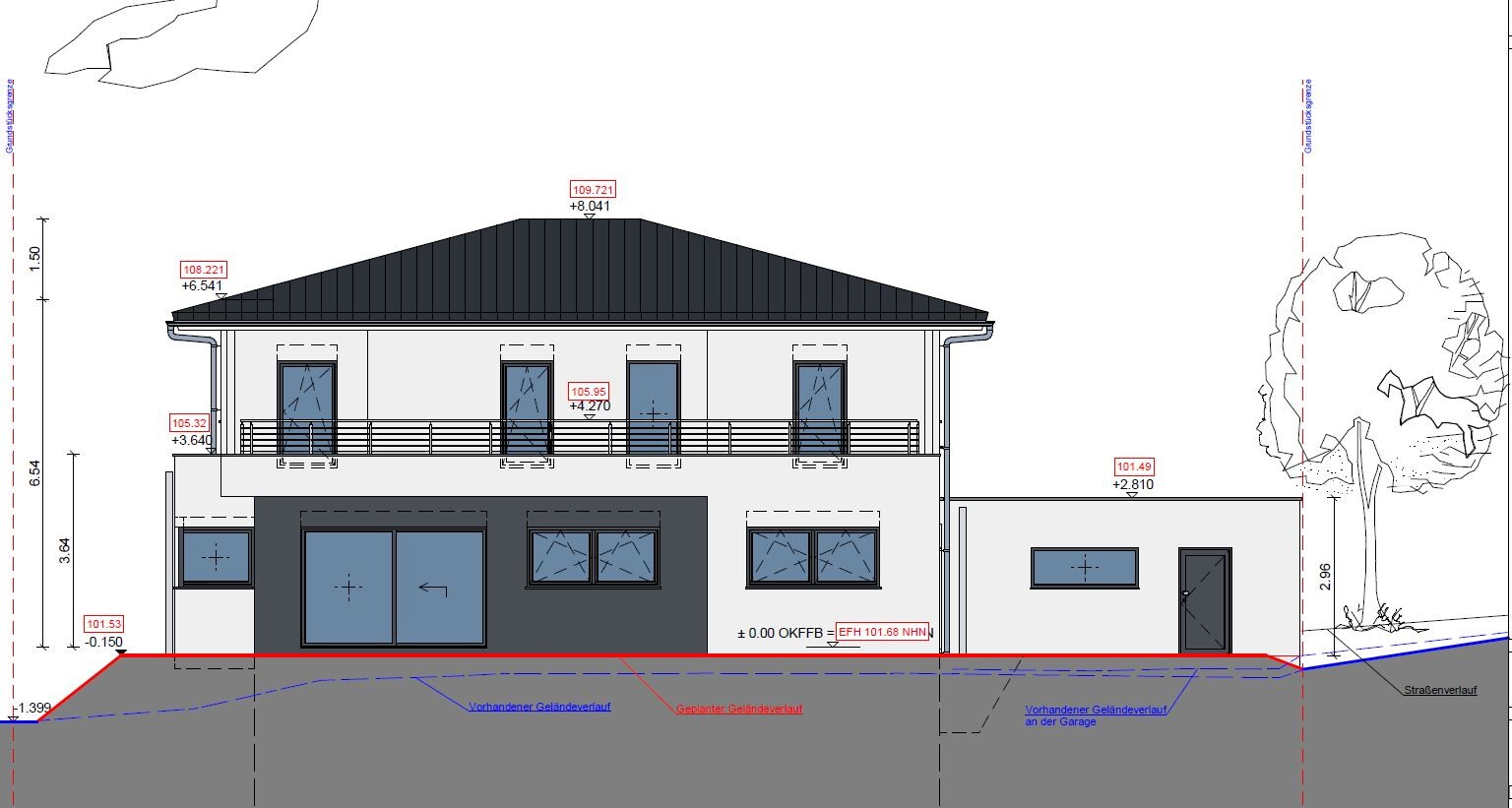
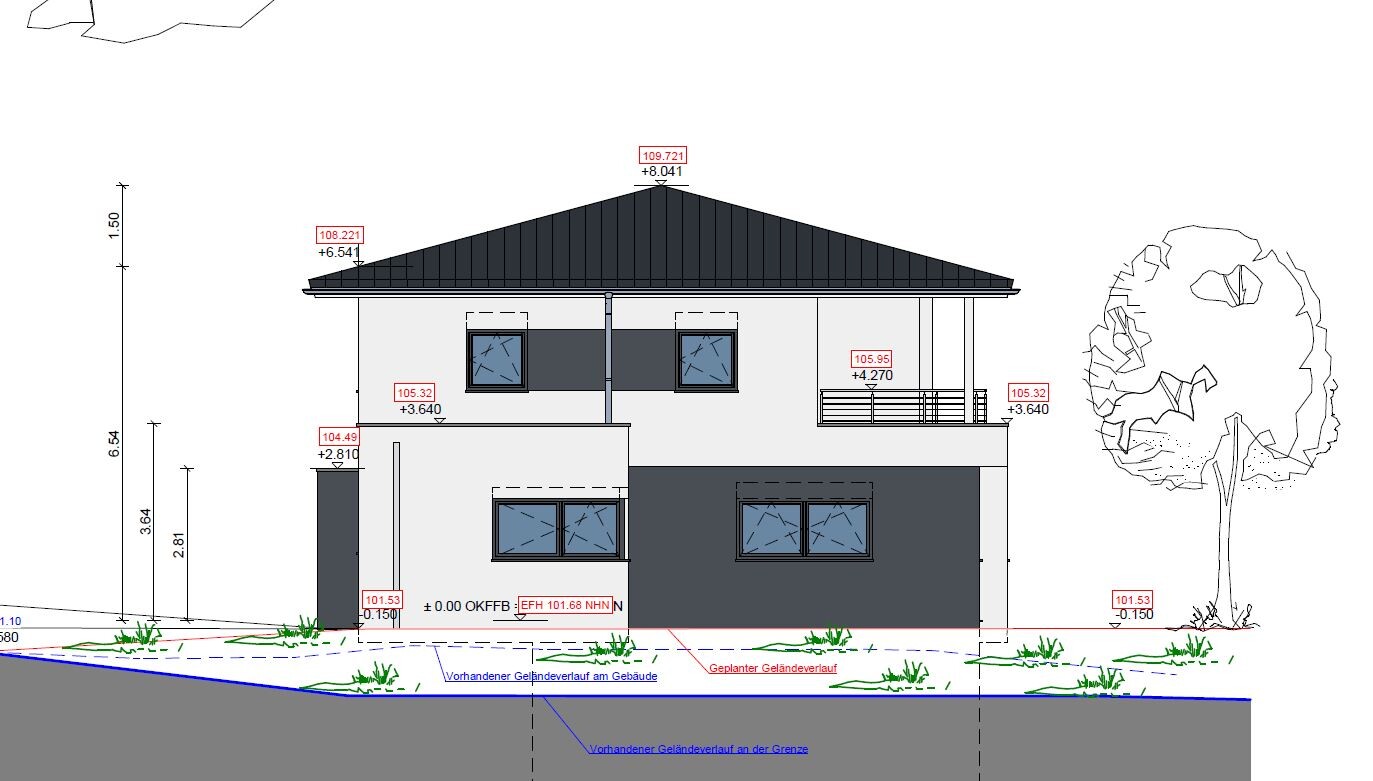
As some users have requested before, I’m now starting a new thread with the current planning of our detached house, which is about to be finalized.
These are the preliminary drawings for the building permit / planning permission application, and I have one last chance to review them and point out any issues.
It still seems to me that there is less than 1.20m (4 feet) of space between the two wardrobes in the dressing room. Or am I seeing this wrong? Apparently, the rooms on the left and right were overlooked and not adjusted accordingly.
Two Velux ceiling spotlights are still planned to illuminate the upper floor hallway.
In the basement, on the right side in the upper room, a window similar to the one on the left basement side is an option.
We still haven’t decided on the T30 fire-rated door to the garage, even though it is shown in the plans. Most likely, for safety reasons and the limited use of the kitchen at the other end of the house, we will eventually forgo it.
User 11ant pointed out that the right window in child’s room 2 is suboptimally positioned. However, this could still be changed after submitting the building permit / planning permission application. Our architect thinks moving the window to the left would negatively affect the house’s exterior appearance. We’ll have to see about that.

So: the 201 cm (6 ft 7 in) measurement is a typical rough opening size; anyone familiar with construction would not assume this to be the clear passage dimension. It is measured, like with windows, from the top edge of the sill to the bottom edge of the lintel.
The 15 cm (6 inches) is a prescribed dimension for the threshold on the outside. The ceiling of the ground floor beneath the terrace forms a boundary toward the “outside” and therefore requires more insulation than on the inside toward the occupied upper floor. It is logical to expect that the threshold on the inside will not be lower than on the outside.
This threshold is measured up to the bottom edge of the finished wall opening, but not up to the top edge of the lower door frame profile. The general contractor correctly states that this profile is meant for stepping over, not for walking on.
It would have been reasonable to inform the client during window selection about the option of a low-profile threshold instead of a standard frame profile at the bottom of the door opening. However, this is an advisory error, not a construction defect.
If I subtract 15 cm (6 inches) for the threshold above the finished terrace surface, add 10 cm (4 inches) more insulation outside, and 8 cm (3 inches) for the frame profile, that results in an effective stepping height of 33 cm (13 inches) without exceeding the promised dimension.
I do not rule out that judicial misunderstanding might interpret a promised step height of 15 cm (6 inches) differently; however, achieving this would only be feasible under ideal laboratory conditions—and even then, only with a full moon and no sausage tax.
https://www.instagram.com/11antgmxde/
https://www.linkedin.com/company/bauen-jetzt/
The 15 cm (6 inches) is a prescribed dimension for the threshold on the outside. The ceiling of the ground floor beneath the terrace forms a boundary toward the “outside” and therefore requires more insulation than on the inside toward the occupied upper floor. It is logical to expect that the threshold on the inside will not be lower than on the outside.
This threshold is measured up to the bottom edge of the finished wall opening, but not up to the top edge of the lower door frame profile. The general contractor correctly states that this profile is meant for stepping over, not for walking on.
It would have been reasonable to inform the client during window selection about the option of a low-profile threshold instead of a standard frame profile at the bottom of the door opening. However, this is an advisory error, not a construction defect.
If I subtract 15 cm (6 inches) for the threshold above the finished terrace surface, add 10 cm (4 inches) more insulation outside, and 8 cm (3 inches) for the frame profile, that results in an effective stepping height of 33 cm (13 inches) without exceeding the promised dimension.
I do not rule out that judicial misunderstanding might interpret a promised step height of 15 cm (6 inches) differently; however, achieving this would only be feasible under ideal laboratory conditions—and even then, only with a full moon and no sausage tax.
https://www.instagram.com/11antgmxde/
https://www.linkedin.com/company/bauen-jetzt/
R
R.Hotzenplotz13 Jul 2018 20:30How is a layperson supposed to know that the threshold is meant to go from outside to inside and not the other way around? I certainly would never have signed that!
I have no fundamental problem with one side being higher than the other, but then the measurements in the contract (15cm (6 inches)) must be the maximum threshold height, not the side where the threshold is lower.
That’s completely absurd; who would want to live like that? And why on earth would anyone offer me something like this?
In the end, I don’t really care whether we end up with what is hopefully a planning error or a construction mistake. I find the argument the lawyer developed quite convincing. He basically assumes both.
Let’s wait and see.
I have no fundamental problem with one side being higher than the other, but then the measurements in the contract (15cm (6 inches)) must be the maximum threshold height, not the side where the threshold is lower.
11ant schrieb:
If I calculate 15 cm (6 inches) threshold from the top edge of the finished terrace plus 10 cm (4 inches) additional insulation on the outside and 8 cm (3 inches) frame profile, I end up with an effective floor-to-threshold height of 33 cm (13 inches) without exceeding the promised dimension.
That’s completely absurd; who would want to live like that? And why on earth would anyone offer me something like this?
11ant schrieb:
It would have been reasonable to inform the client at the window selection stage about the option of a low threshold instead of a standard frame profile at the bottom of the door opening. However, this is a consulting error, not a construction defect.
In the end, I don’t really care whether we end up with what is hopefully a planning error or a construction mistake. I find the argument the lawyer developed quite convincing. He basically assumes both.
Let’s wait and see.
R
R.Hotzenplotz13 Jul 2018 21:17I have something else to guess about. The construction plan shows the front door element as 4.125 m x 2.36 m (13.54 ft x 7.74 ft).
If this is also a rough opening size, I wonder why I’m given a measurement of 4.09 m x 2.39 m (13.42 ft x 7.85 ft) for the door that hasn’t been installed yet. Sometimes doors or windows are smaller than the plan dimensions, sometimes they’re larger... I don’t think this is a problem regarding the height in this case, but it’s still interesting.
Interim conclusion from this whole situation – you should always have all window and door sizes precisely specified in the contract. What use is a rough opening size if you don’t know how wide the actual frame is, etc.?
For example, the fixed window element in the dressing room has about 10 cm (4 inches) more glass area in width than the patio doors. As a layperson, you don’t really realize this in advance when all the dimensions listed are the same. For a homeowner, the glass area is what really matters. We now have three different glass widths upstairs. For the utility room, because of the emergency exit, for reasons known only to God, this width wasn’t proposed everywhere, then the width of the bedroom and bathroom exits, and the fixed element in the dressing room has yet another different width. Had I known this, my goal when signing the contract would have been to have four elements with the same width of glass area. Why should I care about the rough opening size? What matters to me are the clear height and clear width!
If this is also a rough opening size, I wonder why I’m given a measurement of 4.09 m x 2.39 m (13.42 ft x 7.85 ft) for the door that hasn’t been installed yet. Sometimes doors or windows are smaller than the plan dimensions, sometimes they’re larger... I don’t think this is a problem regarding the height in this case, but it’s still interesting.
Interim conclusion from this whole situation – you should always have all window and door sizes precisely specified in the contract. What use is a rough opening size if you don’t know how wide the actual frame is, etc.?
For example, the fixed window element in the dressing room has about 10 cm (4 inches) more glass area in width than the patio doors. As a layperson, you don’t really realize this in advance when all the dimensions listed are the same. For a homeowner, the glass area is what really matters. We now have three different glass widths upstairs. For the utility room, because of the emergency exit, for reasons known only to God, this width wasn’t proposed everywhere, then the width of the bedroom and bathroom exits, and the fixed element in the dressing room has yet another different width. Had I known this, my goal when signing the contract would have been to have four elements with the same width of glass area. Why should I care about the rough opening size? What matters to me are the clear height and clear width!
R.Hotzenplotz schrieb:
but then the specifications in the contract (15cm (6 inches)) must be the maximum threshold height, not the side where the threshold is lower. You probably should have asked why there is a threshold at all. Apparently, you didn’t understand its purpose. Of course, it has to be that high on the outside, and the height on the inside doesn’t really matter. Inside, it could have been 0 cm (0 inches), but that would have resulted in a step difference in the floor slab between levels.
R.Hotzenplotz schrieb:
How is a client, as a layperson, supposed to know that the threshold measurement refers to the outside going inside and not the other way around? The threshold is meant to prevent water ingress—not a bathtub overflowing from inside to the terrace, but a fully watered terrace sloping toward the dressing room. One should be able to expect some logic, even from a layperson.
At this point, you didn’t ask enough questions.
You order cream cakes from a pastry chef, not from a bread baker. You made a fundamental mistake by expecting a custom architect-designed house from a general contractor. That’s a high-risk move :-(
https://www.instagram.com/11antgmxde/
https://www.linkedin.com/company/bauen-jetzt/
R.Hotzenplotz schrieb:
If that is also a rough opening measurement, I wonder why I’m given a size of 4.09 m x 2.39 m (13 ft 5 in x 7 ft 10 in) for the door that hasn’t been installed yet. Sometimes doors/windows are smaller than the plan dimension, sometimes they are larger... I’m not in the mood to check the plans right now. One possible explanation is that the lintel might also serve as a stop, so the frame presses against the top, and on the sides there’s no stop but the usual installation gap.
R.Hotzenplotz schrieb:
Only God knows why this width wasn’t suggested everywhere, Oh, didn’t I suggest leveling there?
R.Hotzenplotz schrieb:
Why should I care about the rough opening dimension? Because that’s the critical measurement. The shell contractor comes before the window installer. So you first need the dimension for forming the rough opening. And how tolerances are used up can’t be known in advance. A house isn’t built by a CNC machine—it’s constructed by rough handling workers.
https://www.instagram.com/11antgmxde/
https://www.linkedin.com/company/bauen-jetzt/
R
R.Hotzenplotz13 Jul 2018 21:4311ant schrieb:
Oh, shouldn’t I have suggested a leveling compound there?I meant the architect/designer.
Similar topics