
ᐅ Floor plan design shortly before submitting the building permit application
Created on: 2 Oct 2017 23:25
R
R.Hotzenplotz
Hello everyone!
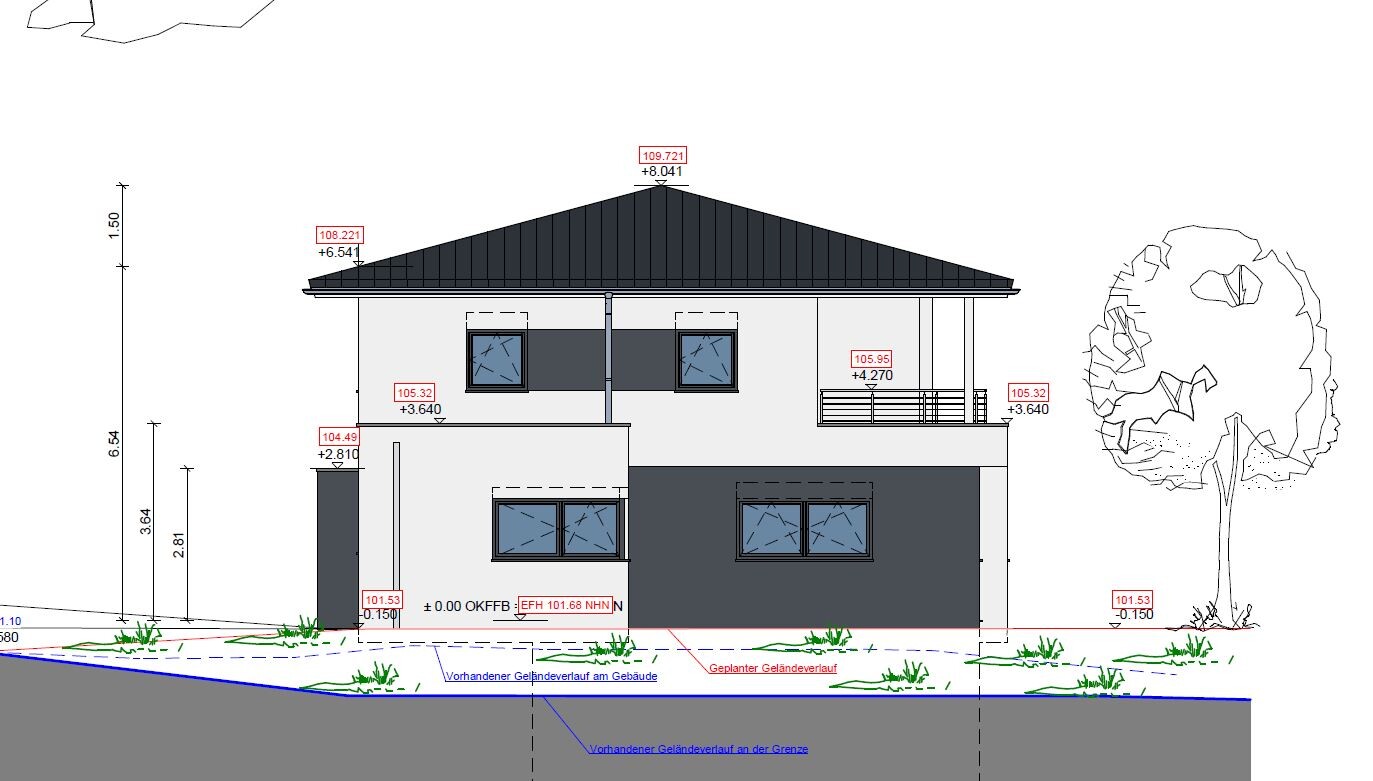
As some users have requested before, I’m now starting a new thread with the current planning of our detached house, which is about to be finalized.
These are the preliminary drawings for the building permit / planning permission application, and I have one last chance to review them and point out any issues.
It still seems to me that there is less than 1.20m (4 feet) of space between the two wardrobes in the dressing room. Or am I seeing this wrong? Apparently, the rooms on the left and right were overlooked and not adjusted accordingly.
Two Velux ceiling spotlights are still planned to illuminate the upper floor hallway.
In the basement, on the right side in the upper room, a window similar to the one on the left basement side is an option.
We still haven’t decided on the T30 fire-rated door to the garage, even though it is shown in the plans. Most likely, for safety reasons and the limited use of the kitchen at the other end of the house, we will eventually forgo it.
User 11ant pointed out that the right window in child’s room 2 is suboptimally positioned. However, this could still be changed after submitting the building permit / planning permission application. Our architect thinks moving the window to the left would negatively affect the house’s exterior appearance. We’ll have to see about that.
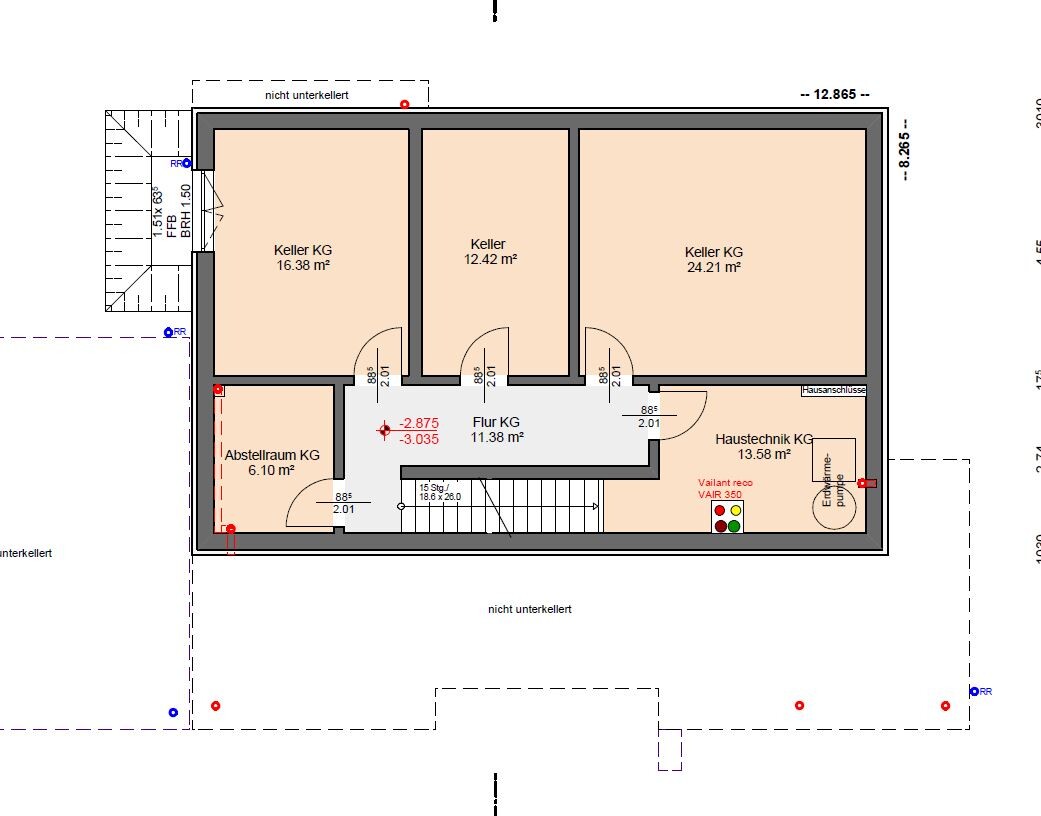
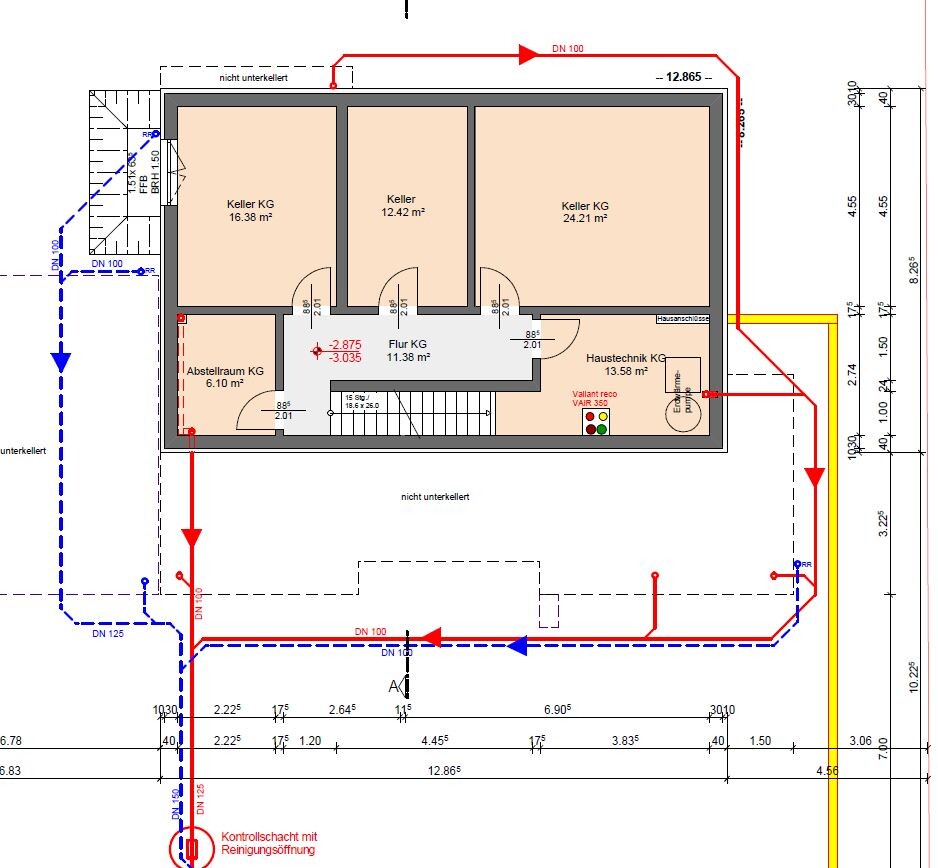
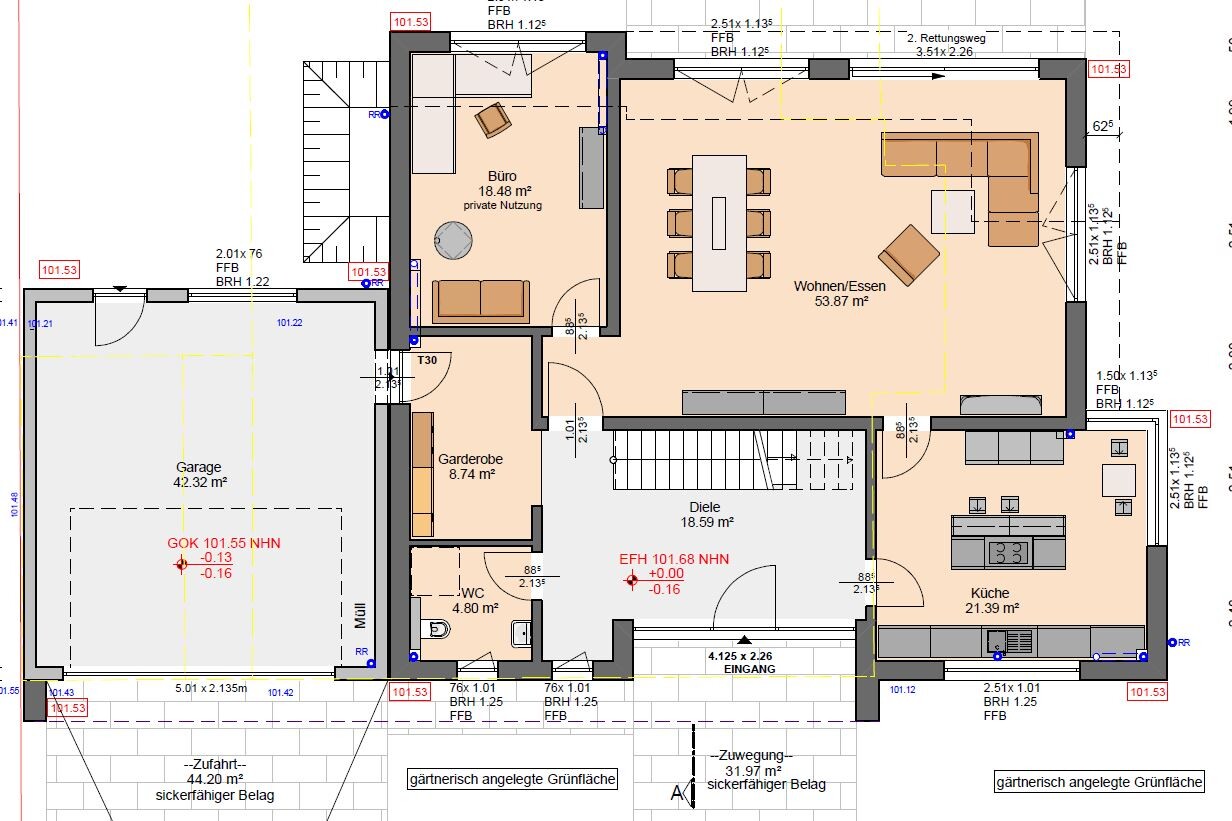
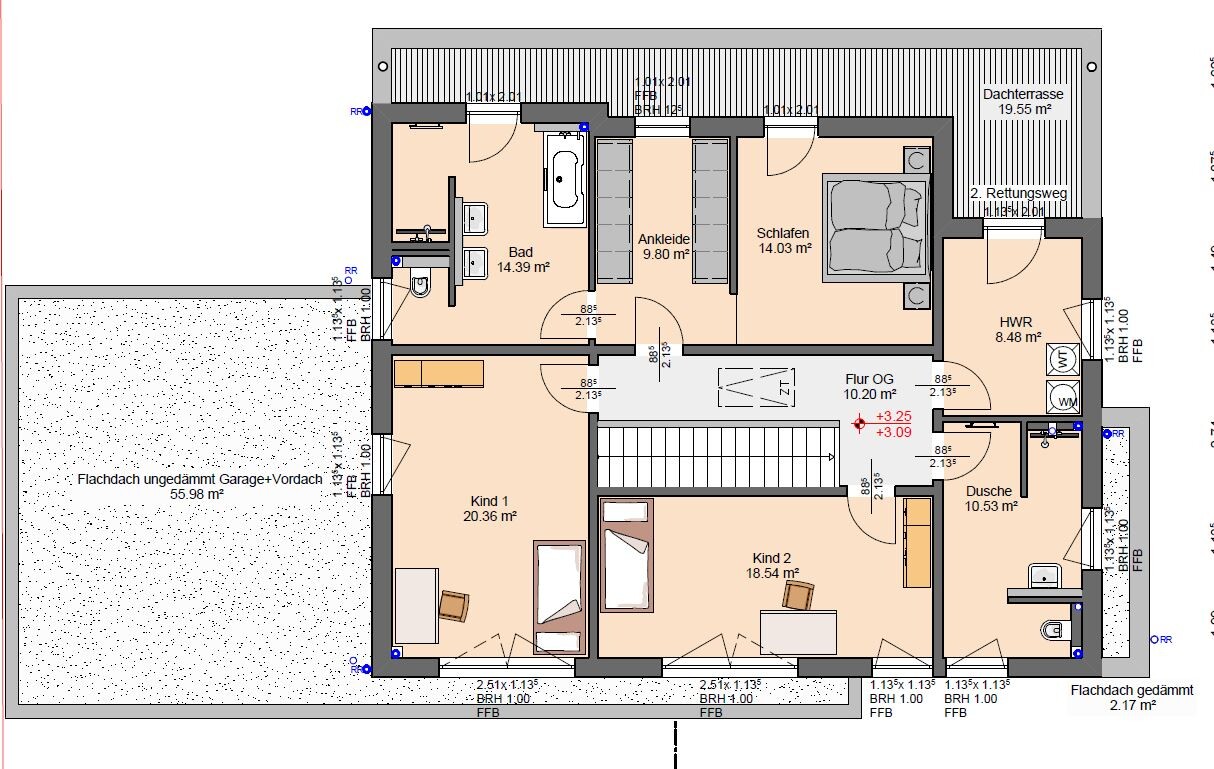
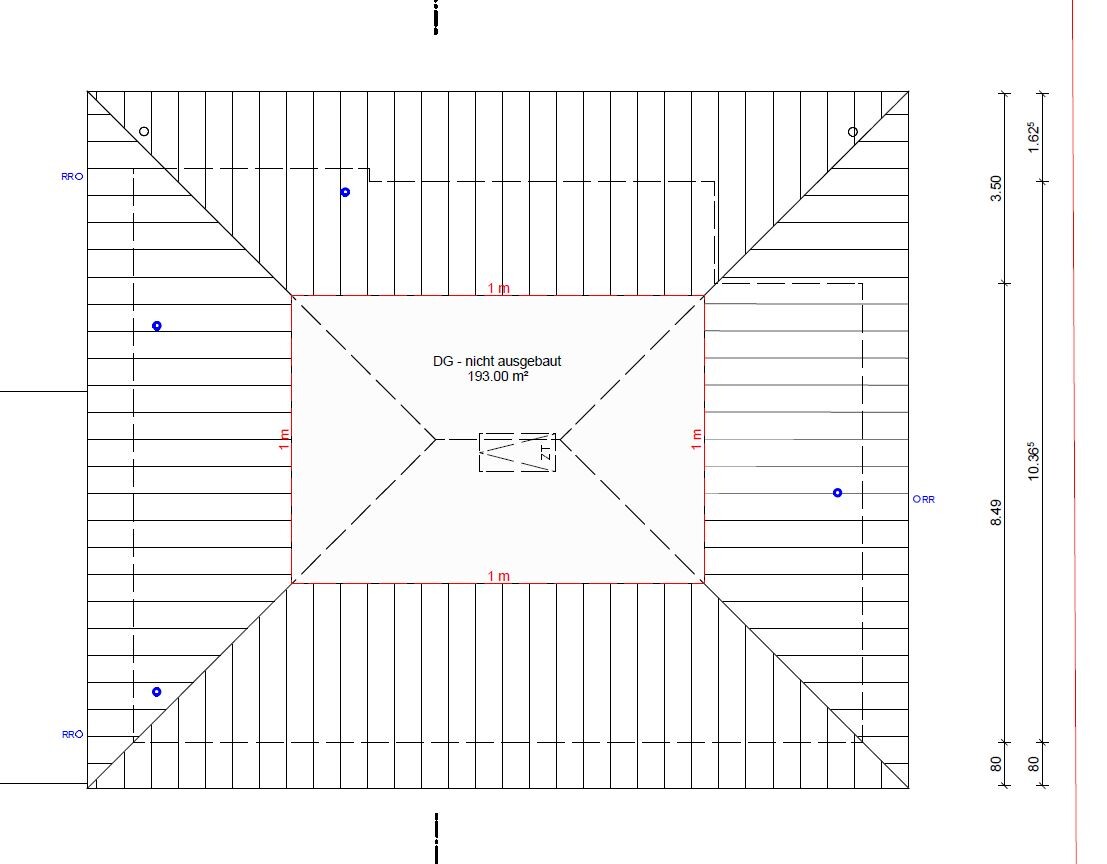
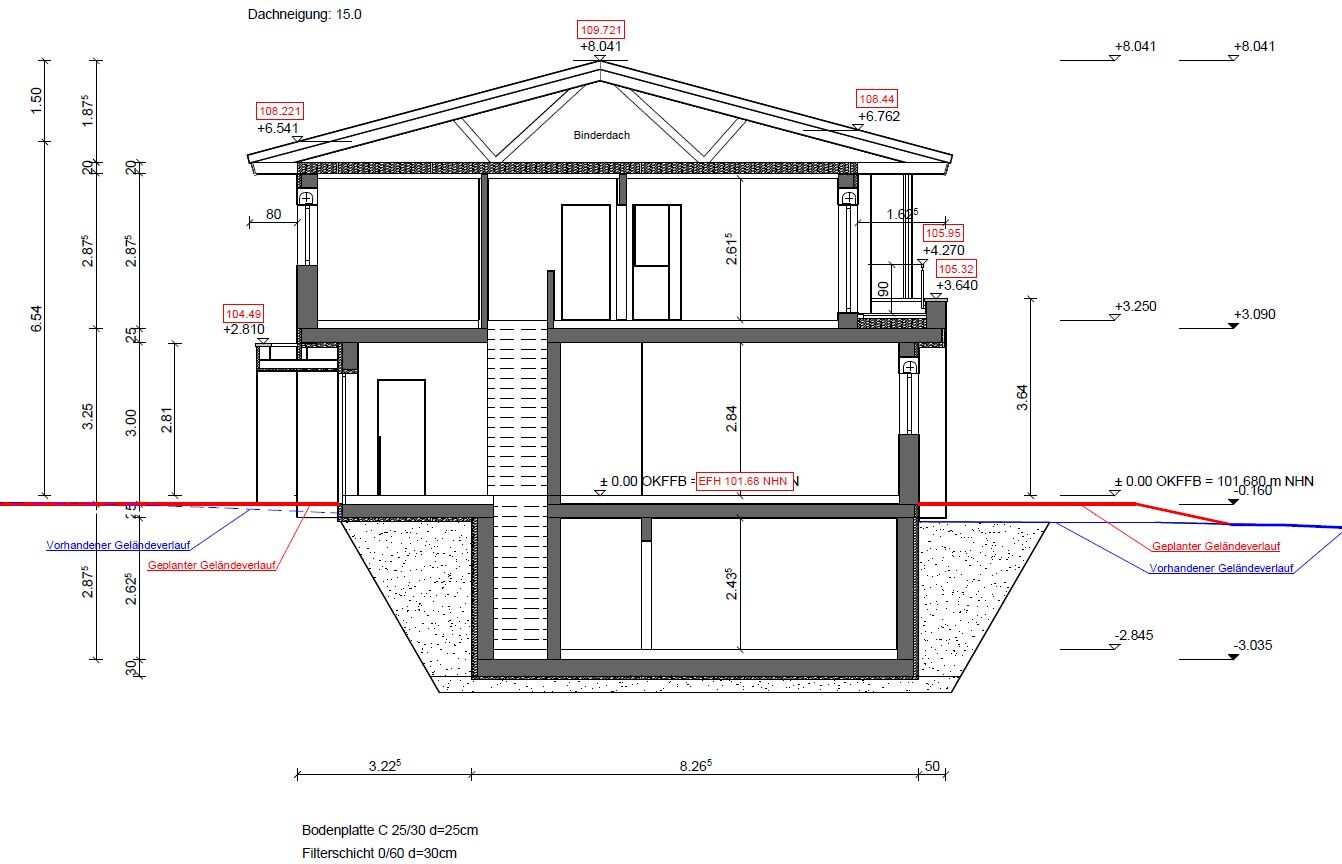

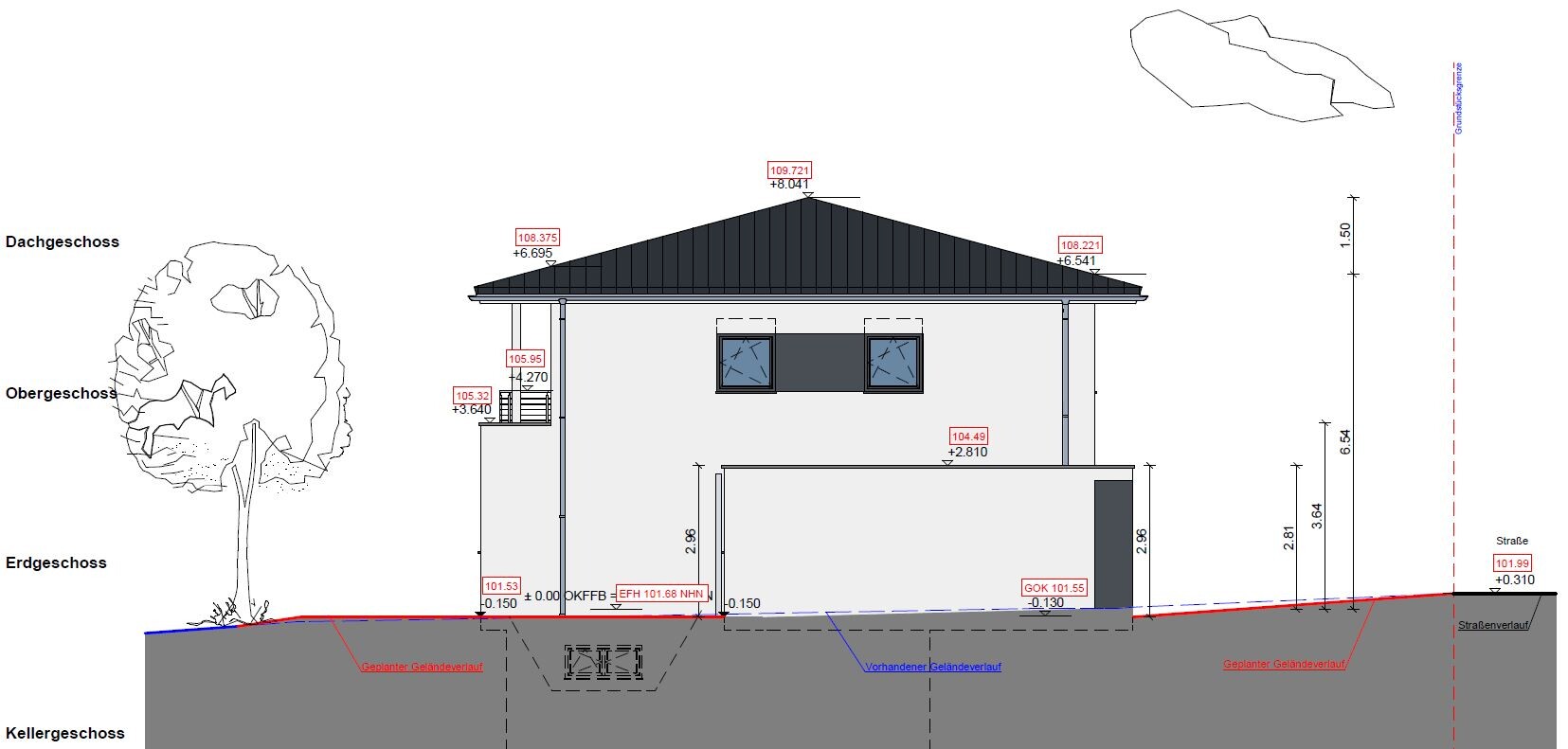
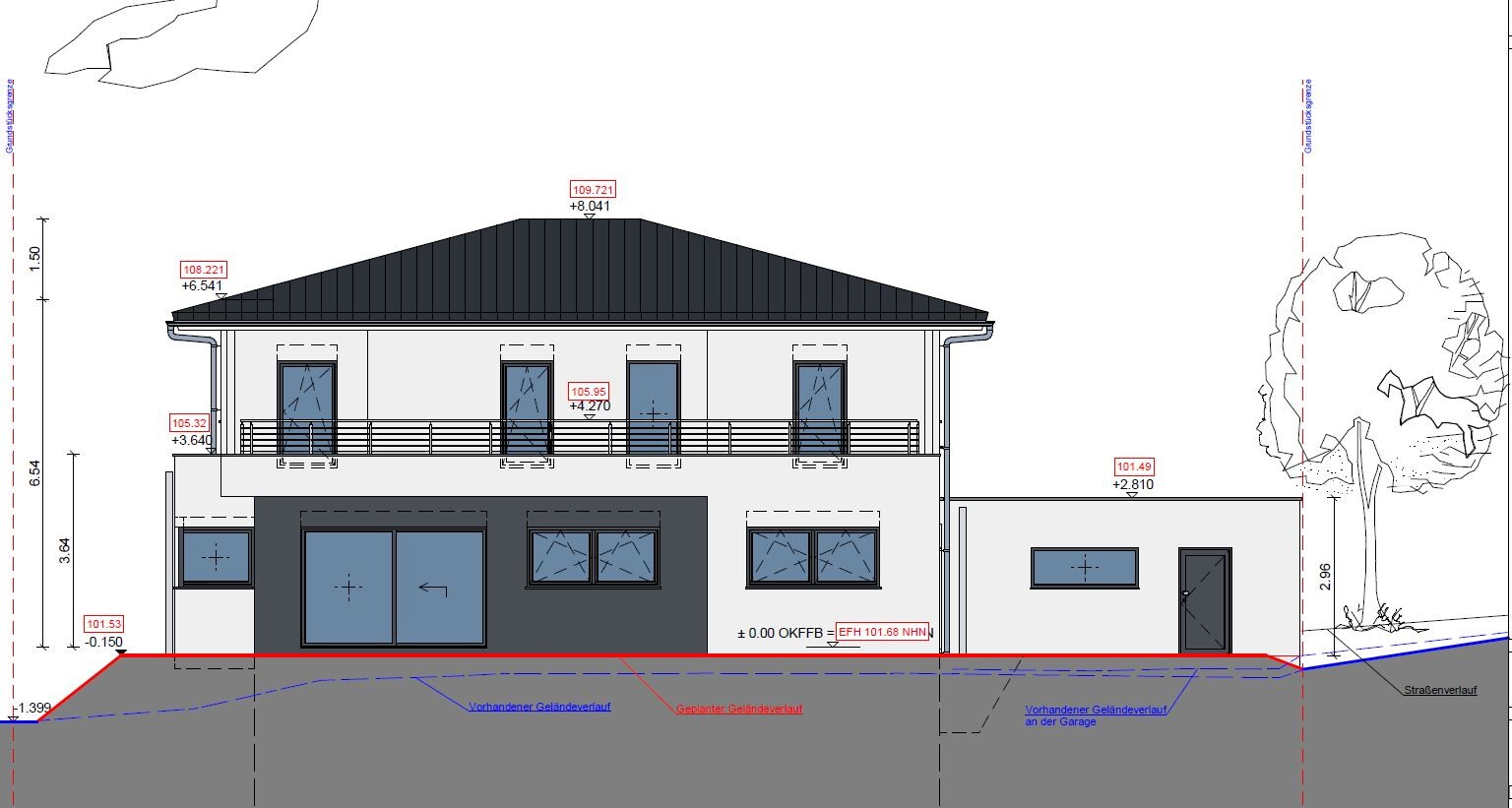
As some users have requested before, I’m now starting a new thread with the current planning of our detached house, which is about to be finalized.
These are the preliminary drawings for the building permit / planning permission application, and I have one last chance to review them and point out any issues.
It still seems to me that there is less than 1.20m (4 feet) of space between the two wardrobes in the dressing room. Or am I seeing this wrong? Apparently, the rooms on the left and right were overlooked and not adjusted accordingly.
Two Velux ceiling spotlights are still planned to illuminate the upper floor hallway.
In the basement, on the right side in the upper room, a window similar to the one on the left basement side is an option.
We still haven’t decided on the T30 fire-rated door to the garage, even though it is shown in the plans. Most likely, for safety reasons and the limited use of the kitchen at the other end of the house, we will eventually forgo it.
User 11ant pointed out that the right window in child’s room 2 is suboptimally positioned. However, this could still be changed after submitting the building permit / planning permission application. Our architect thinks moving the window to the left would negatively affect the house’s exterior appearance. We’ll have to see about that.
R
R.Hotzenplotz10 Jul 2018 18:07Curly schrieb:
Well, if there is a waterproofing layer underneath after all, what does the general contractor say?I already mentioned that. He admits that he deviated from the relevant DIN standard but says he builds 90% of houses this way. His reasoning is that the drainage is simpler.
However, the expert states that his method is neither equivalent nor considered to be good practice according to the recognized technical standards. So why should I accept an inferior execution?

Without counting the commas, the report reads to me with the overall message "defects noted, certificate assigned." I don’t see 199 cm (79 inches) instead of 201 cm (79 inches) as a disputable deviation; with a rough opening of 201 cm (79 inches), I would have even expected a 198 cm (78 inches) element height. So for me, the question is not why 199 cm (79 inches) instead of 201 cm (79 inches), but why 201 cm (79 inches) instead of 213 cm (84 inches).
I assume the rough carpenter will be sidelined for a season when working for the general contractor, but the resale value of the house will not suffer any measurable damage from the deviations.
In my view, your legal chances largely depend on the interaction between the expert assessor and the lawyer.
https://www.instagram.com/11antgmxde/
https://www.linkedin.com/company/bauen-jetzt/
I assume the rough carpenter will be sidelined for a season when working for the general contractor, but the resale value of the house will not suffer any measurable damage from the deviations.
In my view, your legal chances largely depend on the interaction between the expert assessor and the lawyer.
https://www.instagram.com/11antgmxde/
https://www.linkedin.com/company/bauen-jetzt/
R
R.Hotzenplotz10 Jul 2018 19:1511ant schrieb:
Without counting the commas, the report reads to me with the overall message "defects noted, plaque assigned."So you think the base waterproofing is fine and should continue as is? The expert clearly stated that they need to address it again. The execution is substandard, it’s not in my interest, and it simply wasn’t agreed upon. Your assessment therefore puzzles me a bit.
11ant schrieb:
I don’t see 199 instead of 201 cm (79 inches instead of 79.1 inches) as a disputable deviation. For a rough opening of 201 cm (79.1 inches), I would have even expected a 198 cm (78 inches) element height. So the question for me is not why it’s 199 instead of 201, but rather: why 201 instead of 213.The contract states window height 201 cm (79.1 inches), not a window for a rough opening of 201 cm (79.1 inches). Otherwise, basically, I agree with you that the 201 cm (79.1 inches) window height itself is the problem. And the expert tried to establish a basis for the architect’s liability in his statements. However, the expert cannot clarify any further; everything else goes into legal territory, and we will settle that tomorrow. But if suddenly the threshold is 5 cm (2 inches) higher than specified, that is already a significant deviation. The contract states 15 cm (6 inches). Accordingly, in my view, new doors are required anyway. And if new doors are needed, it is certainly negotiable, possibly for an additional cost, to get other dimensions. There is likely some room for negotiation, including regarding delays. The question is whether the building permit / planning permission even allows the installation of taller (and ideally wider in the bedroom and bathroom) balcony doors.
The expert and lawyer have contact from other projects. That works well.
The masonry will be interesting. I can’t imagine the brick manufacturer agreeing to issue such approval. And we won’t grant it either, as the expert writes. This currently seems to be the smallest issue, but it might be one of the most difficult to resolve because no one wants to issue the required approval and the general contractor is not allowed to make such changes unilaterally.
R.Hotzenplotz schrieb:
So you find the base waterproofing acceptable and think it should remain as is? [...] Your assessment therefore confuses me a bit. No, it’s just that the expert’s report sounds less serious to me than what was expected from the last pages of this discussion. It basically seems repairable, although in this case the general contractor will likely end up with no profit on this project. But I suppose that is just the usual learning cost when testing a new structural builder.
https://www.instagram.com/11antgmxde/
https://www.linkedin.com/company/bauen-jetzt/
R
R.Hotzenplotz10 Jul 2018 20:0811ant schrieb:
No, to me the assessor’s statement sounds less dramatic than what was expected from the last pages of this discussion.I see. The last pages mostly dealt with how much the dropped ceilings disturb the space. But that is less a technical expert’s issue and more—if at all—a legal matter. I will address this topic tomorrow, but I don’t expect much from it. Basically, we only have the dropped ceilings left in the kitchen and the office on the left side of the plan. The office on the right side was already removed, and I will eliminate child 1 by using the pipe vent.
11ant schrieb:
It essentially sounds repairable, although in this case, there would ultimately be no benefit for the general contractor on this project.I would like to start with a question. Assuming the general contractor is willing to correct the base waterproofing, how should this be envisioned? Would the entire basement wall around the building need to be exposed? If so, how do they plan to handle that in the area of the garage?
R.Hotzenplotz schrieb:
I will eliminate issue 1 by using the pipe vent.
Great, then it seems my suggestion really helped!