
Hello everyone,
I am undecided between the Gardena models R40, R70, and Smart Sileno.
I have about 100m² (1,076 sq ft) of lawn area. I would also like to monitor/control the system using Loxone. What are your experiences? What advantages does the Smart Sileno offer?
I am undecided between the Gardena models R40, R70, and Smart Sileno.
I have about 100m² (1,076 sq ft) of lawn area. I would also like to monitor/control the system using Loxone. What are your experiences? What advantages does the Smart Sileno offer?
Are there any new experiences with this? We are currently in the final stages of planning the outdoor areas.
Execution is scheduled to start in two weeks, so I am now looking into robotic lawn mowers. It is certain that we will get a robot mower, and the area to be mowed (marked in yellow in the attachment) is about 460m² (4,950 sq ft). I am leaning towards the Gardena R70li, as I don’t think the extra cost for the Husqvarna equivalent is justified.
I can still influence the edges around the house (terraces or concrete edging stones for splash protection). Since I want to minimize follow-up work, how should these edges be constructed? Flush with the lawn or slightly raised?
What else should be considered if I can still make changes? For example, I’ve read that it’s useful or important to design slopes so that there is a small flat area at the bottom before the boundary wire. This prevents the mower from slipping past the wire.
Thank you very much!
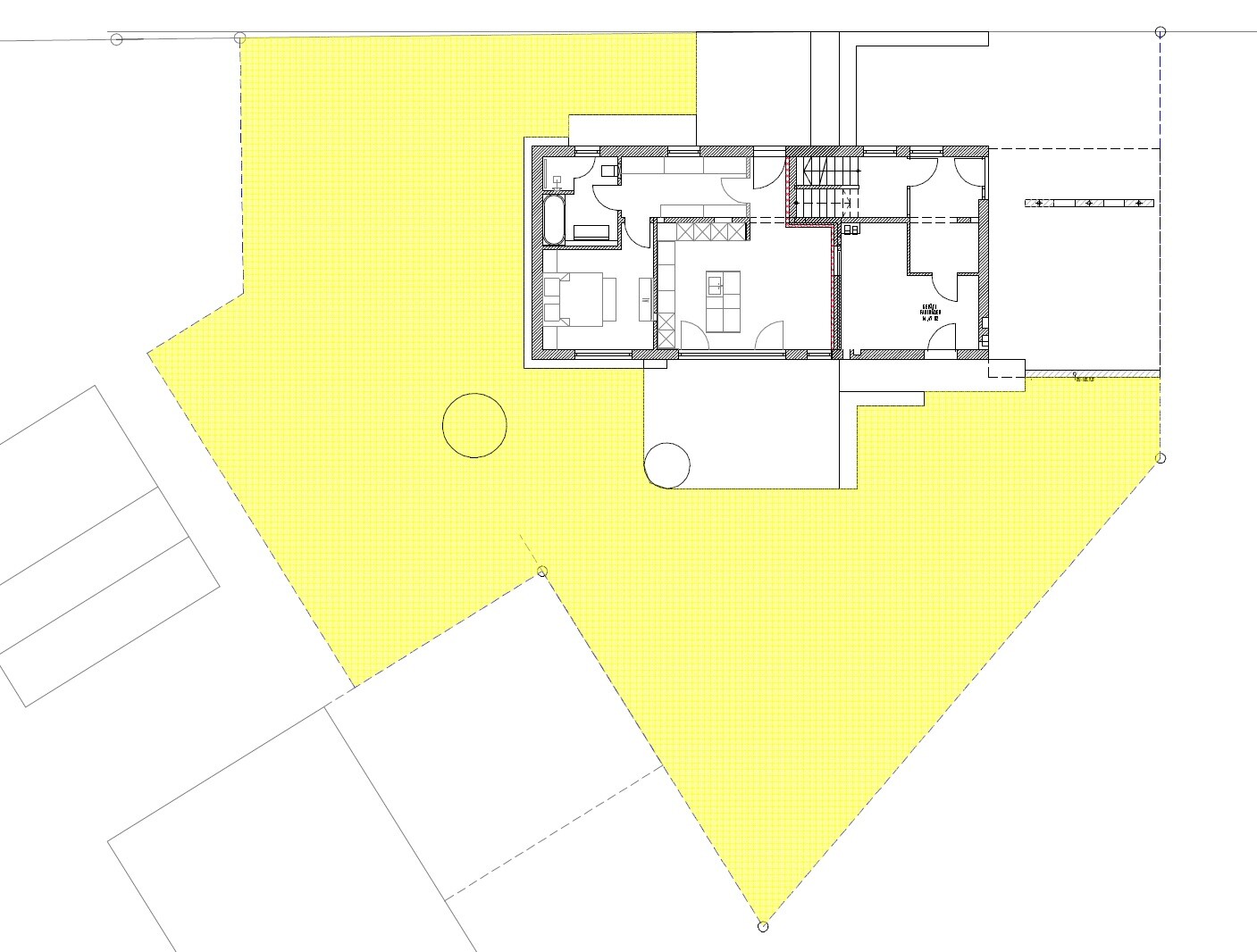
Execution is scheduled to start in two weeks, so I am now looking into robotic lawn mowers. It is certain that we will get a robot mower, and the area to be mowed (marked in yellow in the attachment) is about 460m² (4,950 sq ft). I am leaning towards the Gardena R70li, as I don’t think the extra cost for the Husqvarna equivalent is justified.
I can still influence the edges around the house (terraces or concrete edging stones for splash protection). Since I want to minimize follow-up work, how should these edges be constructed? Flush with the lawn or slightly raised?
What else should be considered if I can still make changes? For example, I’ve read that it’s useful or important to design slopes so that there is a small flat area at the bottom before the boundary wire. This prevents the mower from slipping past the wire.
Thank you very much!
Hello,
Since last week, I have been using the R70li, which I bought in February during a 20% discount and then got an additional 12% at a hardware store. The software itself feels quite outdated, like from the 1980s, but it’s sufficient for a start.
For installation, the Erfardok is probably worth a first read.
As far as I understand it now, the robot travels up to 30cm (12 inches) beyond the boundary wire. It mows up to about 10cm (4 inches) behind the wire. So, when dealing with "walls," you need to make sure there is at least 20cm (8 inches) of stone in front of it.
I also recommend buying extra boundary wire right away. The 200m (660 feet) included was almost not enough for my setup, so I temporarily used regular cable as a workaround.
Just yesterday, I read about the Smart Sileno City, which, depending on your preferences, comes with some basic "smart home" features.
Since last week, I have been using the R70li, which I bought in February during a 20% discount and then got an additional 12% at a hardware store. The software itself feels quite outdated, like from the 1980s, but it’s sufficient for a start.
For installation, the Erfardok is probably worth a first read.
As far as I understand it now, the robot travels up to 30cm (12 inches) beyond the boundary wire. It mows up to about 10cm (4 inches) behind the wire. So, when dealing with "walls," you need to make sure there is at least 20cm (8 inches) of stone in front of it.
I also recommend buying extra boundary wire right away. The 200m (660 feet) included was almost not enough for my setup, so I temporarily used regular cable as a workaround.
Just yesterday, I read about the Smart Sileno City, which, depending on your preferences, comes with some basic "smart home" features.
B
Bieber081529 Mar 2018 21:08matte1987 schrieb:
Since I want to minimize rework, how should I have these edges installed? Flush with the lawn, or overlapping?Flush with the lawn. The user manual (or installation guide for the wire) provides more details, specifically how many centimeters (inches) of clearance should be maintained from obstacles, etc. For obstacles on the lawn (trees, swings, etc.), you have to decide: grind down the edges or let the mower drive against them.matte1987 schrieb:
This prevents the mower from slipping beyond the wire.Ours slipped over the wire two or three times on flat ground during one season. It can happen, especially when it’s damp, apparently.Robotic mowers are usually categorized by their capacity in square meters (square yards). At first, I didn’t realize that this rating assumes continuous 24/7 operation and relatively simple lawn shapes. For example, if you have 500 m² (600 square yards) of lawn and want the mower to run only at night, you’ll need a mower rated for 1000 m² (1200 square yards). Also, particularly complex or irregularly shaped areas require a margin in capacity.

matte1987 schrieb:
After some research, I decided on the WORX Landroid S500i and ordered it today. €550 is quite an investment.
I'm looking forward to trying it out. We have been using it since the end of April and are very pleased so far.
We would buy it again, and my parents next door liked it as well, so they quickly ordered the same one and are also very satisfied.
Similar topics