
ᐅ Outdoor area has screed – how to seal expansion joints without a baseboard?
Created on: 11 May 2018 12:52
K
Kaspatoo
Hello,
I have a solid room outside the house with masonry and concrete walls and a concrete ceiling.
The size is 6 x 4 meters (20 x 13 feet). It has a screed floor without any pipes or cables underneath.
The room is used like a garden shed.
Around the screed, as common in house construction, a (blue) foam strip was installed as an expansion joint. In house construction, this is usually covered by the floor covering or baseboards.
In my case, I simply want to apply a special concrete coating directly onto the screed.
This is generally possible and not in question. I do not want to use tiles.
However, the problem is that the edge strip isn’t solid but made of plastic. I cannot just pour the coating over it.
I also don’t want to apply a full surface leveling compound to create an entire new floor layer, as the screed is already nicely flat and smooth.
Now I wonder if I could simply pour some quick-setting screed at the edges and smooth it out with the regular screed.
But I am concerned that the substrate might not support it well enough and that the edges could become brittle over time.
Does anyone have an opinion on this?
Here are a few pictures showing the edge strip as well as a gap at the door.
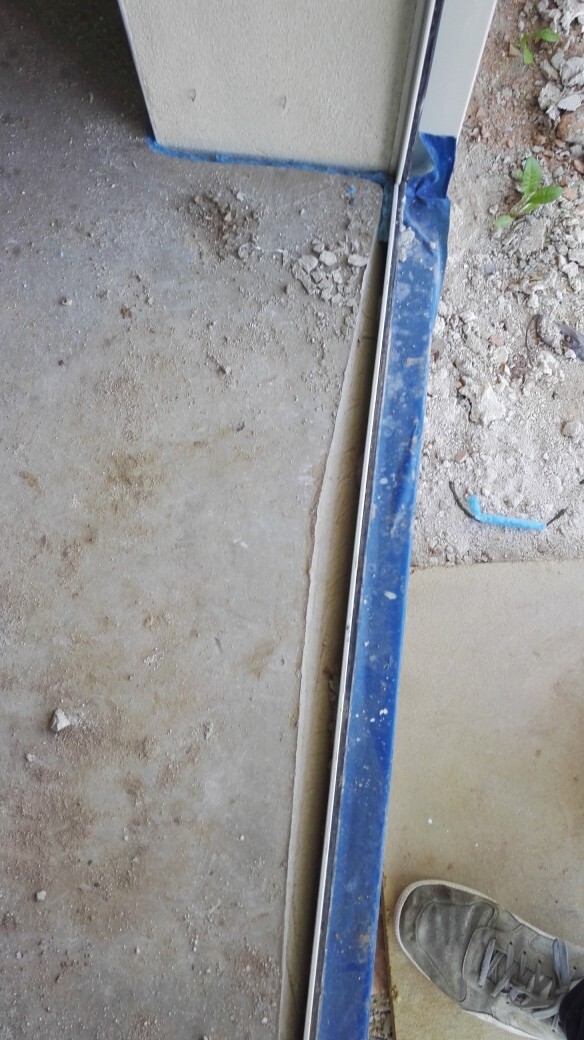
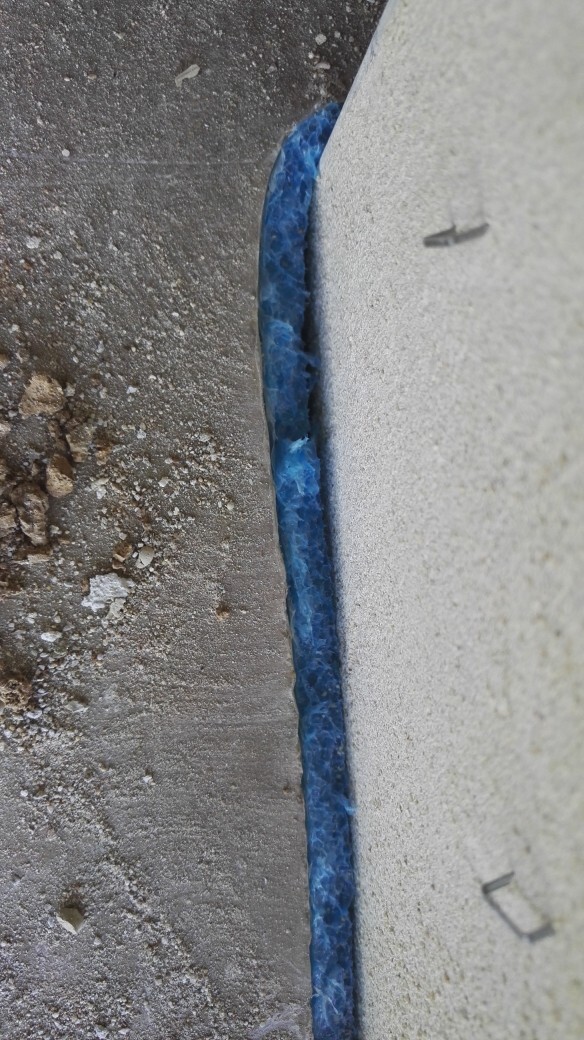
I have a solid room outside the house with masonry and concrete walls and a concrete ceiling.
The size is 6 x 4 meters (20 x 13 feet). It has a screed floor without any pipes or cables underneath.
The room is used like a garden shed.
Around the screed, as common in house construction, a (blue) foam strip was installed as an expansion joint. In house construction, this is usually covered by the floor covering or baseboards.
In my case, I simply want to apply a special concrete coating directly onto the screed.
This is generally possible and not in question. I do not want to use tiles.
However, the problem is that the edge strip isn’t solid but made of plastic. I cannot just pour the coating over it.
I also don’t want to apply a full surface leveling compound to create an entire new floor layer, as the screed is already nicely flat and smooth.
Now I wonder if I could simply pour some quick-setting screed at the edges and smooth it out with the regular screed.
But I am concerned that the substrate might not support it well enough and that the edges could become brittle over time.
Does anyone have an opinion on this?
Here are a few pictures showing the edge strip as well as a gap at the door.
K
Knallkörper12 May 2018 10:50Kaspatoo schrieb:
At the building materials supplier, I was advised to simply fill it with thick acrylic and then paint over it.
Is that bad advice?
Of the options mentioned here, a baseboard would be the most suitable for me, but it would also make it a bit difficult to mount (heavy-duty) shelves flush against the wall.I would recommend installing shelves as wall-mounted whenever possible, so you can easily vacuum underneath.
C
Caspar202012 May 2018 17:34We always leave a gap of 10-15cm (4-6 inches) under the heavy-duty shelving.
Besides, these things are usually very inexpensive.
Besides, these things are usually very inexpensive.
Kaspatoo schrieb:
Of the options mentioned here, the baseboard would be the closest fit for me, but it would also be somewhat obstructive when mounting (heavy-duty) shelves flush to the wall. If you want to anchor heavy-duty shelves to a wall with a baseboard in the room, you can install a spacer between the shelf and the wall or add a continuous strip (e.g., a wooden batten) to prevent any gaps between the wall and the shelf.

I used textured acrylic for this. I needed one tube for every 3–4 meters (10–13 feet) because the expansion joint was 1–2 cm (0.4–0.8 inches) wide. Even after curing, the acrylic remained soft and can be pressed in with some force using a finger.
The concrete coating I applied on top has so far held up well on the edge joints. However, when applying the paint, I didn’t distribute it evenly across the room. There are areas where the paint is thicker and others where almost none was applied. I should have painted during daylight and not poured the paint bucket’s contents over the floor to spread it. Instead, I should have applied the paint directly from the bucket with a roller. The coating feels rather rubbery, though—I expected it to harden more firmly.
Overall, it looks good and serves its purpose. I’m especially satisfied along the edges since you can’t really see that it’s an expansion joint. After filling the room with shelves, appliances, etc., I noticed that nothing specifically presses on the edge joint, so it’s not a problem.
Here are two photos of the result.
Note: One photo shows cracks caused by poorly applied cement; these have nothing to do with the expansion joint. In the end, I should have applied a thicker layer of paint to cover them or even used some fine acrylic. I might get some more paint and fix that later.

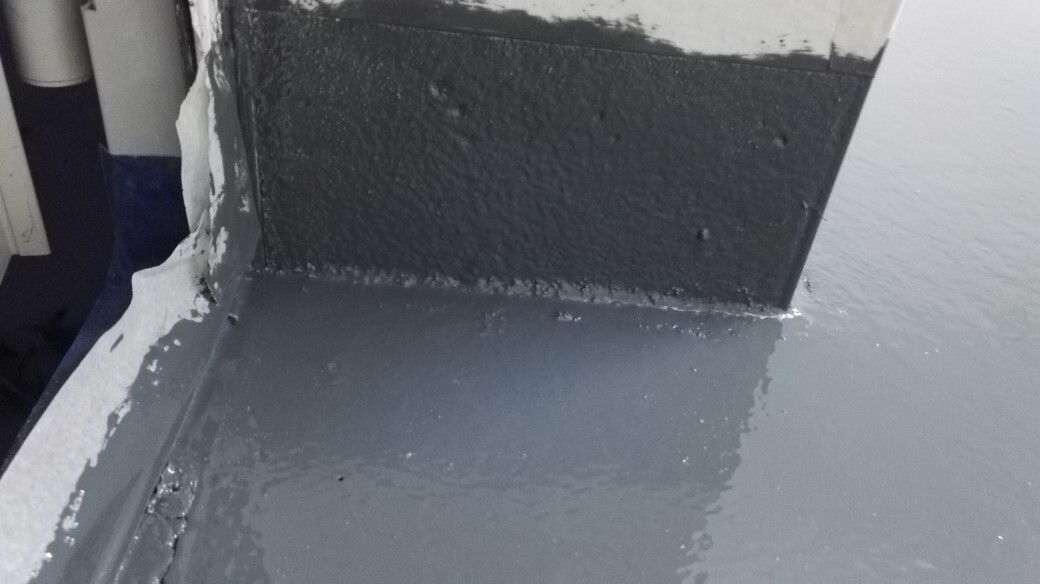
The concrete coating I applied on top has so far held up well on the edge joints. However, when applying the paint, I didn’t distribute it evenly across the room. There are areas where the paint is thicker and others where almost none was applied. I should have painted during daylight and not poured the paint bucket’s contents over the floor to spread it. Instead, I should have applied the paint directly from the bucket with a roller. The coating feels rather rubbery, though—I expected it to harden more firmly.
Overall, it looks good and serves its purpose. I’m especially satisfied along the edges since you can’t really see that it’s an expansion joint. After filling the room with shelves, appliances, etc., I noticed that nothing specifically presses on the edge joint, so it’s not a problem.
Here are two photos of the result.
Note: One photo shows cracks caused by poorly applied cement; these have nothing to do with the expansion joint. In the end, I should have applied a thicker layer of paint to cover them or even used some fine acrylic. I might get some more paint and fix that later.
K
Knallkörper31 May 2018 11:39Which product did you choose exactly?
Similar topics