
ᐅ Does the structural builder need to paint the joint between the insulation (expanded polystyrene) and the brick wall black?
Created on: 5 Mar 2018 22:28
M
MarchonischM
Marchonisch5 Mar 2018 22:28Good evening
Today, we had a plasterer visit who is supposed to do the exterior rendering for us.
While walking around the house together, he said that our structural builder should first paint black at the junction between the polystyrene insulation and the brick wall (outside).
We built on a slope. One of our floors is partly below ground level.
The concrete walls are painted black and covered with the mentioned polystyrene.
This sounds logical, but the structural builder immediately said this is not necessary. He even suggested that the black bitumen could penetrate the wall...
What do you think about this? I’m also surprised that the second plasterer didn’t mention anything about it.
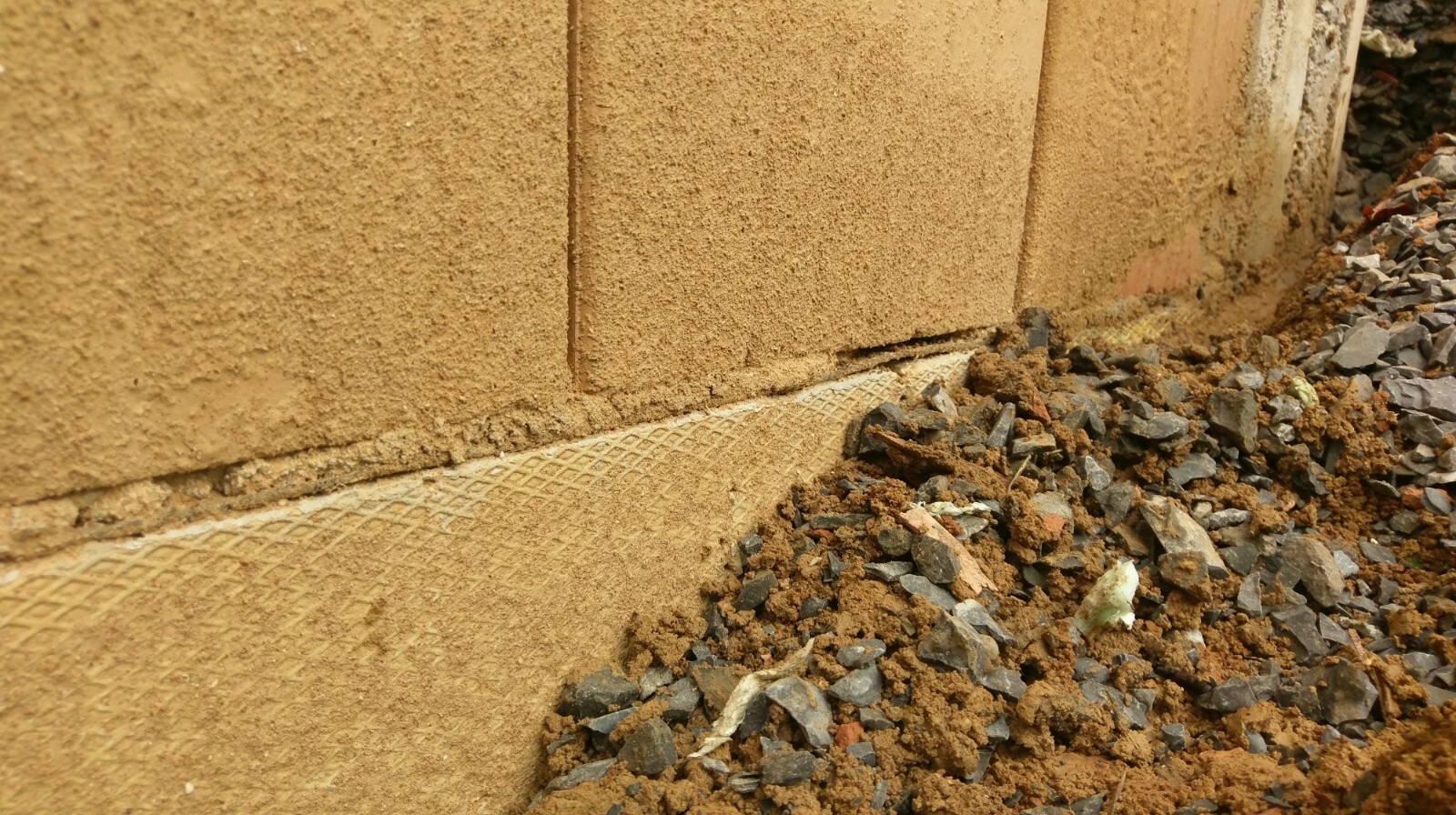
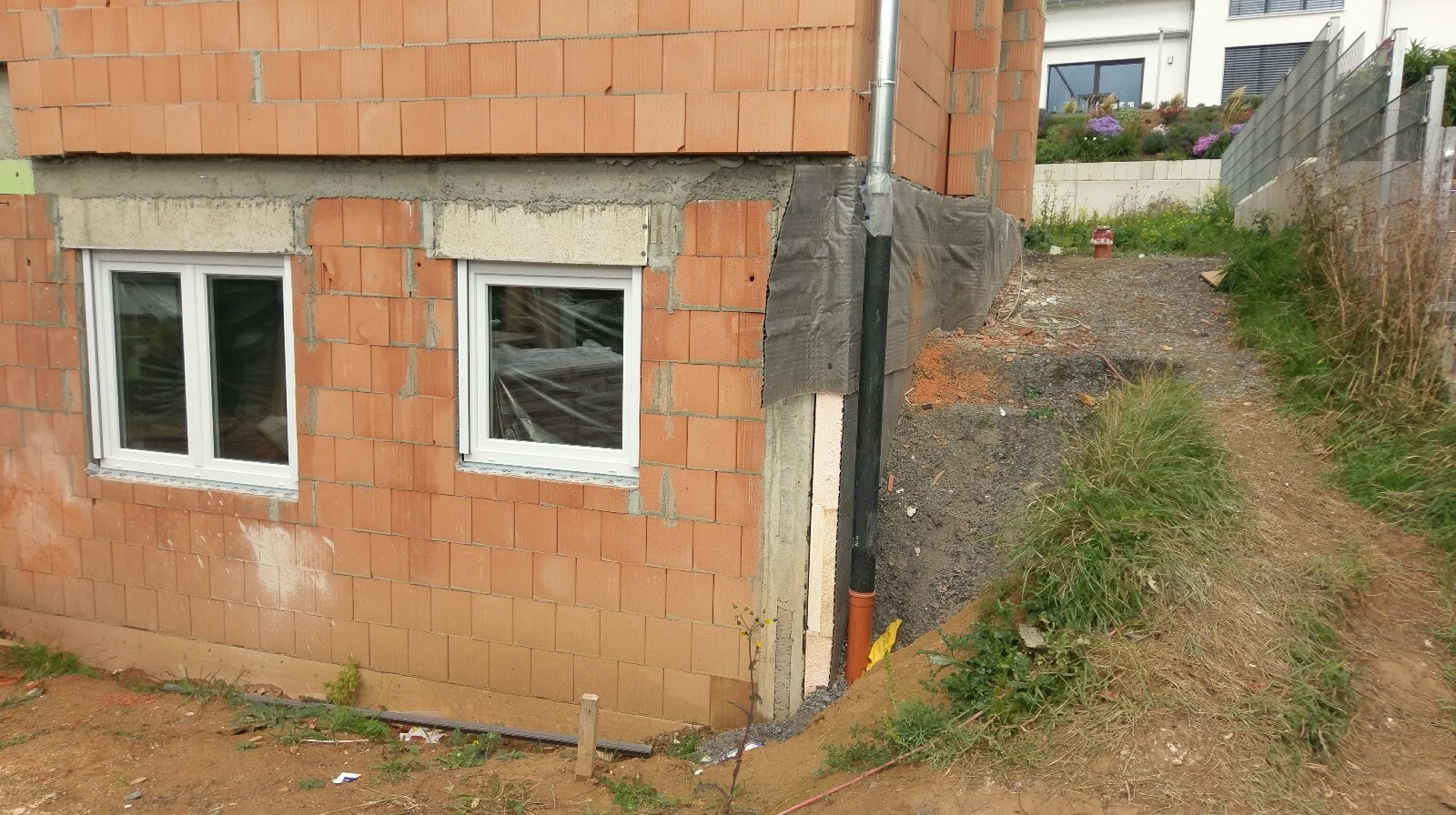
Today, we had a plasterer visit who is supposed to do the exterior rendering for us.
While walking around the house together, he said that our structural builder should first paint black at the junction between the polystyrene insulation and the brick wall (outside).
We built on a slope. One of our floors is partly below ground level.
The concrete walls are painted black and covered with the mentioned polystyrene.
This sounds logical, but the structural builder immediately said this is not necessary. He even suggested that the black bitumen could penetrate the wall...
What do you think about this? I’m also surprised that the second plasterer didn’t mention anything about it.
M
Marchonisch25 Mar 2018 12:07Does anyone have any ideas or opinions about this?
mertmk3 schrieb:
In our case, the bituminous thick coat is applied up to above the first row of bricks on the ground floor, as well as the perimeter insulation and dimpled membrane. Above that, wider bricks without the bituminous thick coat are used.In our case, a coating was also applied up to above the second row of bricks, but I don’t remember the exact name, it was gray.
Best regards,
Sabine
K
Knallkörper29 Mar 2018 14:04Curly schrieb:
At our place, a coating was also applied up to above the first row of bricks, but I don’t remember what it was called; it was gray.That was probably a waterproof slurry.
Regarding the topic: How is it supposed to be prevented that surface water penetrates beneath the first row of bricks? There is a waterproof membrane between the foundation slab and the masonry. In the current condition, it is ineffective.
The masonry at the top left in the picture looks a bit unusual. How far does the masonry extend above the intermediate floor?
B
Benutzer 100329 Mar 2018 16:51Hello forum,
The waterproofing against moisture from the ground is regulated by DIN 18195 and DIN 18533.
According to these standards, the waterproofing must extend at least 15 cm (6 inches) above the planned maximum water level (ground surface). Therefore, I would classify the work as defective.
According to the mentioned standards, a specialized professional plan (architect) must be prepared for waterproofing measures. Has this been done?
If not, this is first and foremost a planning defect.
Regardless, the contractor has a so-called duty to inform. The contractor should have recognized the deficient planning and pointed out the expected defects.
If this was not done, it is a defect in execution.
I would document the situation and report the defects in detail. A deadline of 1 week for defect correction is sufficient. After that, further corrections should be refused and substitute performance threatened.
I would definitely stop the continuation of the work until the waterproofing is installed correctly. Retrofitting will be difficult or even impossible.
Due to the complexity, I would involve an expert with the appropriate field of expertise.
Best regards
Kristof
The waterproofing against moisture from the ground is regulated by DIN 18195 and DIN 18533.
According to these standards, the waterproofing must extend at least 15 cm (6 inches) above the planned maximum water level (ground surface). Therefore, I would classify the work as defective.
According to the mentioned standards, a specialized professional plan (architect) must be prepared for waterproofing measures. Has this been done?
If not, this is first and foremost a planning defect.
Regardless, the contractor has a so-called duty to inform. The contractor should have recognized the deficient planning and pointed out the expected defects.
If this was not done, it is a defect in execution.
I would document the situation and report the defects in detail. A deadline of 1 week for defect correction is sufficient. After that, further corrections should be refused and substitute performance threatened.
I would definitely stop the continuation of the work until the waterproofing is installed correctly. Retrofitting will be difficult or even impossible.
Due to the complexity, I would involve an expert with the appropriate field of expertise.
Best regards
Kristof
Similar topics