
ᐅ Chimney – Planning Errors by Architects or General Contractors
Created on: 17 Mar 2018 00:23
A
Arifas
Hello,
The architect of our general contractor designed a stainless steel external flue for a chimney that was originally planned for the first floor. Yesterday, we received an email stating that the flue pipe required for the chimney we chose is so long that it extends far above the roof, causing structural issues. This is very different from what was shown in the plans for the building permit / planning permission, which we had approved. See plan.
Honestly, we are frustrated that the pipe now extends so extremely high, and we believe the architect should have known this in advance and informed us about the problem. We would have preferred a masonry chimney flue instead. Instead, we are being blamed that this problem arose because of the height of our chimney (the outlet is at 1.65 m (5 feet 5 inches) height). That can’t be correct, can it?! This is a completely normal chimney height, which an architect must account for when planning a chimney.
Our next question is whether there is anything that can be done to possibly shorten the flue pipe?
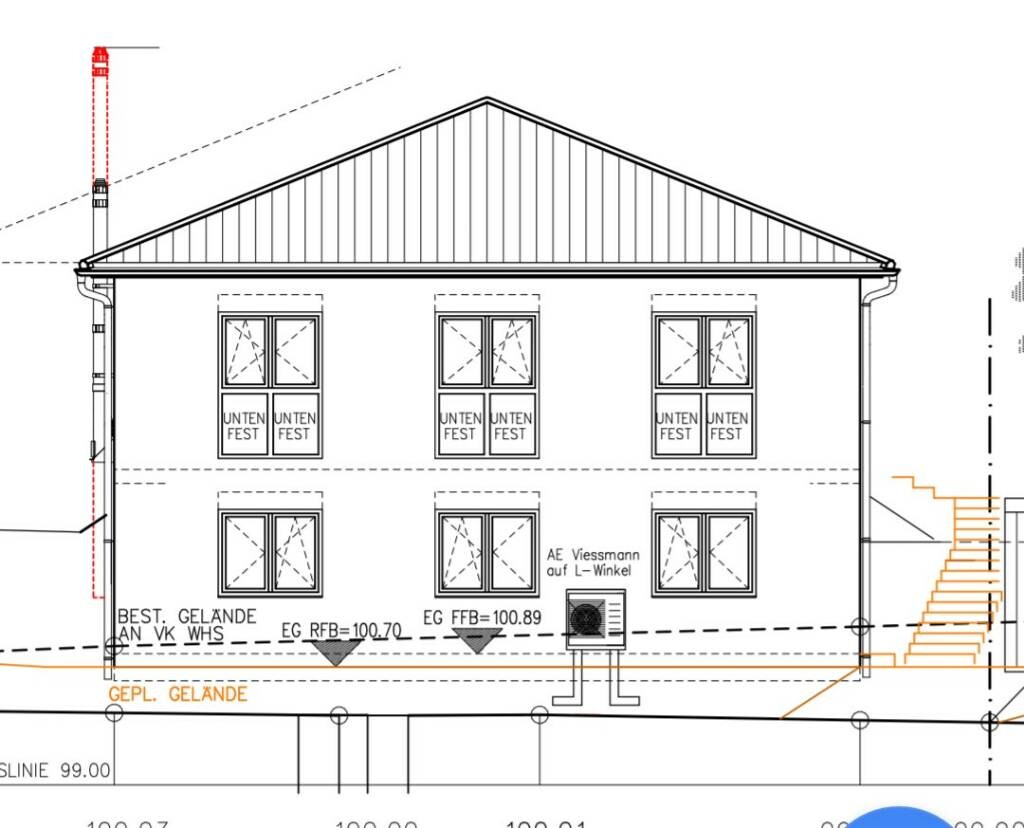
The architect of our general contractor designed a stainless steel external flue for a chimney that was originally planned for the first floor. Yesterday, we received an email stating that the flue pipe required for the chimney we chose is so long that it extends far above the roof, causing structural issues. This is very different from what was shown in the plans for the building permit / planning permission, which we had approved. See plan.
Honestly, we are frustrated that the pipe now extends so extremely high, and we believe the architect should have known this in advance and informed us about the problem. We would have preferred a masonry chimney flue instead. Instead, we are being blamed that this problem arose because of the height of our chimney (the outlet is at 1.65 m (5 feet 5 inches) height). That can’t be correct, can it?! This is a completely normal chimney height, which an architect must account for when planning a chimney.
Our next question is whether there is anything that can be done to possibly shorten the flue pipe?
T
toxicmolotof17 Mar 2018 00:37Well, it should be clear that the chimney requires a certain height to create proper draft. Otherwise, a stove simply won’t work correctly. In my opinion, this doesn’t really depend on the type of stove chosen. However, having the stove on the upper floor means the flue pipe has to extend further outside. Otherwise, the draft probably won’t be sufficient. I think I once read that at least around 5 meters (16 feet) are needed.
As for whether an architect "must" know this... I’m not sure. It’s good that they noticed it early on, though.
As for whether an architect "must" know this... I’m not sure. It’s good that they noticed it early on, though.
To be honest, we have no experience with stoves and chimneys at all. That’s why we had them planned separately by the general contractor or their architect. And it can’t be called timely, because we can no longer move it to the center of the house, where other options might have been possible with a masonry chimney.
B
Baustelle201617 Mar 2018 00:45From my point of view, this is not a planning error by the architect. Depending on the stove and the required draft, a chimney height of usually 3-5 m (10-16 ft) is necessary. The stove installer or dealer, who should also handle the chimney sizing, is aware of this. It does not matter whether the chimney is masonry or stainless steel.
Edit: Clearly, a chimney built in the center of the house would probably have been more effective.
But stainless steel, as shown, should actually work as well. Has the stove installer already been involved? Regards
Edit: Clearly, a chimney built in the center of the house would probably have been more effective.
But stainless steel, as shown, should actually work as well. Has the stove installer already been involved? Regards
Yes, a stove builder is involved.
I had actually relied on the drawing from the building permit/planning permission, trusting that the chimney would look like that later. But that’s definitely not possible if the fireplace is located as planned on the first floor. No matter which model we choose. I do think we should have been informed about this when we bought the chimney through the general contractor.
Edit: A simple chimney without draft assistance or fan apparently needs about 4-5 meters (13-16 feet). That’s quite a bit higher than what was originally indicated (black drawing), right?
I had actually relied on the drawing from the building permit/planning permission, trusting that the chimney would look like that later. But that’s definitely not possible if the fireplace is located as planned on the first floor. No matter which model we choose. I do think we should have been informed about this when we bought the chimney through the general contractor.
Edit: A simple chimney without draft assistance or fan apparently needs about 4-5 meters (13-16 feet). That’s quite a bit higher than what was originally indicated (black drawing), right?

Similar topics