
ᐅ Extension of the screed opening. Is there a risk that the screed might crack?
Created on: 3 Jan 2018 11:30
S
seol_1984
Hello everyone,
In our new build, the screed recess for our fireplace kit (about 600kg (1320 lbs)) was initially made too small. After complaining, it was enlarged as shown in the pictures. To me, as a layperson, it looks quite "improvised," but I might be wrong, so I would like to hear your opinion on this.
What stands out is that the expansion of the recess was clearly done with a different screed material, possibly cement screed, instead of calcium sulfate screed.
Is this a "normal" and "safe" procedure? Can we confidently place our fireplace on the enlarged recess without risk of the extension failing? What should we pay attention to, and should we complain again?
Thank you very much for your assessment.
Best regards,
Seol
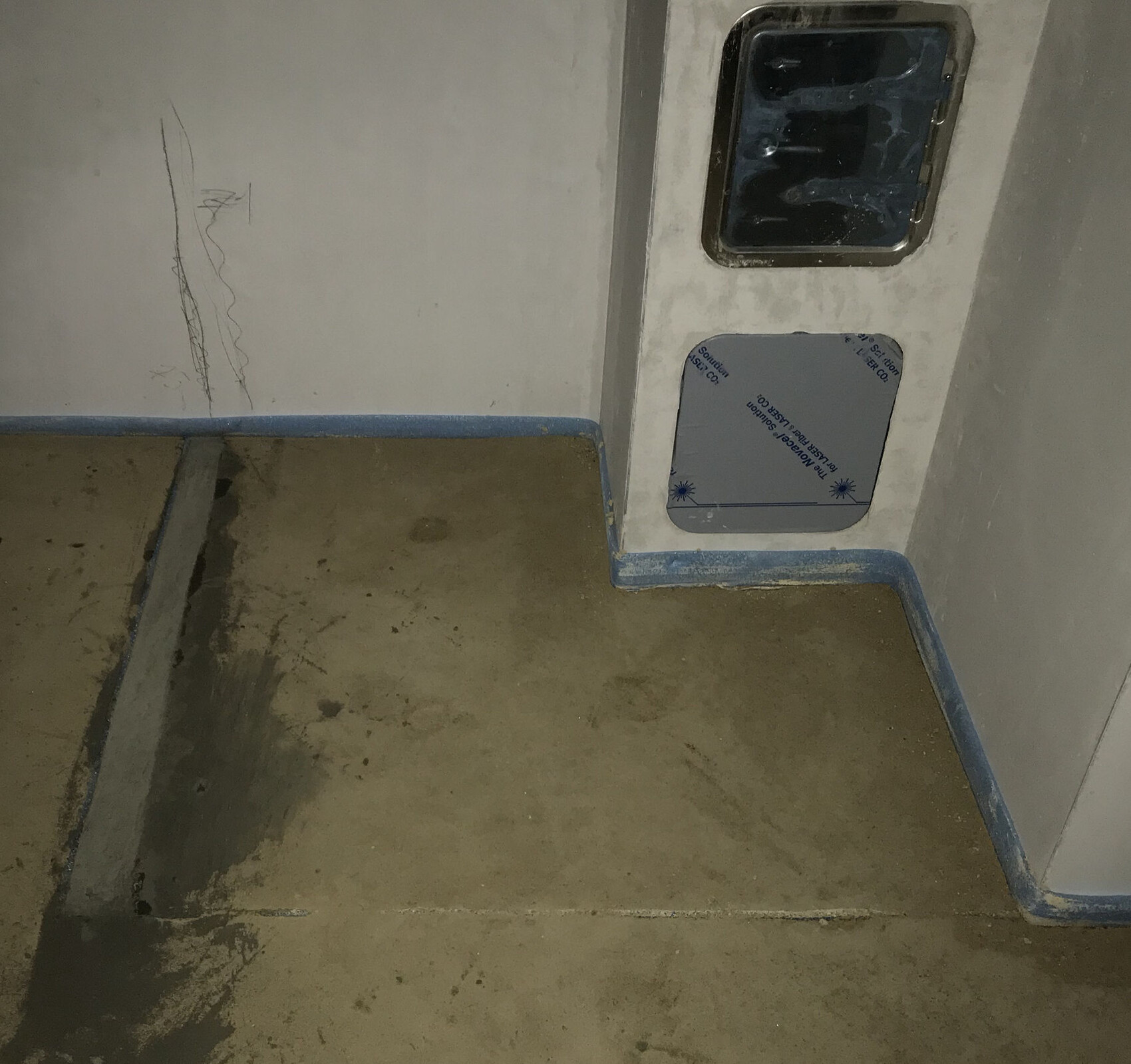
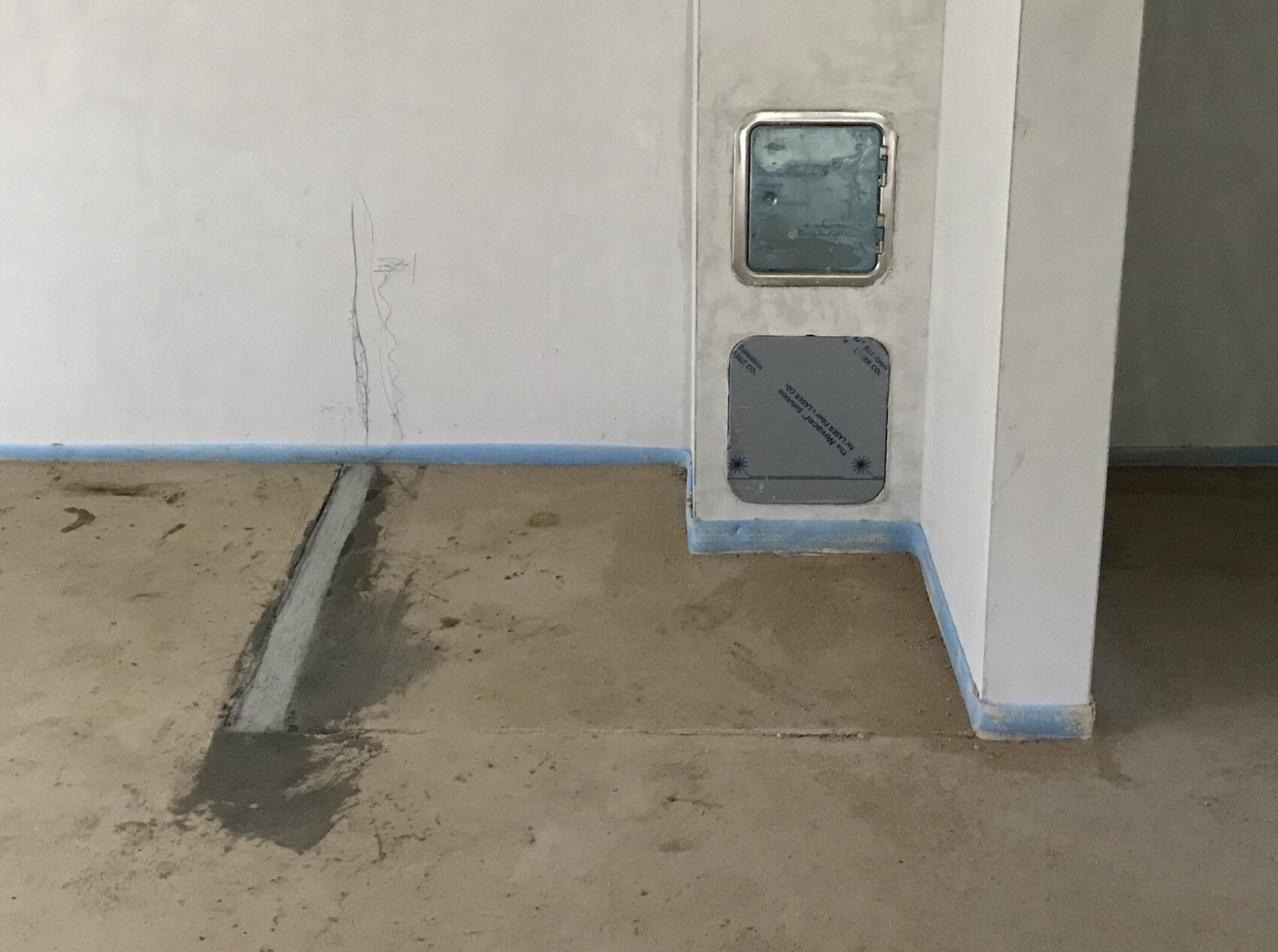
In our new build, the screed recess for our fireplace kit (about 600kg (1320 lbs)) was initially made too small. After complaining, it was enlarged as shown in the pictures. To me, as a layperson, it looks quite "improvised," but I might be wrong, so I would like to hear your opinion on this.
What stands out is that the expansion of the recess was clearly done with a different screed material, possibly cement screed, instead of calcium sulfate screed.
Is this a "normal" and "safe" procedure? Can we confidently place our fireplace on the enlarged recess without risk of the extension failing? What should we pay attention to, and should we complain again?
Thank you very much for your assessment.
Best regards,
Seol

KlaRa schrieb:
In your case, I would have built a plinth at the required height integrated with the raw ceiling, where the fireplace would then be installed. Do I understand this correctly: ... the raw ceiling beneath the fireplace base area was raised up to the top edge of the screed?
https://www.instagram.com/11antgmxde/
https://www.linkedin.com/company/bauen-jetzt/

Yes, that is correct.
The adjacent top layer is then extended up to the base area of the fireplace to create a clean visual finish.
The load transfer through the base onto structural floor slabs or ceiling slabs is also common in commercial construction or with large kitchen equipment.
The adjacent top layer is then extended up to the base area of the fireplace to create a clean visual finish.
The load transfer through the base onto structural floor slabs or ceiling slabs is also common in commercial construction or with large kitchen equipment.
S
seol_198412 Jan 2018 08:17To sum up what I understand from your answers, it seems that it does not look good visually and that it might have been better to take a different approach from the start. However, regarding our project (described in detail above), this does not really impose any significant limitations, correct?
No, that's not correct!
The appearance, which is emphasized here, won’t matter at all later on!
The opening was too small and has been enlarged.
The chimney is installed as a composite structure on a base made of cement screed on the structural slab and separated from the floating screed by a joint.
Then the floor covering is laid up to the chimney, and the renovation is complete.
Functionally and visually flawless!
No one lives directly on screed. It is always smoothed over and covered with a floor finish.
There are no problems here!
If the chimney had been built on the floating screed, the situation would have been completely different!
----------------
Rule of thumb:
Problems arise, you recognize and solve them.
Only the problems that are imagined are often unsolvable and tend to become exaggerated unnecessarily.
Regards, KlaRa
The appearance, which is emphasized here, won’t matter at all later on!
The opening was too small and has been enlarged.
The chimney is installed as a composite structure on a base made of cement screed on the structural slab and separated from the floating screed by a joint.
Then the floor covering is laid up to the chimney, and the renovation is complete.
Functionally and visually flawless!
No one lives directly on screed. It is always smoothed over and covered with a floor finish.
There are no problems here!
If the chimney had been built on the floating screed, the situation would have been completely different!
----------------
Rule of thumb:
Problems arise, you recognize and solve them.
Only the problems that are imagined are often unsolvable and tend to become exaggerated unnecessarily.
Regards, KlaRa
S
seol_198412 Jan 2018 13:00Hello KlaRa,
thank you for your feedback and for explaining how you would have done it/how it would have been correct from your perspective. But what am I supposed to do with that now? This is how it currently is. What is your assessment of the situation described above?
Regarding:
We were told that omitting the insulation is not possible because it would create a thermal bridge. Be that as it may—see the question above: What is your assessment of the described work? What exactly should I do now?
Good luck,
Seol
thank you for your feedback and for explaining how you would have done it/how it would have been correct from your perspective. But what am I supposed to do with that now? This is how it currently is. What is your assessment of the situation described above?
Regarding:
KlaRa schrieb:
The chimney is installed onto the structural ceiling as a unit on a base made of cement screed and separated from the floating screed by a joint.
We were told that omitting the insulation is not possible because it would create a thermal bridge. Be that as it may—see the question above: What is your assessment of the described work? What exactly should I do now?
Good luck,
Seol
KlaRa schrieb:
The chimney will be installed as a unit on a base made of cement screed on the structural ceiling and separated by a joint from the floating screed. So, as an alternative to thickening the structural ceiling in this area, the structural ceiling remains the normal thickness with a cement screed on top, but not floating, instead directly on the structural ceiling?
seol_1984 schrieb:
We were informed that leaving out the insulation is not possible, as it would create a thermal bridge. I don’t see that, since there should be a separation strip between it and the floating screed (?)
https://www.instagram.com/11antgmxde/
https://www.linkedin.com/company/bauen-jetzt/
Similar topics