

Hello,
we are demolishing a 500-year-old Jura farmhouse, and of course I’m salvaging everything that can still be reused. Also because the house holds a lot of memories from my (grandparents’) generation.
The floor of the house is made entirely of Jura marble slabs, as old as the house itself (about 500-550 years). Some are naturally broken, but so far we’ve already recovered several good stacks just from the kitchen.
What do you think would be good ideas for using them in our new build project? Indoors or outdoors? Also, I’m not sure how to prepare them, since they are too thick for tiles, for example, and I’m worried that if used outside, they might crack from freezing...
There are even larger hexagonal slabs, it would really be a shame to waste these valuable pieces!
Here are a few pictures:
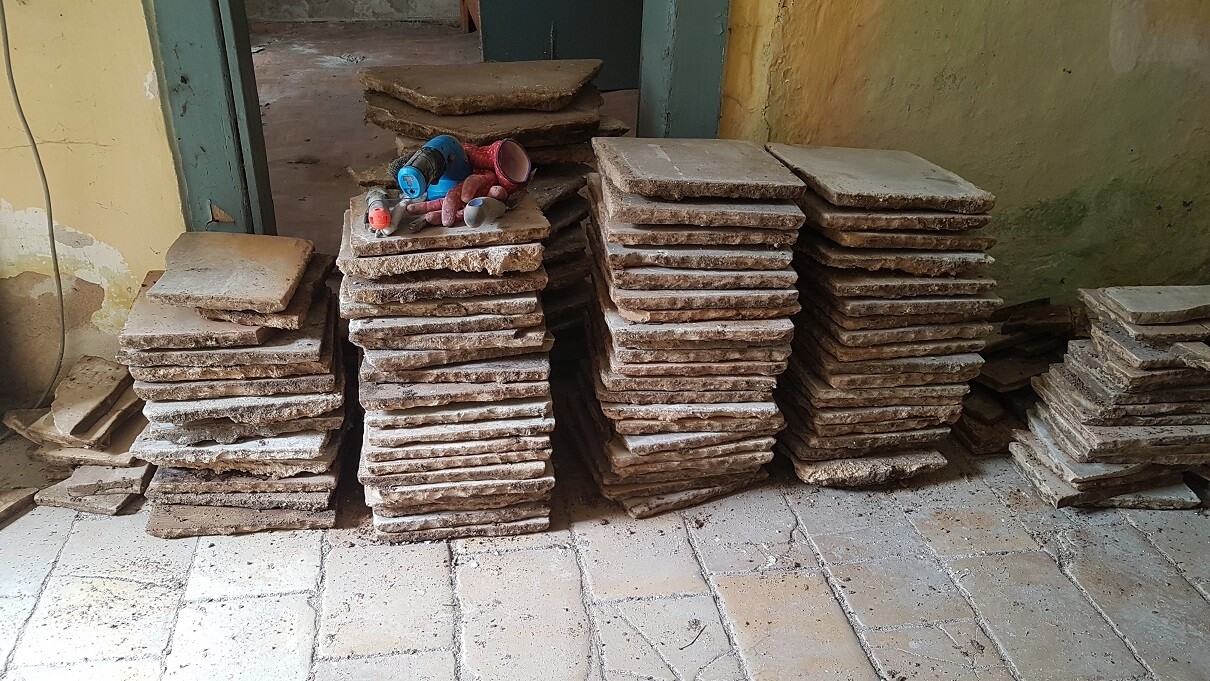

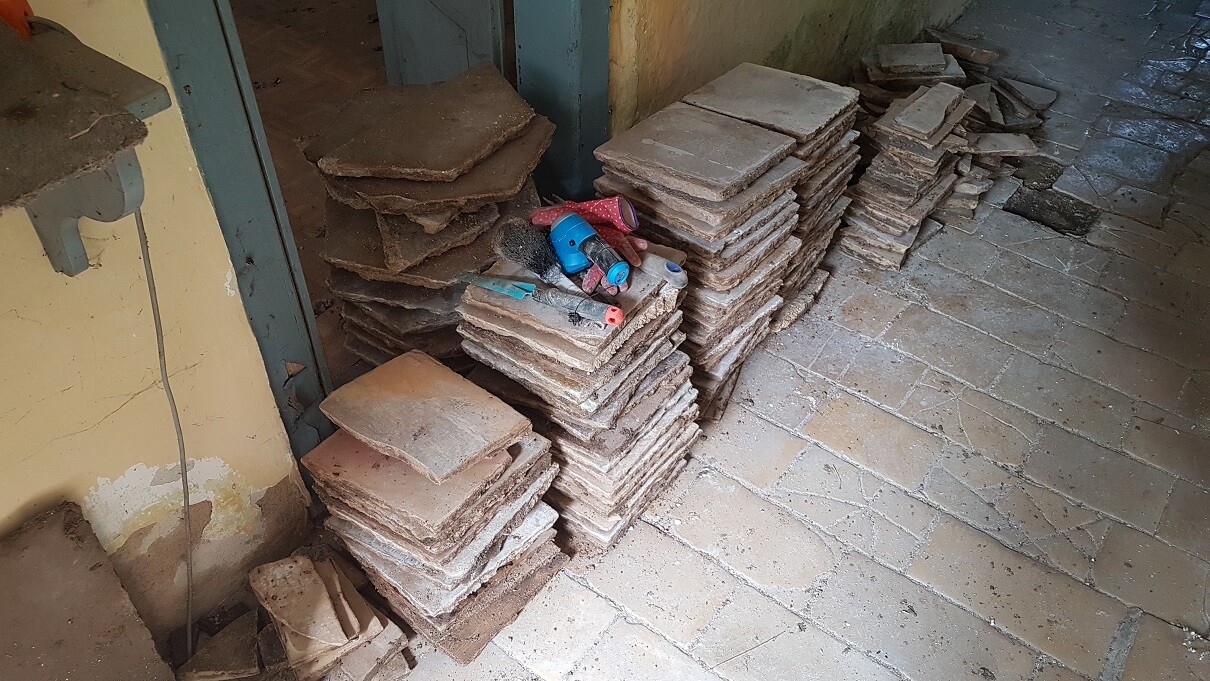
we are demolishing a 500-year-old Jura farmhouse, and of course I’m salvaging everything that can still be reused. Also because the house holds a lot of memories from my (grandparents’) generation.
The floor of the house is made entirely of Jura marble slabs, as old as the house itself (about 500-550 years). Some are naturally broken, but so far we’ve already recovered several good stacks just from the kitchen.
What do you think would be good ideas for using them in our new build project? Indoors or outdoors? Also, I’m not sure how to prepare them, since they are too thick for tiles, for example, and I’m worried that if used outside, they might crack from freezing...
There are even larger hexagonal slabs, it would really be a shame to waste these valuable pieces!
Here are a few pictures:
Yes, that’s what I thought too, but when we suggested using tiles in the entrance area, it was said that the screed would have to be thinner in that spot. This then leads to additional steps that make the overall cost higher than if we used regular tiles in the entrance area.

Storing and keeping them definitely pays off. I would use them again inside the house on the floor; for outdoor areas I share your concern, and for the wall they are too thick.
I agree with that as well.
I think the gain in uniqueness is “not worth” the bit of extra effort :-)
It could be interesting to polish part of them and leave part unpolished, then lay them mixed.
Overall, there will still be a lot left over that’s better than what you can or want to install yourself. If you have patience, you’ll be pleasantly surprised by how much you can still sell them for.
https://www.instagram.com/11antgmxde/
https://www.linkedin.com/company/bauen-jetzt/
matte1987 schrieb:
For a new build, the standard tile thickness doesn’t really matter at first. If planned early, the flooring can also be thicker.
I agree with that as well.
KingSong schrieb:
This then leads to additional steps that overall make it more expensive than if we were to cover the entrance area with regular tiles.
I think the gain in uniqueness is “not worth” the bit of extra effort :-)
It could be interesting to polish part of them and leave part unpolished, then lay them mixed.
Overall, there will still be a lot left over that’s better than what you can or want to install yourself. If you have patience, you’ll be pleasantly surprised by how much you can still sell them for.
https://www.instagram.com/11antgmxde/
https://www.linkedin.com/company/bauen-jetzt/
Similar topics