
Hello,
my tenant sent me the following photo from my basement apartment. Apparently, there are moisture problems.
This concerns an exterior wall.
What is the correct procedure here (four-family house with four owners)? Should I first hire a building expert at my own expense to determine the cause (it could also be due to incorrect ventilation, etc.)?
How would you proceed in this situation?
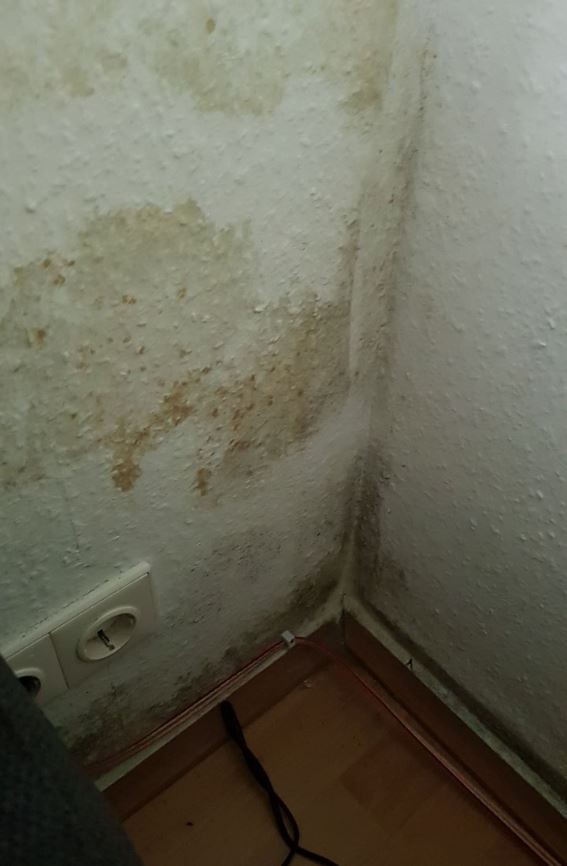
my tenant sent me the following photo from my basement apartment. Apparently, there are moisture problems.
This concerns an exterior wall.
What is the correct procedure here (four-family house with four owners)? Should I first hire a building expert at my own expense to determine the cause (it could also be due to incorrect ventilation, etc.)?
How would you proceed in this situation?

In addition to insufficient ventilation or heating, causes of moisture damage can include a lack of building insulation, which leads to condensation of warm, humid indoor air on cold structural elements (thermal bridges).
Or rising damp from the ground due to the absence of a horizontal damp-proof course in the masonry, or missing or faulty waterproofing of the slab foundation. Or missing or defective vertical waterproofing of the exterior walls in cases of hydrostatic or intermittent water pressure. Or leaking/damaged downspouts or drainage pipes, which can cause seemingly inexplicable localized moisture problems in certain areas.
Before deploying the full equipment of an engineering office for moisture measurement, it is advisable to clarify the building physics and structural relationships of the probable moisture cause through an on-site inspection. Building documents such as working drawings, construction descriptions, and contractor invoices that detail the shell construction and materials used are also helpful for this purpose.
Or rising damp from the ground due to the absence of a horizontal damp-proof course in the masonry, or missing or faulty waterproofing of the slab foundation. Or missing or defective vertical waterproofing of the exterior walls in cases of hydrostatic or intermittent water pressure. Or leaking/damaged downspouts or drainage pipes, which can cause seemingly inexplicable localized moisture problems in certain areas.
Before deploying the full equipment of an engineering office for moisture measurement, it is advisable to clarify the building physics and structural relationships of the probable moisture cause through an on-site inspection. Building documents such as working drawings, construction descriptions, and contractor invoices that detail the shell construction and materials used are also helpful for this purpose.
R
R.Hotzenplotz21 Aug 2017 19:25tomtom79 schrieb:
Never leave windows in tilt position.
At least three times a day, open all windows fully to create cross-ventilation. The tenant wants to know why tilted windows are not recommended. I need to explain this to him. Opening all windows three times a day is not possible since he usually leaves the house at 7 a.m. and only returns around 7 p.m.

The room cools down at that spot without sufficient air exchange taking place.
In the one picture where the speaker cable is visible, it was also placed too close to the wall.
Furniture should generally not be positioned too close to the wall.
Have you measured anything yet?
In the one picture where the speaker cable is visible, it was also placed too close to the wall.
Furniture should generally not be positioned too close to the wall.
Have you measured anything yet?
R
R.Hotzenplotz21 Aug 2017 19:47tomtom79 schrieb:
Have you taken any measurements yet?No, that will only be possible next week. The expert doesn’t have time before then.R.Hotzenplotz schrieb:
Opening all windows three times a day isn’t possible, as he’s usually out of the house from 7 am and only returns around 7 pm (19:00).So he keeps everything nicely cool and doesn’t heat while away?
Speak gently and respectfully with him. Not everyone knows that ventilation or heating can be done incorrectly. During an on-site appointment, as @wpic suggests, a professional can explain this from a technical perspective. He probably doesn’t believe you and thinks he should create dry air. At least, that might be the case.
As a tenant, he is in a better position, so be careful not to upset him, otherwise he might reduce the rent and become less cooperative. That’s probably not something you want. What’s important now is that he has more availability, participates, and cooperates.
R
R.Hotzenplotz21 Aug 2017 19:53I just spoke with him again.
He doesn’t use heating in the summer. He estimates the temperature at around 20°C (68°F). If asked to turn on the heating, he will want a very good reason; he is basically reluctant to use the heating during the summer.
He keeps the windows tilted open, sometimes for extended periods. He rarely, if ever, does shock ventilation (fully opening the windows briefly).
He also mentioned that the sofa is placed directly against the wall. However, the moisture forms on the left and right sides next to it.
He dries laundry in the bathroom. He doesn’t have any other space for it.
This really needs to be discussed with a professional. Then a standard guideline should be created explaining the proper behavior. After that, I need to add a lease agreement addendum—at least for the next tenant, if they are unwilling to sign it.
It’s really frustrating; then I pay 250 euros because of presumed improper ventilation… But as you said, the tenant is in the stronger position here. I never really wanted to rent out... until I saw this supposedly great deal… I should have stuck to my initial decision against renting.
He doesn’t use heating in the summer. He estimates the temperature at around 20°C (68°F). If asked to turn on the heating, he will want a very good reason; he is basically reluctant to use the heating during the summer.
He keeps the windows tilted open, sometimes for extended periods. He rarely, if ever, does shock ventilation (fully opening the windows briefly).
He also mentioned that the sofa is placed directly against the wall. However, the moisture forms on the left and right sides next to it.
He dries laundry in the bathroom. He doesn’t have any other space for it.
This really needs to be discussed with a professional. Then a standard guideline should be created explaining the proper behavior. After that, I need to add a lease agreement addendum—at least for the next tenant, if they are unwilling to sign it.
It’s really frustrating; then I pay 250 euros because of presumed improper ventilation… But as you said, the tenant is in the stronger position here. I never really wanted to rent out... until I saw this supposedly great deal… I should have stuck to my initial decision against renting.
Similar topics