
Hello,
I want to install a new radiator in the bathroom. The current one is installed under a ledge:
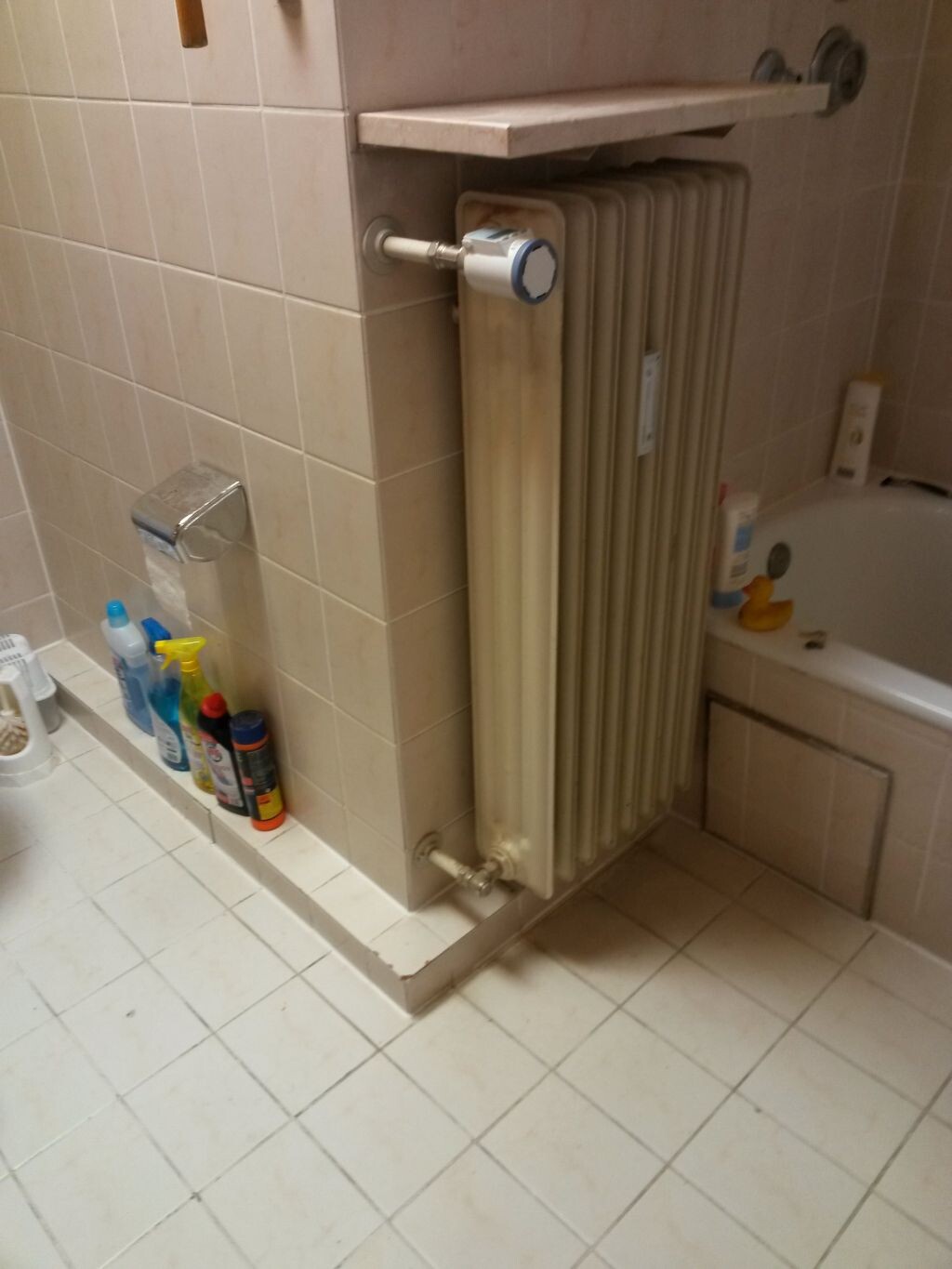
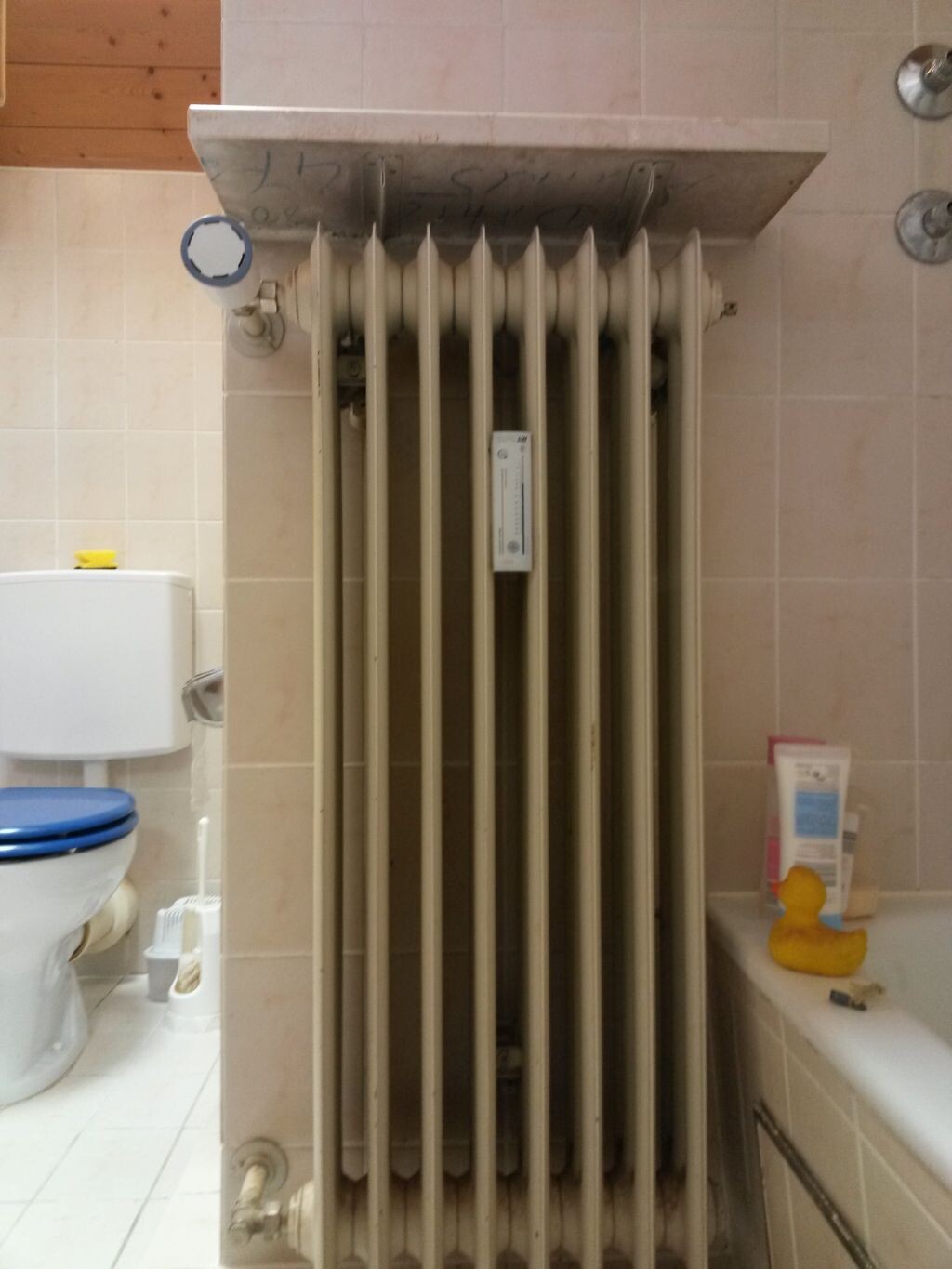
The new radiator is taller than the old one, so the ledge has to be removed. I also need to retile the entire bathroom eventually, but for now I just want to replace the radiator. How can I remove the marble slab and the supports underneath? Both seem to be built into the wall. What kind of tools are needed for this? Should you use an angle grinder for this?
Thank you very much, Philipp_
I want to install a new radiator in the bathroom. The current one is installed under a ledge:
The new radiator is taller than the old one, so the ledge has to be removed. I also need to retile the entire bathroom eventually, but for now I just want to replace the radiator. How can I remove the marble slab and the supports underneath? Both seem to be built into the wall. What kind of tools are needed for this? Should you use an angle grinder for this?
Thank you very much, Philipp_
11ant schrieb:
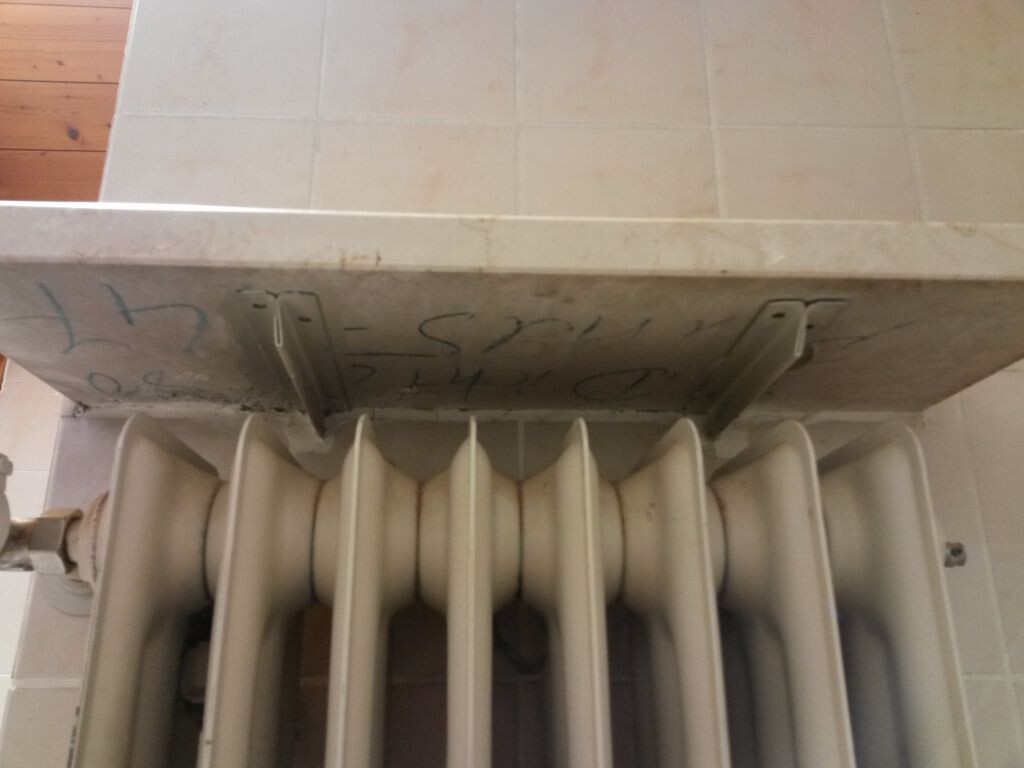
From the photos, it’s hard to tell from the perspective whether the brackets are set into the joints. If so, they might be rod-shaped and cast in place. If they are angle brackets as I suspect, it would take a lot more force to break them free than you might expect before they become exposed. Here is a close-up:
I thought I could quickly install a new radiator for the hydraulic balancing and then remove it briefly in the fall to flow behind it. But I seriously underestimated the effort, so I’ll do it all in one go in the fall or winter.
Thank you!

In this picture, it does not seem unlikely that it is the version with the rod permanently set in concrete.
Isn't there still a lot more to be done? - I seem to recall that it also involves an enclosed drain pipe and a pipe leading above the bathtub, as well as unclear height relationships between the bathtub and bathroom floor, so overall it is not a simple construction site.
https://www.instagram.com/11antgmxde/
https://www.linkedin.com/company/bauen-jetzt/
Isn't there still a lot more to be done? - I seem to recall that it also involves an enclosed drain pipe and a pipe leading above the bathtub, as well as unclear height relationships between the bathtub and bathroom floor, so overall it is not a simple construction site.
https://www.instagram.com/11antgmxde/
https://www.linkedin.com/company/bauen-jetzt/
11ant schrieb:
In this picture, it doesn’t seem unlikely that it is the cemented-in rod-shaped type.Another photo:
That would mean cutting or sawing off, right?
11ant schrieb:
Isn’t there actually a lot more to do? – I seem to remember that this also involves an enclosed drain pipe and a pipe leading into the tub, and generally unclear height relationships between tub and bathroom floor, so overall not a simple job.Yes, I will be quite busy over the winter. I want to do as much as possible myself because I don’t currently have the funds to have everything done. Of course, if pipes need to be laid, I will still need professionals.
If you’re going to do it soon anyway, the temporary appearance doesn’t really matter, right?
Then I would try using an angle grinder. Clearly, the order isn’t ideal, but the hydraulic balancing is definitely useful. And of course, you can remove and reinstall the radiator again.
Then I would try using an angle grinder. Clearly, the order isn’t ideal, but the hydraulic balancing is definitely useful. And of course, you can remove and reinstall the radiator again.
Philipp_ schrieb:
That would mean cutting or sawing off, right? For heaven’s sake, definitely not that. Aside from the fact that you’ll end up trying methods where you eventually lose control of the angle grinder: by doing this, you’d be cutting exactly the leverage you need to remove those pieces completely. A bad idea with serious safety risks.
Philipp_ schrieb:
Another photo: Well, you can clearly see there that it’s probably glued. Either find a small hole as far back as possible and thread a wire loop through, or from the front, aim under the tip using a small hammer and chisel. Tap gently, don’t hammer. No force required.
https://www.instagram.com/11antgmxde/
https://www.linkedin.com/company/bauen-jetzt/
11ant schrieb:
Well, you can clearly see that it must be glued.Is the bracket then only glued to the masonry beneath the plaster, or does it extend into the masonry?
Similar topics