
Hello everyone,
We are currently still considering how to design the upper floor regarding non-load-bearing walls. The architect planned the entire upper floor with 12.5cm (5 inches) drywall partitions (W112).
I have done some research and believe that drywall can achieve significantly better sound insulation compared to a Poroton brick.
The exterior masonry will be built with 36.5cm (14 inches) T7 lightweight concrete blocks.
According to the data sheets, I understand that a simple drywall panel can reach 53dB and with "Silent Board" up to 66dB. In comparison, the brick achieves 52dB.
What are your thoughts on this topic? How have you handled it, and what are your experiences regarding soundproofing?
The stud construction will be placed directly on the raw floor slab, not on the screed.
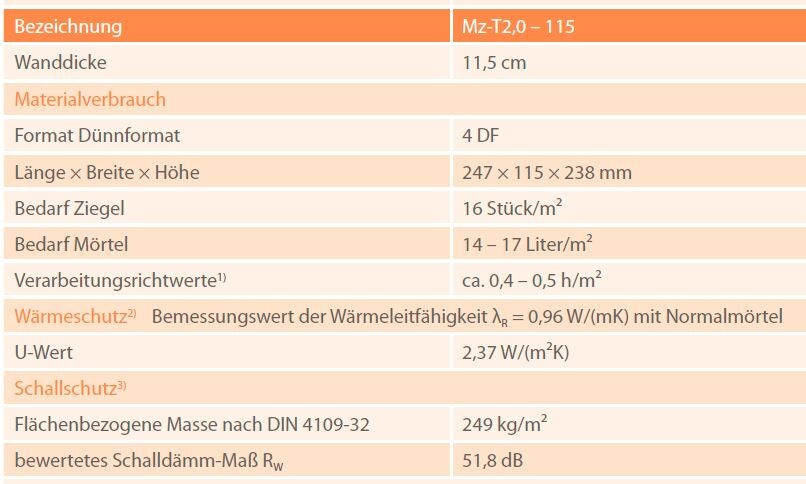
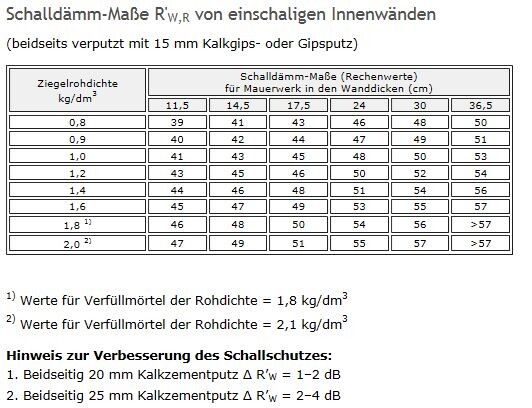
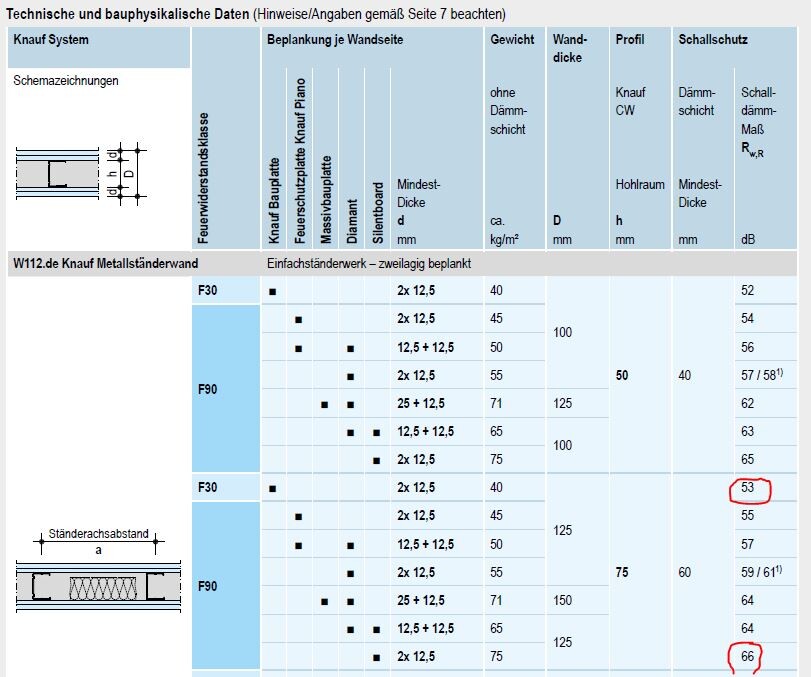
We are currently still considering how to design the upper floor regarding non-load-bearing walls. The architect planned the entire upper floor with 12.5cm (5 inches) drywall partitions (W112).
I have done some research and believe that drywall can achieve significantly better sound insulation compared to a Poroton brick.
The exterior masonry will be built with 36.5cm (14 inches) T7 lightweight concrete blocks.
According to the data sheets, I understand that a simple drywall panel can reach 53dB and with "Silent Board" up to 66dB. In comparison, the brick achieves 52dB.
What are your thoughts on this topic? How have you handled it, and what are your experiences regarding soundproofing?
The stud construction will be placed directly on the raw floor slab, not on the screed.

11ant schrieb:
Drywall partitions are not only non-load-bearing but also non-bracing. Hello,
That is incorrect.
Drywall partitions can be both load-bearing and bracing.
Olli
G
Goldi091112 Apr 2017 08:51I read a lot yesterday...
If I assume that the stud wall is installed below the screed and not on top of it, then a drywall partition should provide very good sound insulation, whether against airborne or impact sound.
I will ask which panels the architect has specified, as in my opinion it only makes sense to use soundproof panels, which are, however, significantly more expensive.
If I assume that the stud wall is installed below the screed and not on top of it, then a drywall partition should provide very good sound insulation, whether against airborne or impact sound.
I will ask which panels the architect has specified, as in my opinion it only makes sense to use soundproof panels, which are, however, significantly more expensive.
K
Knallkörper2 Apr 2017 10:01Goldi09111 schrieb:
I read a lot yesterday...
Assuming the stud frame is installed below the screed and not on top of it, a drywall partition should provide very good sound insulation, both for airborne and impact noise.
I will ask which boards the architect has specified because, in my opinion, it only makes sense to use acoustic insulation boards, which are however significantly more expensive.You are an engineer after all – just ask to see the corresponding octave band spectrum along with the sound insulation rating, so you can see which frequency ranges are most effectively reduced.
G
Goldi091112 Apr 2017 10:54The idea is good, although I always prefer practical experience over pure theory.

wrobel schrieb:
Drywall partitions can be both load-bearing and bracing.We’re not talking here about stud walls that can be used to build entire prefabricated houses. Nor about walls designed for mounting plumbing installations. Instead, we mean the sheeted metal track constructions (which cannot support a roof or ceiling and are not counted as bracing in skeletal construction).
Goldi09111 schrieb:
Assuming the framework is installed beneath the screed rather than on top of it, a drywall partition should provide very good sound insulation, whether for airborne or impact noise.This means the wall has to be installed before the screed is laid, making it less suitable for later removal or relocation. However, from an acoustic standpoint, this is better.
11ant schrieb:
Then this approach by the planner is surprising unique on the upper floor (?)One advantage, however, is greater freedom to position walls entirely differently than on the floor below.
https://www.instagram.com/11antgmxde/
https://www.linkedin.com/company/bauen-jetzt/
Similar topics