
G
Goldi0911131 Mar 2017 08:31Hello everyone,
We are currently still considering how to design the upper floor regarding non-load-bearing walls. The architect planned the entire upper floor with 12.5cm (5 inches) drywall partitions (W112).
I have done some research and believe that drywall can achieve significantly better sound insulation compared to a Poroton brick.
The exterior masonry will be built with 36.5cm (14 inches) T7 lightweight concrete blocks.
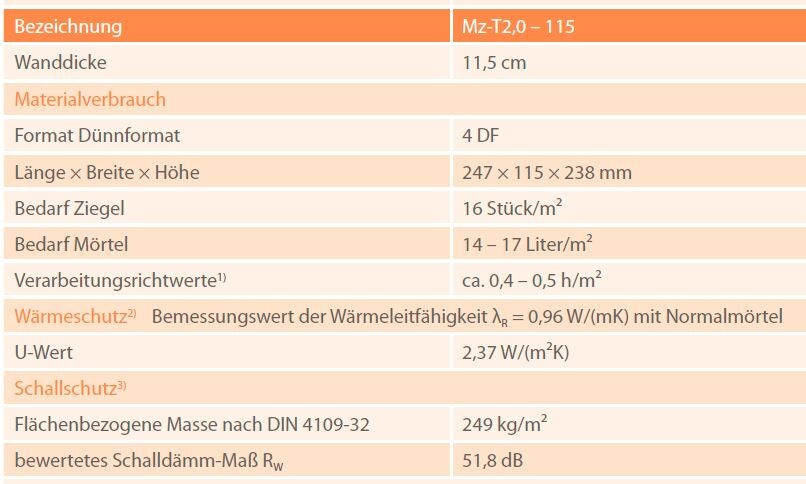
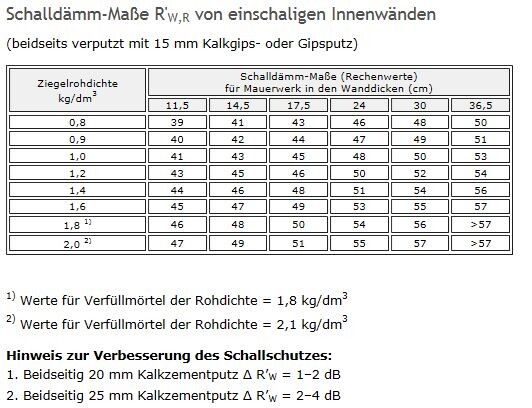
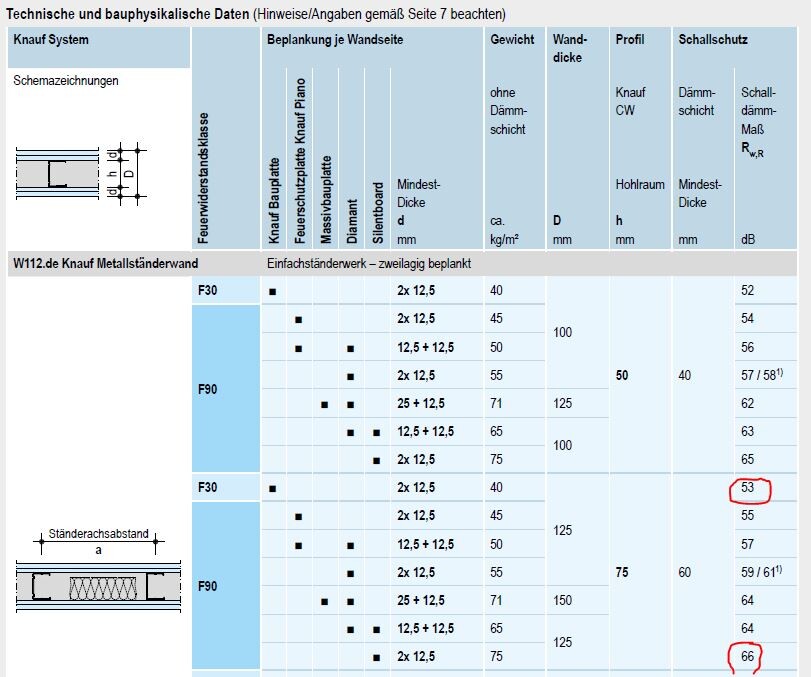
According to the data sheets, I understand that a simple drywall panel can reach 53dB and with "Silent Board" up to 66dB. In comparison, the brick achieves 52dB.
What are your thoughts on this topic? How have you handled it, and what are your experiences regarding soundproofing?
The stud construction will be placed directly on the raw floor slab, not on the screed.
We are currently still considering how to design the upper floor regarding non-load-bearing walls. The architect planned the entire upper floor with 12.5cm (5 inches) drywall partitions (W112).
I have done some research and believe that drywall can achieve significantly better sound insulation compared to a Poroton brick.
The exterior masonry will be built with 36.5cm (14 inches) T7 lightweight concrete blocks.
According to the data sheets, I understand that a simple drywall panel can reach 53dB and with "Silent Board" up to 66dB. In comparison, the brick achieves 52dB.
What are your thoughts on this topic? How have you handled it, and what are your experiences regarding soundproofing?
The stud construction will be placed directly on the raw floor slab, not on the screed.
S
Steffen8031 Mar 2017 08:42Drywall construction has additional advantages. Consider plumbing— with solid walls, you still need a false wall, which takes up valuable space. Therefore, we have all our "plumbing" walls built with drywall (except for exterior walls, where this is not possible).
Regards, Steffen
Regards, Steffen

Sound can be airborne noise or impact noise. A combination of material(s) and construction may be more effective for one type, but not necessarily for the other. Some planners’ preference for lightweight partition walls on the upper floor is more related to the cheaper construction of the roof slope connections than to different physical properties.
https://www.instagram.com/11antgmxde/
https://www.linkedin.com/company/bauen-jetzt/
https://www.instagram.com/11antgmxde/
https://www.linkedin.com/company/bauen-jetzt/
G
Goldi091111 Apr 2017 09:07We do not have any sloping ceilings...
What are your experiences?
What are your experiences?
K
Knallkörper1 Apr 2017 09:12In our old house, the interior walls are drywall, and we were very unhappy with them. They somehow sound hollow, don’t really contribute to phase shift (heat protection), and provide virtually no sound insulation. Additionally, the connections to the exterior masonry are cracking.
Now, your drywall partition is certainly much better. However, I would still personally prefer solid walls. Keep in mind that the plaster also significantly contributes to the surface mass and sound insulation. In our new build, all the walls on the upper floor are integrated about 1.5 meters (5 feet) into the ring beam, which I expect will result in even less movement between the walls.
Now, your drywall partition is certainly much better. However, I would still personally prefer solid walls. Keep in mind that the plaster also significantly contributes to the surface mass and sound insulation. In our new build, all the walls on the upper floor are integrated about 1.5 meters (5 feet) into the ring beam, which I expect will result in even less movement between the walls.
Goldi09111 schrieb:
We have no sloped ceilings...Then this approach by the designer surprises me, isolated in the upper floor (?)
Knallkörper schrieb:
It sounds hollow somehow, doesn’t really contribute to phase shift (heat protection), and the sound insulation is basically zero. Also, the connections to the exterior masonry crack. [...] In our new build, we involved all walls on the upper floor about 1.5 meters (5 feet) into the ring beam, which I expect to result in even less movement between the walls.Drywall partitions are not only non-load-bearing but also not stiffening. That is one reason why they are used beneath timber structures or in skeleton frame construction (where they are not required to provide such support).
In my opinion, they act as bass reflex surface resonators for airborne sound. So they don’t really have sound-insulating properties but rather shift sound into a frequency range below the measurement window (100 to 3,150 Hz). For impact sound, they even act more like resonators.
https://www.instagram.com/11antgmxde/
https://www.linkedin.com/company/bauen-jetzt/
Similar topics