
ᐅ Underfloor Heating – No Heating Loop Over Thermal Insulation Block
Created on: 11 Jan 2017 21:23
K
KrustyDerClownK
KrustyDerClown11 Jan 2017 21:23Hello everyone,
From your perspective, is it common not to install a floor heating loop above an insulation block?
On the ground floor, near the doors leading to the terrace, the substrate directly in front of the doors is an insulation block (aerated concrete). In exactly that area (only about 20cm (8 inches)), no underfloor heating is planned because this area is insulated.
Is this understandable and even advisable?
Best regards,
Oliver
From your perspective, is it common not to install a floor heating loop above an insulation block?
On the ground floor, near the doors leading to the terrace, the substrate directly in front of the doors is an insulation block (aerated concrete). In exactly that area (only about 20cm (8 inches)), no underfloor heating is planned because this area is insulated.
Is this understandable and even advisable?
Best regards,
Oliver

Hmm, in my construction, the underfloor heating is installed particularly densely at this exact spot... but what does it matter to the concrete? There is 10cm (4 inches) of insulation and impact sound insulation above it anyway... so the explanation is not really convincing...
B
Bieber081512 Jan 2017 09:59KrustyDerClown schrieb:
Is this understandable and even reasonable? For me, it is hard to follow. The underfloor heating is insulated below ("above a block"). Is the block located within the insulation layer?
When the heating pipes are installed, the substrate should be level. I don't understand your planning.
Hello,
I found some information related to the topic on the internet.
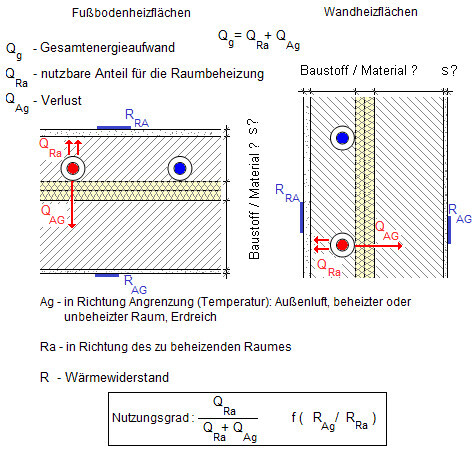
Take a look and read through it.
Best regards.
KrustyDerClown schrieb:
....
Is this understandable and even reasonable?
I found some information related to the topic on the internet.
Take a look and read through it.
Best regards.

Hello "Krusty".
There are no specific regulations in the relevant standards regarding the spacing of heating elements in front of floor-to-ceiling facade sections. However, it is true that heating elements are generally installed closer together in front of such facade parts to reduce the convection of cold air near window surfaces. But with a spacing of about 20cm (8 inches), there is no reason to be concerned—nothing will happen.
It is also correct that, from a construction perspective, the thermal insulation installed in the floor should increase in thickness in a tapered manner at these locations to prevent thermal bridges from the exterior. Aerated concrete has good thermal insulation properties.
The notes and sketches provided by the other "reader" apparently were not fully understood by them, as they have nothing to do with the issue you described. They were taken from a literature source clearly referring to DIN 18560 Part 2 (the screed standard for floating screeds and heated screeds).
I think you will be able to accept my explanations best, won’t you?
Best regards, KlaRa
There are no specific regulations in the relevant standards regarding the spacing of heating elements in front of floor-to-ceiling facade sections. However, it is true that heating elements are generally installed closer together in front of such facade parts to reduce the convection of cold air near window surfaces. But with a spacing of about 20cm (8 inches), there is no reason to be concerned—nothing will happen.
It is also correct that, from a construction perspective, the thermal insulation installed in the floor should increase in thickness in a tapered manner at these locations to prevent thermal bridges from the exterior. Aerated concrete has good thermal insulation properties.
The notes and sketches provided by the other "reader" apparently were not fully understood by them, as they have nothing to do with the issue you described. They were taken from a literature source clearly referring to DIN 18560 Part 2 (the screed standard for floating screeds and heated screeds).
I think you will be able to accept my explanations best, won’t you?
Best regards, KlaRa
KlaRa schrieb:
Hello "Krusty".
....I think you will be able to "live with" my explanations best, right?
Just a side question: what legally valid liability do you take for your answer ;-)
Is it guesswork, assumption, estimation, or a look into the highly unclear crystal ball?
RegardsSimilar topics