
ᐅ Architectural floor plan for a 240 m² single-family home in Bauhaus style
Created on: 15 Dec 2016 18:16
K
KostikschK
Kostiksch15 Dec 2016 18:16Hello everyone,
My name is Konstantin, and we will be building a house for ourselves and our children (currently 1, increasing to 3 in the next few years) in early 2017.
I have been following this forum for a while and am always grateful for your tips on all aspects of house construction. I have already been able to use many ideas for our project. Thank you all!
Attached is our floor plan (created with a friend who is an architect).
This floor plan has been optimized several times and we are quite happy with it.
Since this is a major investment that should be well planned and prepared, we would like to hear your opinions on the floor plan to avoid possible mistakes or to incorporate new ideas.
We look forward to your feedback.
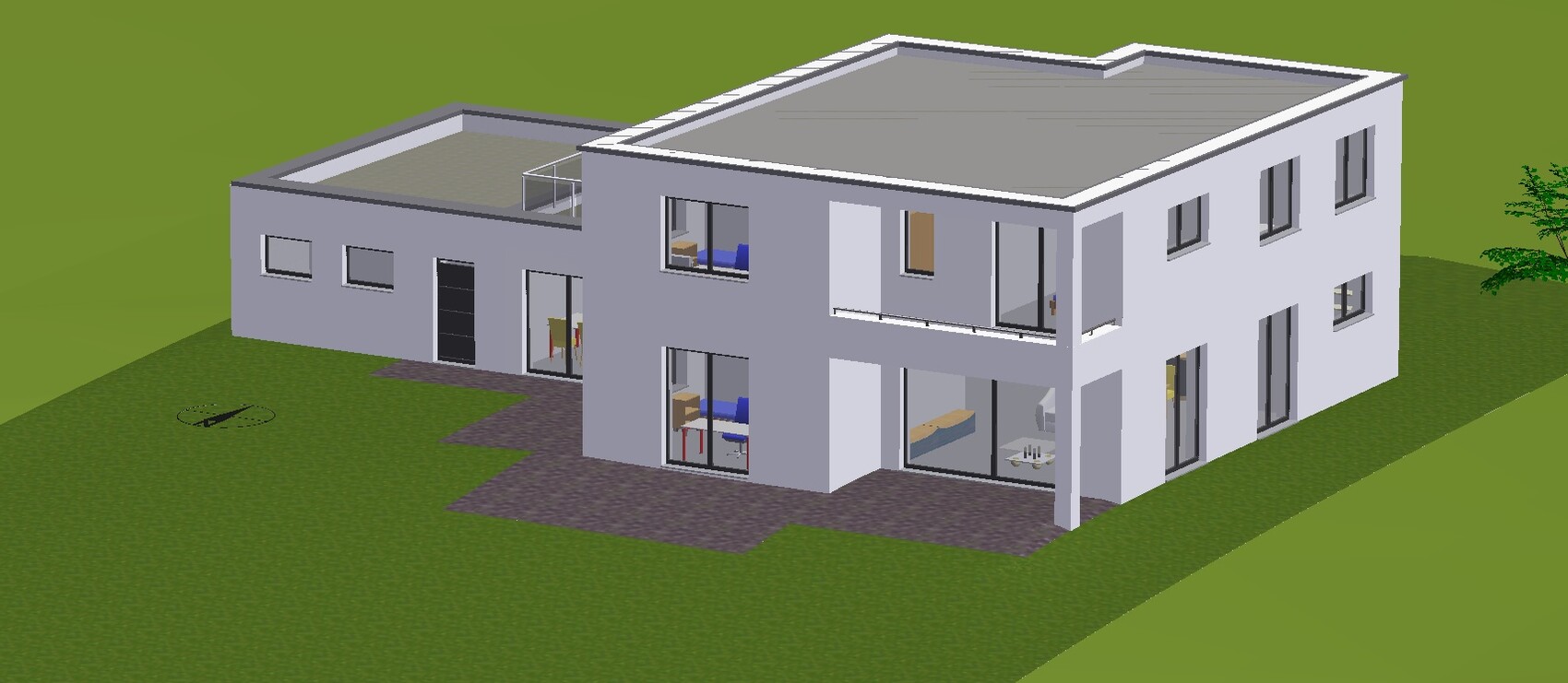
I have included images of the ground floor, upper floor, 3D house model, and the plot.
Development Plan / Restrictions
Plot size: 1,008m2 (see plot plan No. 412)
Slope: YES, south-facing slope 10%
Floor area ratio (FAR): 0.4
Site coverage ratio (building density): 0.4
Building envelope, building line, and boundary
Edge setback: 3 meters (10 feet) from the street, 1 meter (3 feet) from the neighbor (west side)
Number of floors: 1 full floor + 1 recessed upper floor
Roof type: flat roof
Client Requirements
Style: Bauhaus
Roof: flat roof
Basement: no
Number of floors: 2
Number of people, age: currently 3, increasing to 5 within 5 years
Office: home office + meeting room
Guest stays per year: at least 1–2 times per month
Open or closed architecture: open
Conservative or modern construction: modern
Open kitchen, cooking island: open kitchen
Number of dining seats: at least 8
Fireplace: no
Balcony, roof terrace: yes/yes
Garage, carport: garage
Vegetable garden, greenhouse: no
Additional features: KNX wiring, ground-source heat pump, controlled mechanical ventilation, water softener, KFW55 (energy standard)
House Design
Designed by: architect
Estimated cost according to architect/planner: around 500,000 euros plus land
Preferred heating technology: heat pump
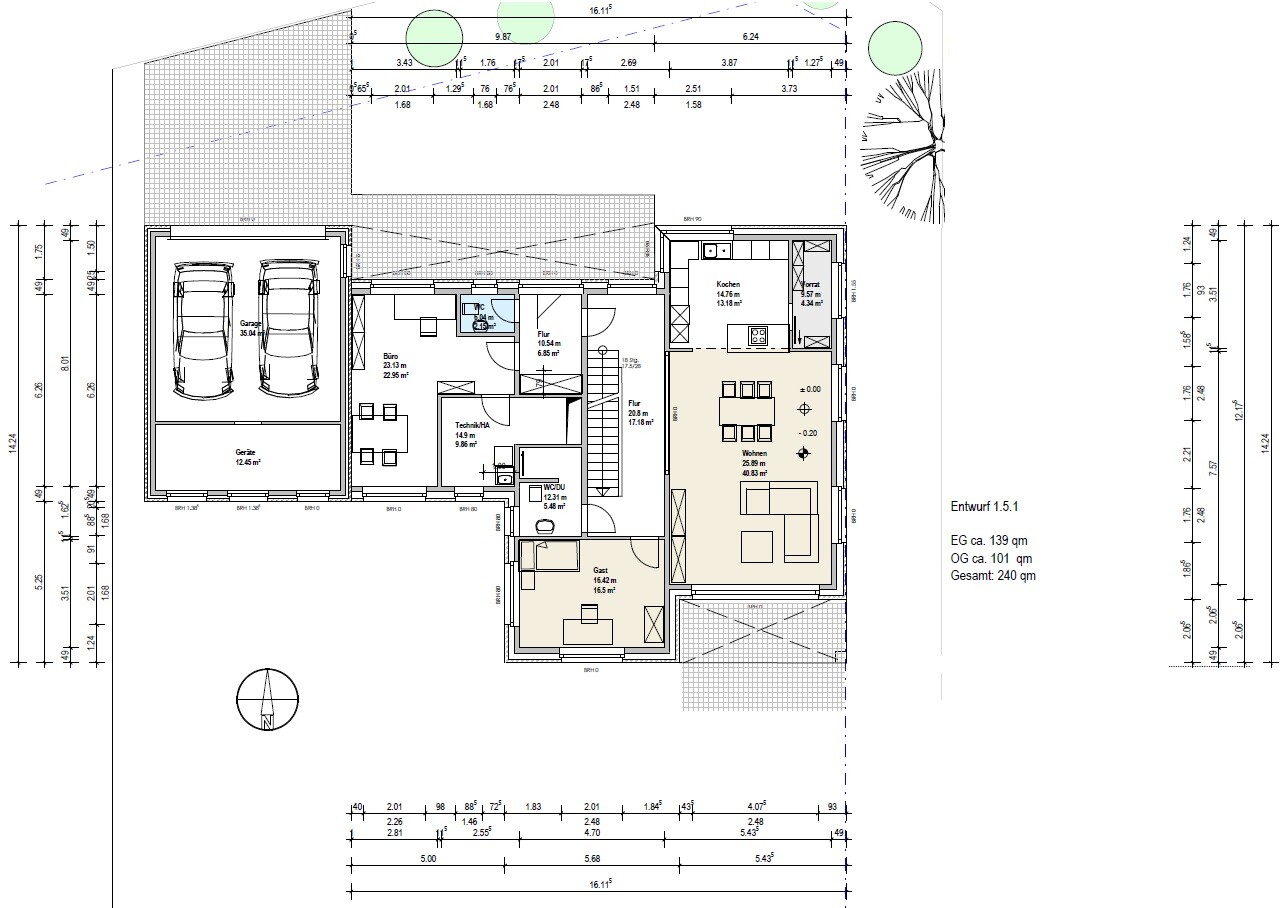
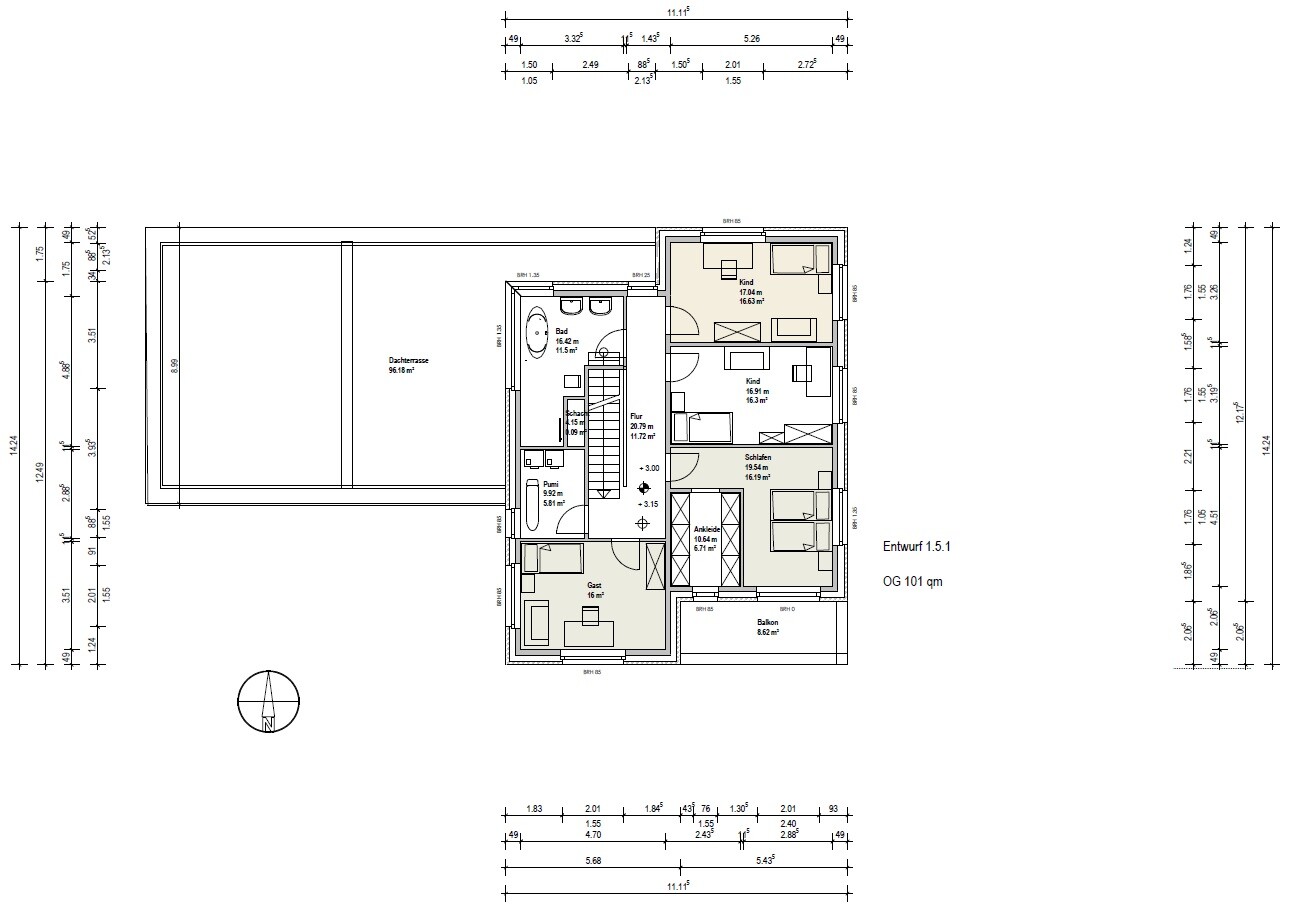
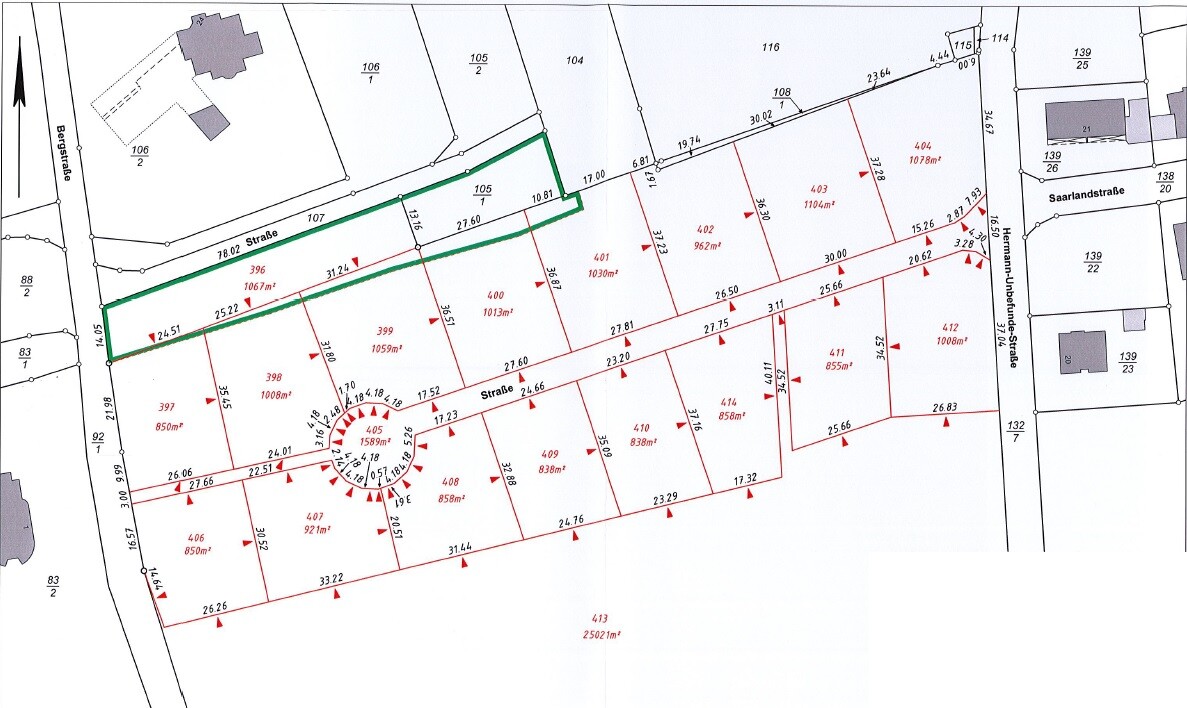
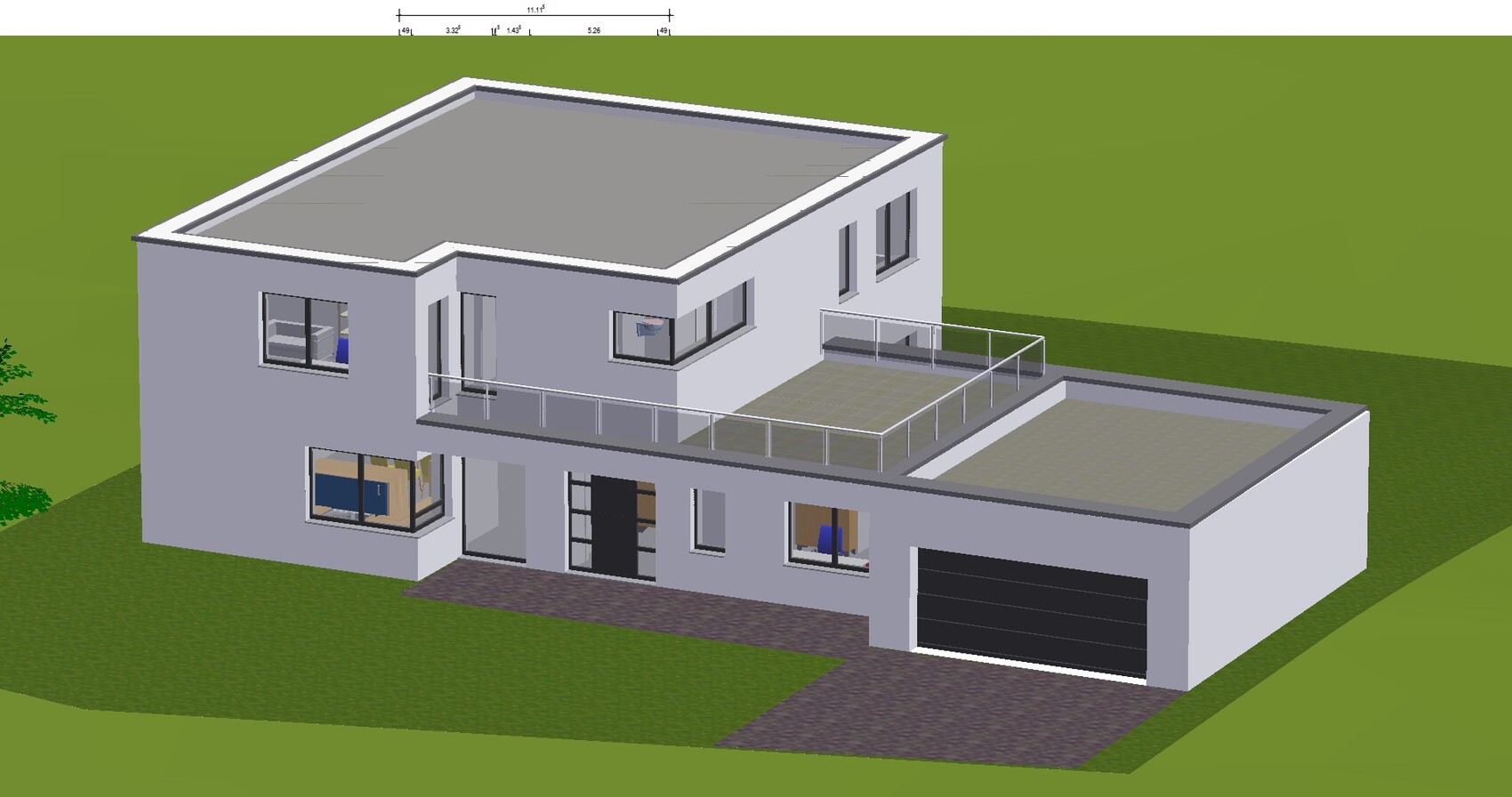
My name is Konstantin, and we will be building a house for ourselves and our children (currently 1, increasing to 3 in the next few years) in early 2017.
I have been following this forum for a while and am always grateful for your tips on all aspects of house construction. I have already been able to use many ideas for our project. Thank you all!
Attached is our floor plan (created with a friend who is an architect).
This floor plan has been optimized several times and we are quite happy with it.
Since this is a major investment that should be well planned and prepared, we would like to hear your opinions on the floor plan to avoid possible mistakes or to incorporate new ideas.
We look forward to your feedback.
I have included images of the ground floor, upper floor, 3D house model, and the plot.
Development Plan / Restrictions
Plot size: 1,008m2 (see plot plan No. 412)
Slope: YES, south-facing slope 10%
Floor area ratio (FAR): 0.4
Site coverage ratio (building density): 0.4
Building envelope, building line, and boundary
Edge setback: 3 meters (10 feet) from the street, 1 meter (3 feet) from the neighbor (west side)
Number of floors: 1 full floor + 1 recessed upper floor
Roof type: flat roof
Client Requirements
Style: Bauhaus
Roof: flat roof
Basement: no
Number of floors: 2
Number of people, age: currently 3, increasing to 5 within 5 years
Office: home office + meeting room
Guest stays per year: at least 1–2 times per month
Open or closed architecture: open
Conservative or modern construction: modern
Open kitchen, cooking island: open kitchen
Number of dining seats: at least 8
Fireplace: no
Balcony, roof terrace: yes/yes
Garage, carport: garage
Vegetable garden, greenhouse: no
Additional features: KNX wiring, ground-source heat pump, controlled mechanical ventilation, water softener, KFW55 (energy standard)
House Design
Designed by: architect
Estimated cost according to architect/planner: around 500,000 euros plus land
Preferred heating technology: heat pump
K
Kostiksch15 Dec 2016 20:27Pumi means plastering material room.
S
Steffen8015 Dec 2016 23:00Nice design.. I like it. 500k including additional construction costs and architect fees? That’s too tight. The house alone is about 500k plus 50k for the architect (HOAI) plus 50k additional construction costs, which is more realistic. KNX easily adds another 30..35k on top of the electrical installation. Ground source heat pump, controlled residential ventilation, and water softening system together also probably cost around 50k. Many architects don’t charge that much, so be careful. We’ve just been through all of this. 225 sqm (about 2,422 sq ft) including attic, garage 470k plus architect fees plus 150k additional construction costs (KNX, controlled residential ventilation, and so on).
Regards, Steffen
Regards, Steffen
S
Steffen8015 Dec 2016 23:03One more thing: You wouldn’t believe how much a freestanding bathtub costs. We also have three bathrooms and NOT everything is from Villeroy & Boch. We are at nearly 35,000 euros just for the sanitary fixtures.
B
Bieber081516 Dec 2016 06:48Kostiksch schrieb:
We appreciate your feedback. Overall, the layout feels somewhat convoluted. In many places, a smaller rectangular room (cuboid) has been added within a larger one to accommodate specific functions (kitchen-pantry, bedroom-dressing room, office-utility room, etc.). This results in somewhat “strange” circulation paths. Often, you have to walk through narrow corridors.
Example:
- Guest to guest bathroom
- Resident from the couch to the toilet
- Homeowner to their bed
- Back and forth to the office
- Guests to the office (meeting room?)
The more I think about it, the more I would redesign it. A smaller office (but only you know how many guests attend meetings at the same time), better office access, and generally smoothing out corners and edges.
Similar topics