
ᐅ Additional Costs Due to Incorrectly Designed Ventilation System and Floor-to-Ceiling Windows?
Created on: 29 Nov 2016 01:14
3
305er
Hi, we have our final planning meeting on December 13th, after which everything will be sent to the building authority (building permit / planning permission).
From the beginning, I told my salesperson that the outdoor unit of the Rotex ventilation system was incorrectly positioned in the first offer. The layout shown is not possible because the garage is supposed to be there.
I was told, "No problem. This can be changed in the planning phase and moved up."
Now I wrote to the CEO to have this corrected.
The reply was only:
On your floor plan, you moved the outdoor unit of the heat pump to a different location. This is not possible with the contractual Rotex heat pump. A Novelan LAD heat pump is required, and the outdoor unit must be moved further to the right, against the outer wall of the study room.
Here are the costs: Change to Novelan LAD + 2,138.00 €
Extension of the outdoor unit + 1,509.00 €
The reason is that the outdoor and indoor units have to be aligned at the same height/line.
Of course, I disagree with this.
Do you have any suggestions on how to solve this without extra costs or significant loss of space?
The pantry shown in the picture will be removed, and the utility room (HAR) will be made larger instead.
Point 2:
I wanted to replace the two large floor-to-ceiling terrace windows in the kitchen with one standard window, because the kitchen island will be placed against that wall.
Reply:
– Changing the floor-to-ceiling windows in the kitchen to standard windows with a masonry sill is possible at the same price in the project planning.
Question: By “standard” you mean? So two large floor-to-ceiling windows cost the same as one normal window?
Point 3:
Colored front door with a small side panel, ADDITIONAL COST 1,464€???? That seems quite high for just a bit of paint or finish, right?
Point 4:
I want to install a horizontal window at the top of the hallway to bring light into the room (we don’t want double casement windows). We saw this in a prefab house with the same knee wall height as ours.
Reply:
In the current plan, the window is not possible because the wall height is insufficient. Otherwise, the window would have to be fixed and equipped with TRAV glazing. The cost would be around 1,400.00 € to 1,600.00 €.
What do you think?
Point 5:
Price reduction for removing the standard front door: -1,315.00 €
But if I want an additional door, it costs me over 4,000 €. How is that possible?
See the attached picture.
Maybe they want to remove it because the door is not good enough — no RC2 rating, no windows with privacy glass, etc.
Here is the description:
Your contract includes a white plastic front door from the standard range with a small side panel.
The side panel has clear glass; satin glass can of course be added separately.
The front door has basic security, which should correspond approximately to WK 1, but a higher standard is possible and can be arranged.
According to the contract, a handle about 30 cm (12 inches) long is agreed.
Point 6:
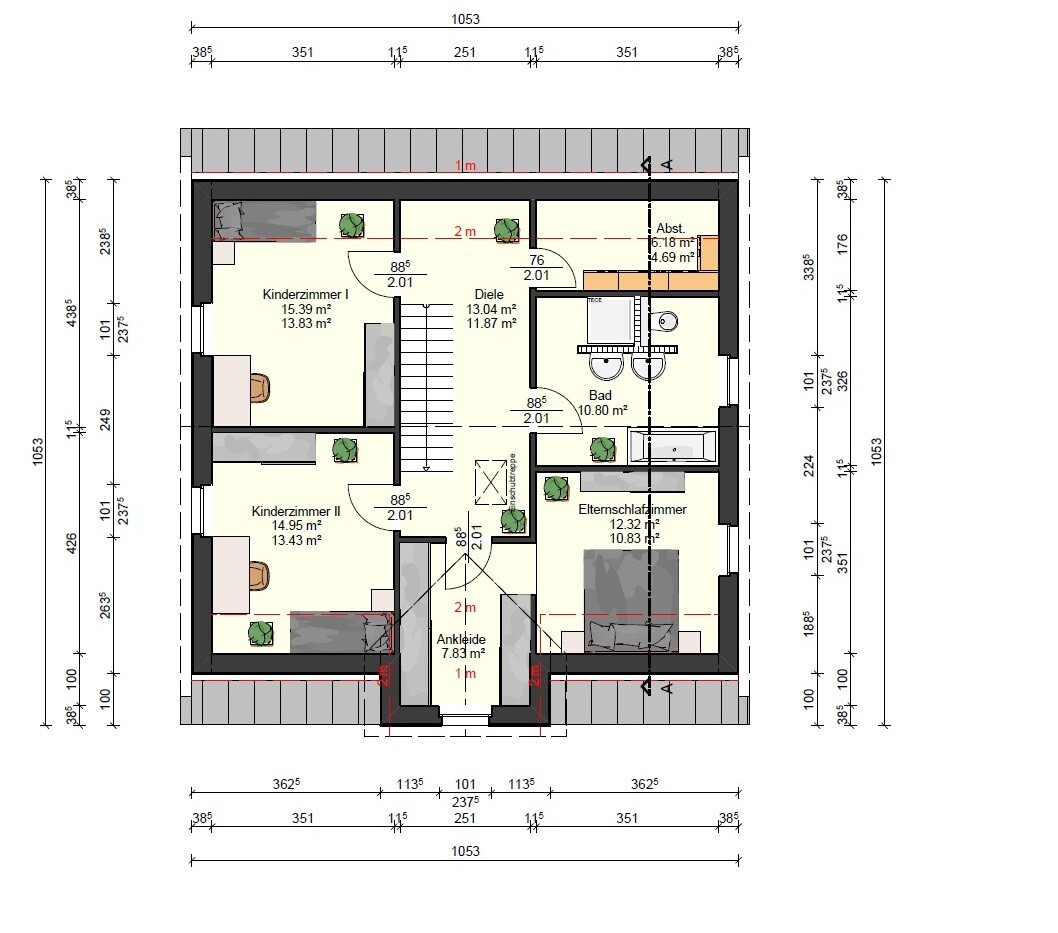
Are the floor-to-ceiling windows on the upper floor acceptable? Or do they let in too little light?
Would a standard window be better? What is considered standard? What size is that?
So, that’s it for now. I actually wanted to write very little, just one or two points.
Thanks
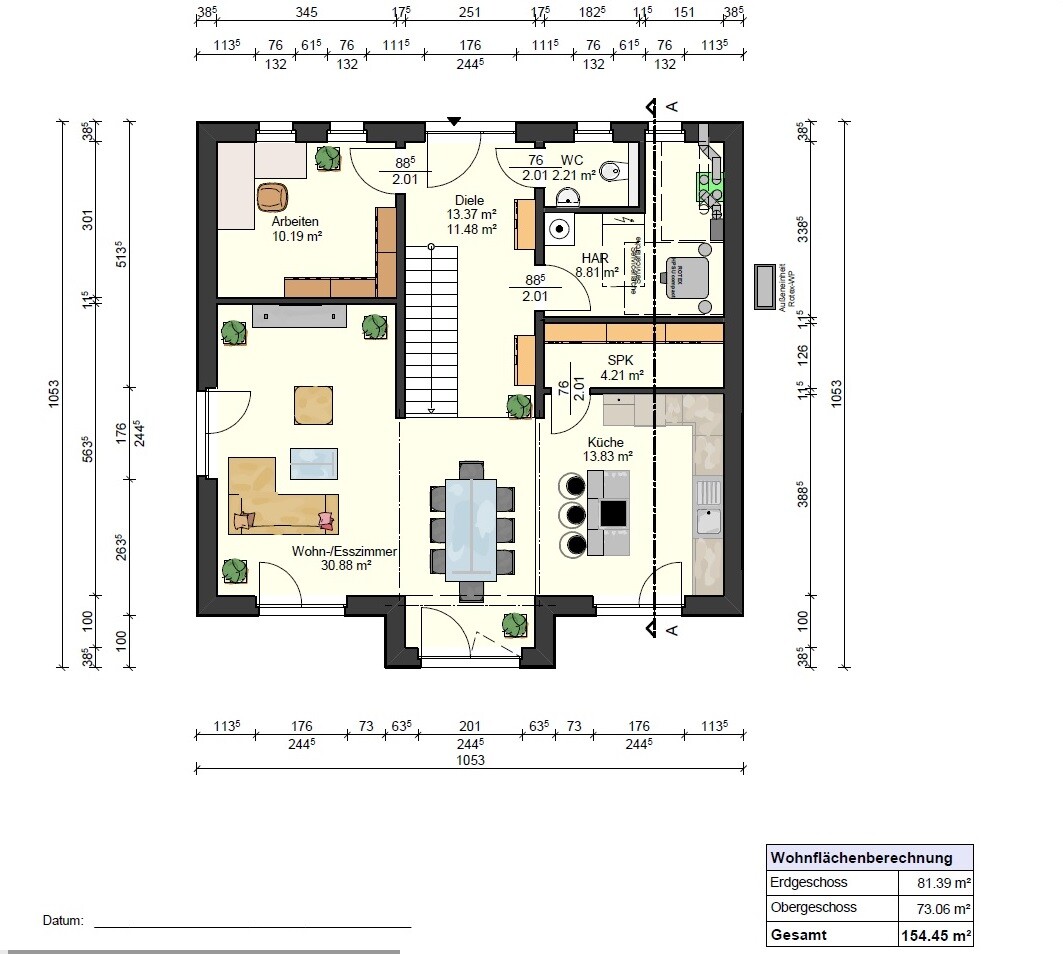
From the beginning, I told my salesperson that the outdoor unit of the Rotex ventilation system was incorrectly positioned in the first offer. The layout shown is not possible because the garage is supposed to be there.
I was told, "No problem. This can be changed in the planning phase and moved up."
Now I wrote to the CEO to have this corrected.
The reply was only:
On your floor plan, you moved the outdoor unit of the heat pump to a different location. This is not possible with the contractual Rotex heat pump. A Novelan LAD heat pump is required, and the outdoor unit must be moved further to the right, against the outer wall of the study room.
Here are the costs: Change to Novelan LAD + 2,138.00 €
Extension of the outdoor unit + 1,509.00 €
The reason is that the outdoor and indoor units have to be aligned at the same height/line.
Of course, I disagree with this.
Do you have any suggestions on how to solve this without extra costs or significant loss of space?
The pantry shown in the picture will be removed, and the utility room (HAR) will be made larger instead.
Point 2:
I wanted to replace the two large floor-to-ceiling terrace windows in the kitchen with one standard window, because the kitchen island will be placed against that wall.
Reply:
– Changing the floor-to-ceiling windows in the kitchen to standard windows with a masonry sill is possible at the same price in the project planning.
Question: By “standard” you mean? So two large floor-to-ceiling windows cost the same as one normal window?
Point 3:
Colored front door with a small side panel, ADDITIONAL COST 1,464€???? That seems quite high for just a bit of paint or finish, right?
Point 4:
I want to install a horizontal window at the top of the hallway to bring light into the room (we don’t want double casement windows). We saw this in a prefab house with the same knee wall height as ours.
Reply:
In the current plan, the window is not possible because the wall height is insufficient. Otherwise, the window would have to be fixed and equipped with TRAV glazing. The cost would be around 1,400.00 € to 1,600.00 €.
What do you think?
Point 5:
Price reduction for removing the standard front door: -1,315.00 €
But if I want an additional door, it costs me over 4,000 €. How is that possible?
See the attached picture.
Maybe they want to remove it because the door is not good enough — no RC2 rating, no windows with privacy glass, etc.
Here is the description:
Your contract includes a white plastic front door from the standard range with a small side panel.
The side panel has clear glass; satin glass can of course be added separately.
The front door has basic security, which should correspond approximately to WK 1, but a higher standard is possible and can be arranged.
According to the contract, a handle about 30 cm (12 inches) long is agreed.
Point 6:
Are the floor-to-ceiling windows on the upper floor acceptable? Or do they let in too little light?
Would a standard window be better? What is considered standard? What size is that?
So, that’s it for now. I actually wanted to write very little, just one or two points.
Thanks
Many of the mentioned points are absolutely fundamental during the early planning phase or questions before signing the contract. Additional costs can be easily negotiated before signing, which is usually welcomed by the contractors.
Windows: Could you install the large beautiful floor-to-ceiling windows somewhere else and instead put a smaller one in the kitchen? You get more windows for the same price. Fewer windows = cost-neutral, more windows = more expensive.
Credits for removal: First, you will only get the net amount refunded, since every company calculates based on net prices. The markup to gross (usually 19%) is lost. Also, standard parts are naturally cheaper for them, and of course, they want to make a profit. Certain items are not deducted in the credit. For example, with the front door, the window installer still has to come for the windows, so they cannot deduct the trip related to the door. Similarly, for planning, the planner/buyer only saves a few minutes because of the door, while they still order/plan everything else.
If you buy a door elsewhere, the other company has to put in significantly more effort in terms of time than the original company saves. They must create a file, write a purchase order, place a separate order, and of course, have their own trip costs. All of this is charged accordingly. And the company also wants to earn profit, but only on that one front door, whereas the original company spread the profit across door and windows.
Conclusion: Include extras in the calculation before signing the house contract and then make your own counteroffer. Additional costs can quickly decrease if the contractor wants the job.
With prefab house suppliers, where the walls are even delivered pre-assembled, extras are sometimes not easy to implement in production. When the house is assembled on site, the craftsmen just have to be able to read the plans (which often does not work as well as initially assumed).
Windows: Could you install the large beautiful floor-to-ceiling windows somewhere else and instead put a smaller one in the kitchen? You get more windows for the same price. Fewer windows = cost-neutral, more windows = more expensive.
Credits for removal: First, you will only get the net amount refunded, since every company calculates based on net prices. The markup to gross (usually 19%) is lost. Also, standard parts are naturally cheaper for them, and of course, they want to make a profit. Certain items are not deducted in the credit. For example, with the front door, the window installer still has to come for the windows, so they cannot deduct the trip related to the door. Similarly, for planning, the planner/buyer only saves a few minutes because of the door, while they still order/plan everything else.
If you buy a door elsewhere, the other company has to put in significantly more effort in terms of time than the original company saves. They must create a file, write a purchase order, place a separate order, and of course, have their own trip costs. All of this is charged accordingly. And the company also wants to earn profit, but only on that one front door, whereas the original company spread the profit across door and windows.
Conclusion: Include extras in the calculation before signing the house contract and then make your own counteroffer. Additional costs can quickly decrease if the contractor wants the job.
With prefab house suppliers, where the walls are even delivered pre-assembled, extras are sometimes not easy to implement in production. When the house is assembled on site, the craftsmen just have to be able to read the plans (which often does not work as well as initially assumed).
Hello Sven,
usually larger windows cost more, even if they reduce the amount of masonry, plaster, etc. We replaced two standard 1.50m (5 feet) wide windows with two 1m (3.3 feet) wide windows and received a credit of over 700 euros. Another builder quoted 540 euros per square meter of window area, so a smaller window should be cheaper. However, the builder can handle this as they see fit—if they don’t provide a credit, you either have to accept that or keep the larger window.
For the front door, there is usually a standard door included, and if you want something different, it will cost significantly more. In our case, the price of the front door was clearly stated in the contract, so we could calculate the extra cost in advance. With front doors, you can spend a lot of money…
I find the floor-to-ceiling windows on the upper floor a bit small. I would either enlarge them or additionally plan for skylights. You might want to visit a model home exhibition again; they often have 1m (3.3 feet) wide floor-to-ceiling windows installed there, so you can see if it’s bright enough for you (of course, it also depends on the orientation of the windows).
Best regards,
Sabine
usually larger windows cost more, even if they reduce the amount of masonry, plaster, etc. We replaced two standard 1.50m (5 feet) wide windows with two 1m (3.3 feet) wide windows and received a credit of over 700 euros. Another builder quoted 540 euros per square meter of window area, so a smaller window should be cheaper. However, the builder can handle this as they see fit—if they don’t provide a credit, you either have to accept that or keep the larger window.
For the front door, there is usually a standard door included, and if you want something different, it will cost significantly more. In our case, the price of the front door was clearly stated in the contract, so we could calculate the extra cost in advance. With front doors, you can spend a lot of money…
I find the floor-to-ceiling windows on the upper floor a bit small. I would either enlarge them or additionally plan for skylights. You might want to visit a model home exhibition again; they often have 1m (3.3 feet) wide floor-to-ceiling windows installed there, so you can see if it’s bright enough for you (of course, it also depends on the orientation of the windows).
Best regards,
Sabine

Payday schrieb:
credits on removal: initially, they only refund you the net amount, since every company calculates based on net prices. The markup to the gross amount (after all, 19%) is lost.This statement is nonsense, of course. A credit note always includes value-added tax.
B
Bieber081529 Nov 2016 10:47305er schrieb:
Do you have a solution to manage this without extra costs or significant loss of space? The problem is that the Rotex indoor and outdoor units should be installed as close to each other as possible. The seller should have pointed this out from the start (in my opinion, was required to), as such a change will incur additional costs. (Take-home message: Always get everything in writing and actively ask about possible extra costs when making changes.)
Off the top of my head, I don’t see a way… Either relocate the indoor unit or accept the longer distance between the indoor and outdoor units and consequently switch to a different heat pump. Alternatively, redesign the garage, but that’s probably not an option. It might be possible to place the outdoor unit on the garage roof, but instinctively I wouldn’t recommend that.
Musketier schrieb:
That statement is obviously nonsense. A credit note always includes VAT. Who says that? Every company calculates figures in net amounts, and gross amounts are only added at the end. In our case, VAT was basically always forgotten when doing hypothetical calculations. Markups were always quoted as net amounts as well.