
ᐅ Installed windows do not match the window schedule. Is this a valid complaint?
Created on: 1 Jun 2016 00:17
T
taeps1984T
taeps19841 Jun 2016 00:17Hello everyone,
Attached you can see our issue. In the living room (ground floor) we have corner glazing with a corner support cladding. On the front garden side in the living room (ground floor) there are two larger fixed floor-to-ceiling window units. Above them is the children’s room with two smaller windows with tilt-and-turn function. The windows on the ground floor and upper floor, as well as their central window frames, are supposed to be aligned with each other. At least, according to the window plan.
The as-built rough openings actually correspond to the floor plan. However, the windows are not aligned with each other. I don’t like the external appearance because the central frames are not aligned and do not match the elevations or the window plan. From the outside, it looks poorly planned and simply not nice. The floor plan states for the corner glazing in the living room (ground floor), “corner support cladding support depending on structural engineering.” Does this note release the builder from responsibility? Do the upper and lower window units not have to match the window plan or the elevations because the corner support cladding is decisive, or are the elevations and window plan binding?
Shouldn’t the window installer or builder have taken the elevations into account during the measurement of the rough openings (for window production) and manufactured the windows accordingly to ensure that the look of the window plan/elevations is maintained? At that time, the structural engineering for the corner support cladding was already confirmed, wasn’t it?
In other words: Would you insist on the alignment of the two windows, or am I out of luck here?
Thanks in advance!!!
Good luck Manuel
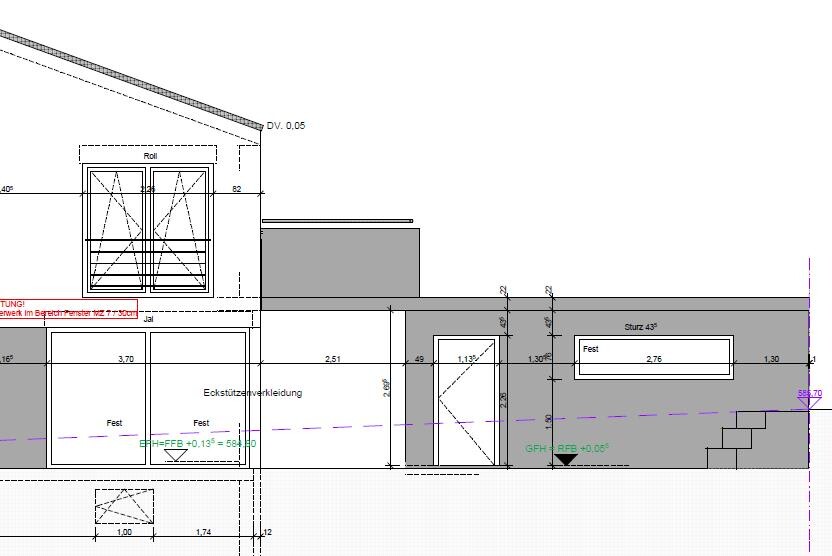
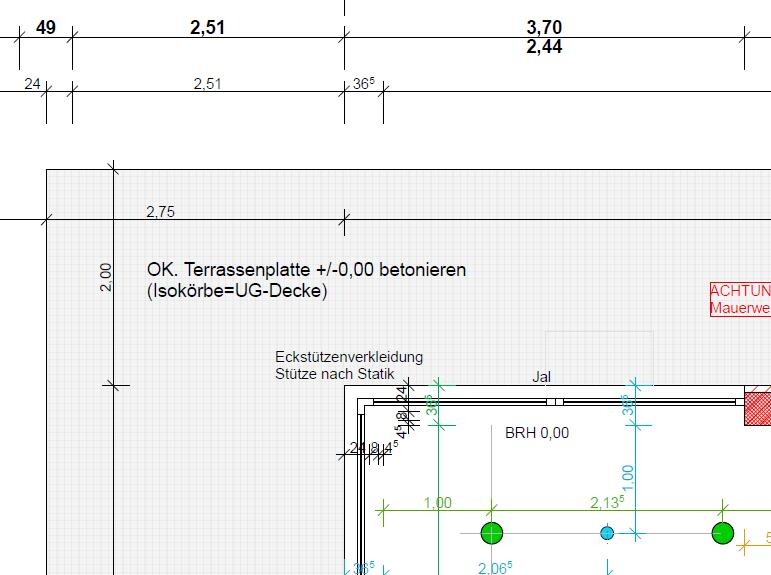
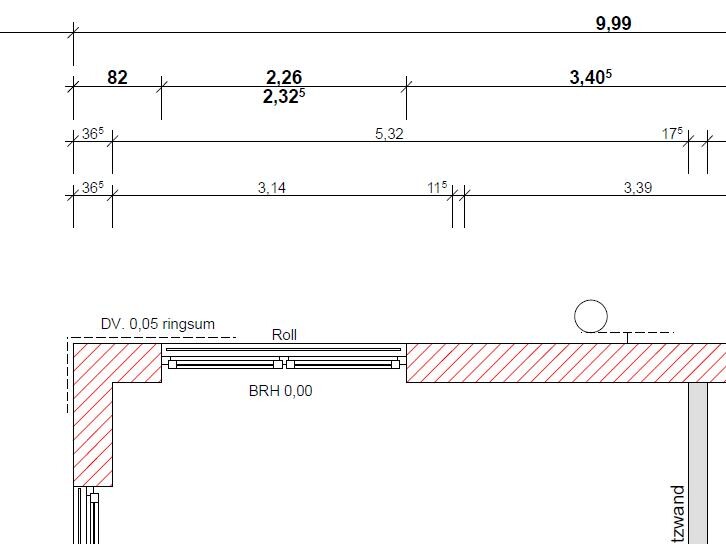
Attached you can see our issue. In the living room (ground floor) we have corner glazing with a corner support cladding. On the front garden side in the living room (ground floor) there are two larger fixed floor-to-ceiling window units. Above them is the children’s room with two smaller windows with tilt-and-turn function. The windows on the ground floor and upper floor, as well as their central window frames, are supposed to be aligned with each other. At least, according to the window plan.
The as-built rough openings actually correspond to the floor plan. However, the windows are not aligned with each other. I don’t like the external appearance because the central frames are not aligned and do not match the elevations or the window plan. From the outside, it looks poorly planned and simply not nice. The floor plan states for the corner glazing in the living room (ground floor), “corner support cladding support depending on structural engineering.” Does this note release the builder from responsibility? Do the upper and lower window units not have to match the window plan or the elevations because the corner support cladding is decisive, or are the elevations and window plan binding?
Shouldn’t the window installer or builder have taken the elevations into account during the measurement of the rough openings (for window production) and manufactured the windows accordingly to ensure that the look of the window plan/elevations is maintained? At that time, the structural engineering for the corner support cladding was already confirmed, wasn’t it?
In other words: Would you insist on the alignment of the two windows, or am I out of luck here?
Thanks in advance!!!
Good luck Manuel

taeps1984 schrieb:
To ask differently: Would you insist on the alignment of the two windows, or am I out of luck?No idea – personally, I wouldn’t have even noticed if you hadn’t described it. For outsiders (at least for me), it’s not a "flaw." I don’t find it bad and wouldn’t call your house ugly because of it.B
Bauexperte1 Jun 2016 11:39Hello Manuel,
This is an indication that the structural engineering requirements are decisive at this point; nothing more, nothing less.
As I see it, the window dimensions match the specifications of the working drawings; so the window manufacturers are not at fault. To me, it looks like the structural carpenters made an 8cm (3 inches) error when creating the window opening above the corner glazing on the ground floor.
Initially, this is a visual issue; correcting it is quite complex and I don’t know—since I don’t know the attitude of the contracting party—whether they will be willing to take on this effort. The window and its support would need to be shifted by 8cm (3 inches); on one side it would also have to be piecemealed by 8cm (3 inches). In my view, it makes more economic sense—of course only if the structural carpenter (your contracting party?) cooperates—to install a window that is 12.5cm (5 inches) wider. The intriguing question is then what to do with the leftover window?
As you can see from Wastl’s response, he does not consider this a visual mistake; it will therefore be interesting to see the opinion of your contracting partner. Effort and benefit should always be balanced.
Regards, Bauexperte
taeps1984 schrieb:
In the floor plan, it says next to the corner glazing in the living room (ground floor), "Corner support cladding support depending on structural engineering." Does this wording let the developer off the hook?
This is an indication that the structural engineering requirements are decisive at this point; nothing more, nothing less.
taeps1984 schrieb:
Shouldn't the window manufacturer or the developer have taken the elevations into account during the measurement of the rough openings (for window production) and had the windows made accordingly, so that the appearance of the window plan/elevations is maintained? At that time, the structural engineering of the corner support cladding was already determined, wasn’t it?
As I see it, the window dimensions match the specifications of the working drawings; so the window manufacturers are not at fault. To me, it looks like the structural carpenters made an 8cm (3 inches) error when creating the window opening above the corner glazing on the ground floor.
taeps1984 schrieb:
To put it differently: Would you insist on the alignment of the two windows, or am I out of luck here?
Initially, this is a visual issue; correcting it is quite complex and I don’t know—since I don’t know the attitude of the contracting party—whether they will be willing to take on this effort. The window and its support would need to be shifted by 8cm (3 inches); on one side it would also have to be piecemealed by 8cm (3 inches). In my view, it makes more economic sense—of course only if the structural carpenter (your contracting party?) cooperates—to install a window that is 12.5cm (5 inches) wider. The intriguing question is then what to do with the leftover window?
As you can see from Wastl’s response, he does not consider this a visual mistake; it will therefore be interesting to see the opinion of your contracting partner. Effort and benefit should always be balanced.
Regards, Bauexperte
Bauexperte schrieb:
Effort and benefit should always balance each other out.I have to disagree there.
Sometimes fixing defects needs to be really tough. Maybe then the ongoing poor workmanship in construction will improve, and people will start thinking properly beforehand to do it right the first time, instead of trying to fix it afterwards and hoping for the best.
B
Bauexperte1 Jun 2016 17:05SirSydom schrieb:
I have to disagree.I thought so ....SirSydom schrieb:
Fixing defects can sometimes really hurt, but maybe that will help reduce the constant poor workmanship in construction and encourage people to think ahead to get it right the first time, instead of hoping to fix it later.How many times must I say this? A defect only exists _after_ final inspection; until then, it is simply a mistake that needs to be corrected. Either by full replacement or a credit. In court – I’m confident it would be the latter, because a court always considers proportionality. People work on construction sites, and people make mistakes. Do you think they intentionally include errors? Can you walk on water?Just because you have so many problems with your building project doesn’t necessarily mean everything is just sloppy work. So be careful with general accusations.
Regards, Bauexperte
Similar topics