
ᐅ Installing hardwood flooring: Which direction should it be laid?
Created on: 6 Mar 2016 22:13
W
werschtl
Dear forum,
I want to install ship deck parquet flooring in the living room of a penthouse apartment and have attached two pictures. The living room measures 6x5m (20x16 ft). The windows on the longer 6m (20 ft) side face southwest.
How should the parquet boards run—option 1 or along the long side option 2?
How would you recommend finishing the parquet at the window frame? Should I install a baseboard along the walls as well? Or rather create a silicone joint between the frame and the parquet, or glue in a cork strip?
I was considering Haro FP4000 3-strip oak, 13.5 mm (0.53 inch) thick. Is the quality good?
Thanks in advance, best regards
Frank
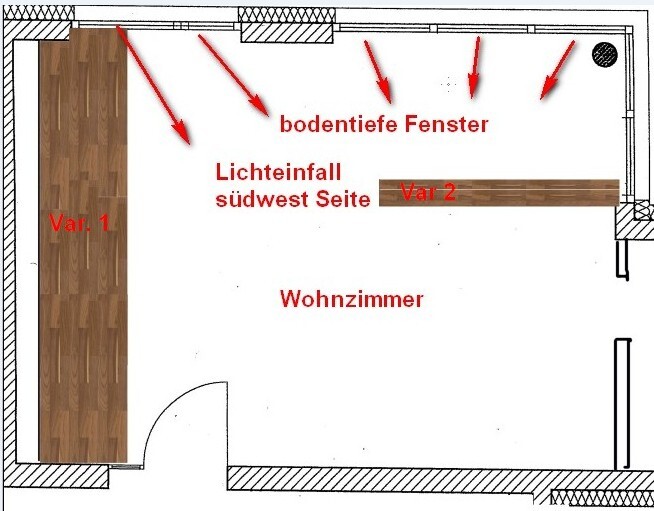
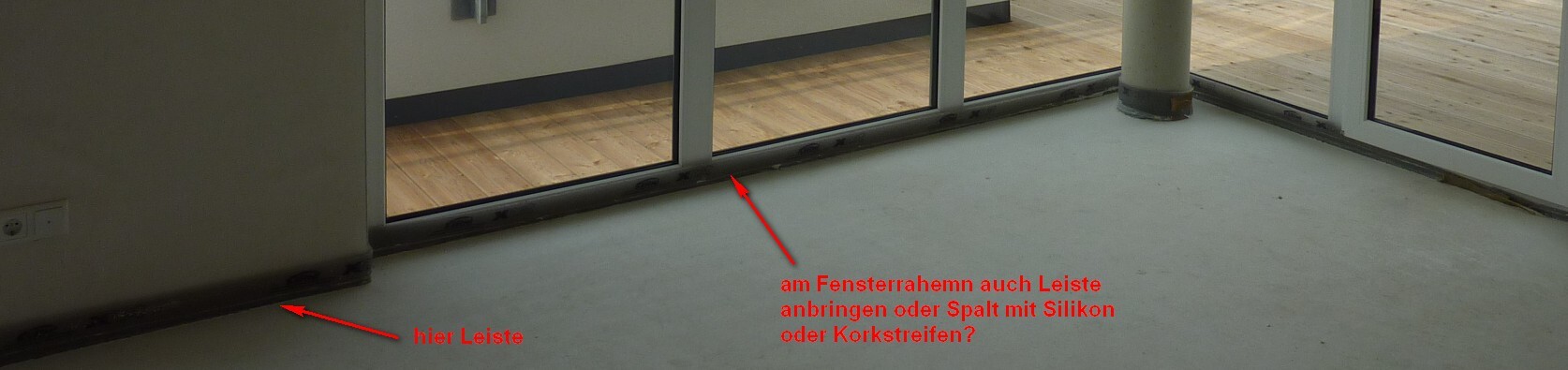
I want to install ship deck parquet flooring in the living room of a penthouse apartment and have attached two pictures. The living room measures 6x5m (20x16 ft). The windows on the longer 6m (20 ft) side face southwest.
How should the parquet boards run—option 1 or along the long side option 2?
How would you recommend finishing the parquet at the window frame? Should I install a baseboard along the walls as well? Or rather create a silicone joint between the frame and the parquet, or glue in a cork strip?
I was considering Haro FP4000 3-strip oak, 13.5 mm (0.53 inch) thick. Is the quality good?
Thanks in advance, best regards
Frank


Hi,
what happened in the picture? It looks like the gap to the wall wasn’t maintained? And now it’s bulging because it can’t expand further to the right and left?
And do I understand correctly that the "liquid cork" is actually the proper type of sealing for the patio door?
Is there anything special to consider, or is it basically just a large silicone joint?
Best regards,
Andreas
what happened in the picture? It looks like the gap to the wall wasn’t maintained? And now it’s bulging because it can’t expand further to the right and left?
And do I understand correctly that the "liquid cork" is actually the proper type of sealing for the patio door?
Is there anything special to consider, or is it basically just a large silicone joint?
Best regards,
Andreas

These are actually NOT sanding marks on the parquet surface, but rather visible planes of light refraction caused by warping of the elements, which inevitably occur due to varying light reflection.
Certainly, any parquet flooring can be damaged by improper sanding techniques and/or lack of expertise. However, this is not the case shown in the photo I posted.
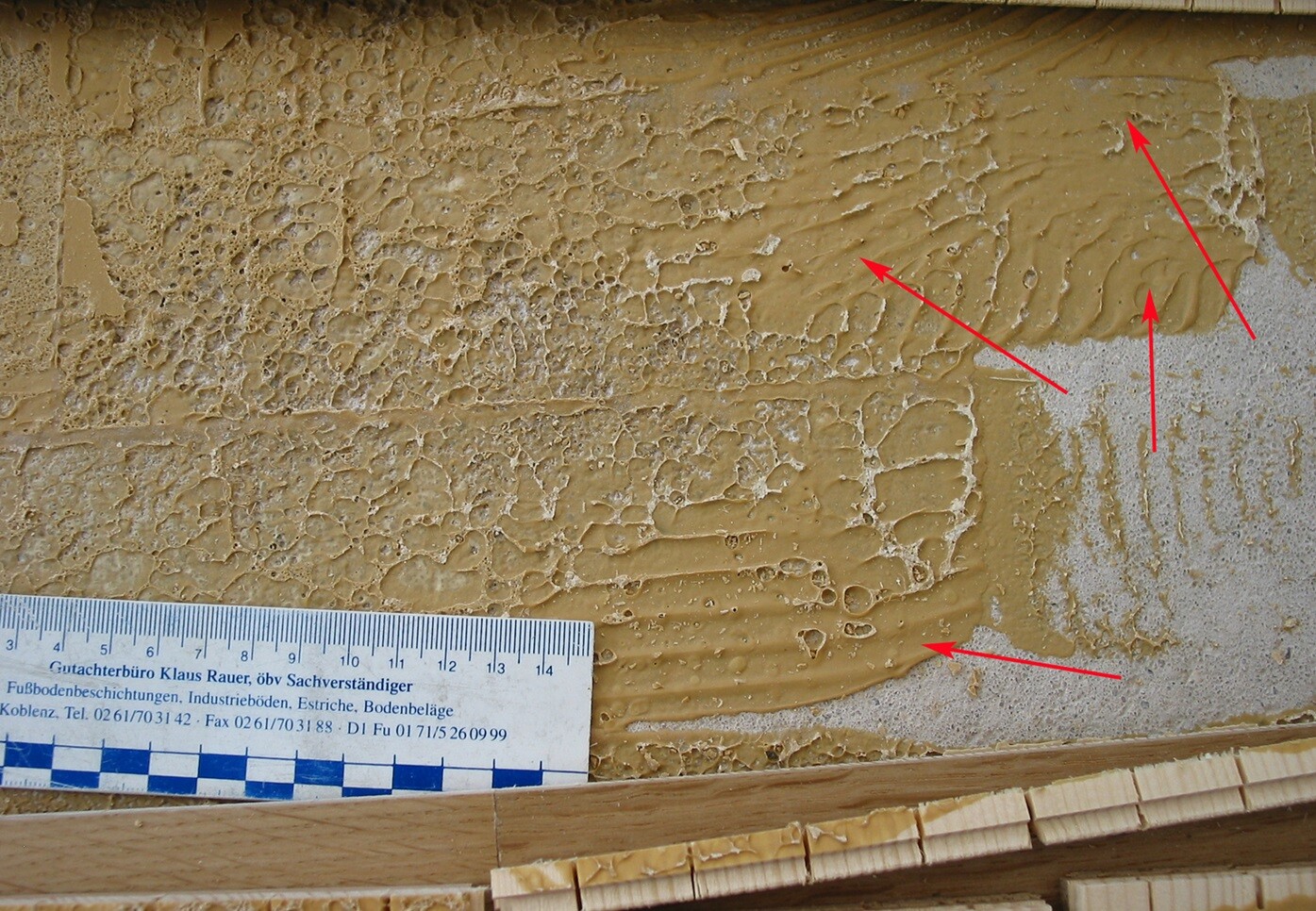
In this instance, the situation was a bit more complex: the cause was related to the installation method (see the following or attached photo).
I shared the photo solely to help the inquisitive questioner "werschtl" realize that the installation variant he mentioned (2) carries certain “visual risks” and he might be disappointed with the outcome of his installation….
The effect of unrestricted warping of parquet elements, especially with floating installation, is not related to the quality or price level (“high-end” or “less expensive”) of the product!
--------------------------------
Best regards, KlaRa
Certainly, any parquet flooring can be damaged by improper sanding techniques and/or lack of expertise. However, this is not the case shown in the photo I posted.
In this instance, the situation was a bit more complex: the cause was related to the installation method (see the following or attached photo).
I shared the photo solely to help the inquisitive questioner "werschtl" realize that the installation variant he mentioned (2) carries certain “visual risks” and he might be disappointed with the outcome of his installation….
The effect of unrestricted warping of parquet elements, especially with floating installation, is not related to the quality or price level (“high-end” or “less expensive”) of the product!
--------------------------------
Best regards, KlaRa
KlaRa schrieb:
Of course, any hardwood floor can be ruined by using the wrong technique and/or “expert” knowledge. Should I take that personally?
@werschtl
Although I would personally prefer option 2 in your case, you should consider the points made by
@KlaRa in your decision. However, the example given seems quite extreme to me and, in my opinion, is rather an exception.
andimann schrieb:
And do I understand correctly that "liquid cork" is a fairly proper way to finish at the patio door? Well, that’s a matter of taste. The fact is, there still needs to be an expansion joint there, and how it is “treated” is up to personal preference.
For me personally, a wall trim profile would be the first choice when installing a floating floor. If liquid cork is to be used, my approach would be to first insert a PE backer rod. This prevents three-sided adhesion and thus maintains better elasticity. The joint is more stable and less prone to cracking. Additionally, this saves on filler material.
@ "neige":
(Quote) However, the example given seems to me to be quite extreme and, in my opinion, rather the exception.
Response:
I am very rarely (to put it humorously) involved in the assessment of surfaces that have been installed perfectly.
Therefore, the photos I have posted so far and will post in the future are certainly exceptions, but “extreme” looks different to me, and besides, I only see such surfaces myself...
From my perspective, what is important is that knowledge and experience are shared at the grassroots level and that this can (if necessary) help avoid mistakes.
However, “EXTREME” is something else, not the parquet floor shown. The extent of this damage was still manageable.
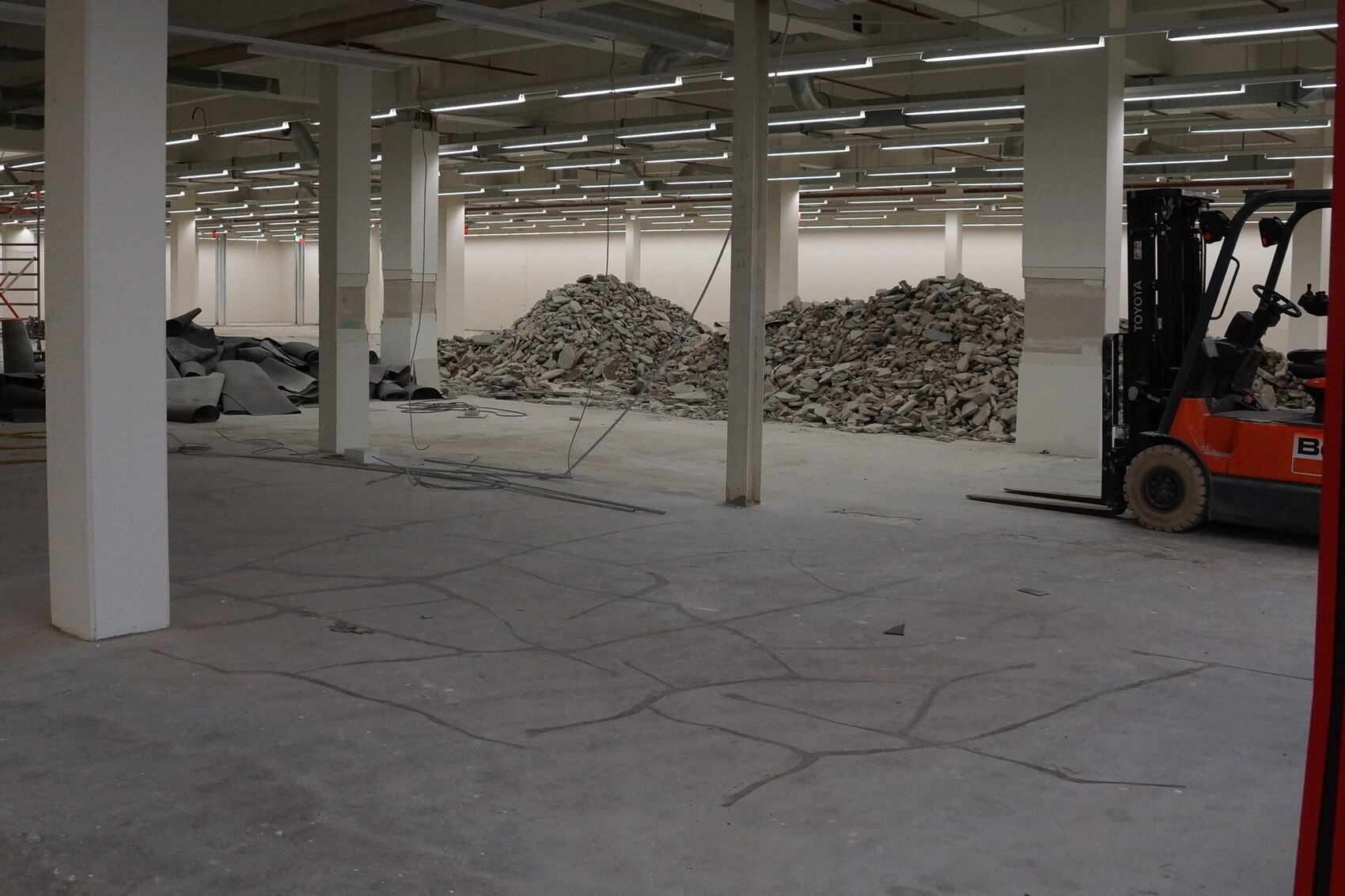
An example of a different scale is the situation shown in the attached photo, which occurred only after my instructions were not followed:
Shortly before the business opening, the entire screed on over 1,200m² (about 12,917 sq ft) had to be removed...
Due to my professional background, I deal daily with other categories, as can be seen.
-----------------
Best regards, KlaRa
(Quote) However, the example given seems to me to be quite extreme and, in my opinion, rather the exception.
Response:
I am very rarely (to put it humorously) involved in the assessment of surfaces that have been installed perfectly.
Therefore, the photos I have posted so far and will post in the future are certainly exceptions, but “extreme” looks different to me, and besides, I only see such surfaces myself...
From my perspective, what is important is that knowledge and experience are shared at the grassroots level and that this can (if necessary) help avoid mistakes.
However, “EXTREME” is something else, not the parquet floor shown. The extent of this damage was still manageable.
An example of a different scale is the situation shown in the attached photo, which occurred only after my instructions were not followed:
Shortly before the business opening, the entire screed on over 1,200m² (about 12,917 sq ft) had to be removed...
Due to my professional background, I deal daily with other categories, as can be seen.
-----------------
Best regards, KlaRa