
I wanted to try replacing the lever mixer in our shower because it’s leaking and I can’t reach the seal. I’ve already got a new one. So, I checked where to shut off the water in our basement (yeah, embarrassing 😀). There’s a shut-off valve before and one after the water meter. Which one do I need to close, or if both, in what order?
By the way: I think I can leave these adapter threaded parts on the shower lever and transfer them to the new lever, right? There are also some threaded parts included that I probably don’t need.
j.
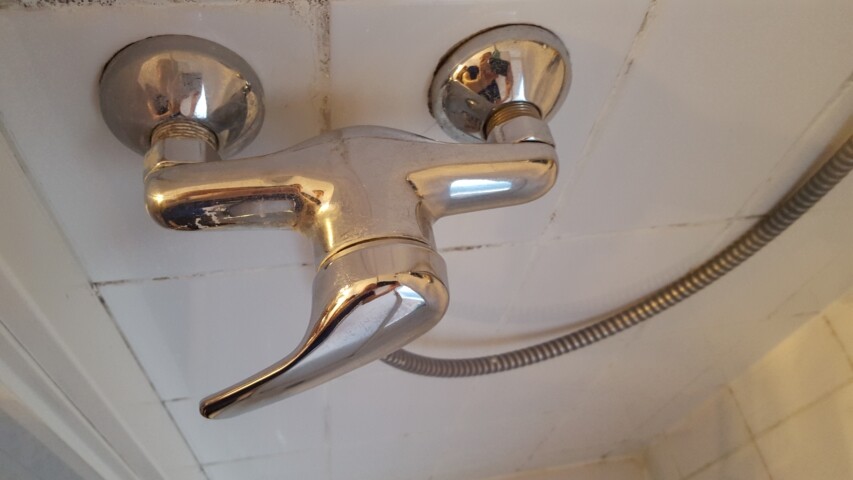
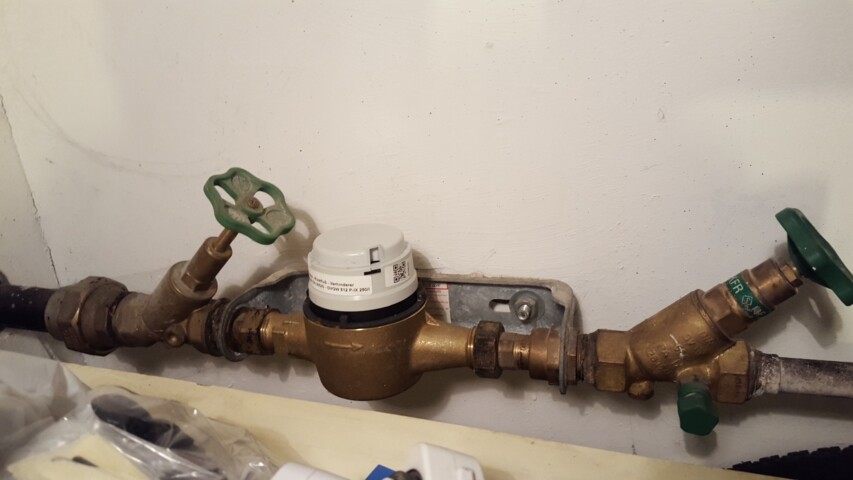
By the way: I think I can leave these adapter threaded parts on the shower lever and transfer them to the new lever, right? There are also some threaded parts included that I probably don’t need.
j.
Leave the shower door open? Then everything in front gets wet. But that’s true, the moisture wouldn’t build up as much.
About a year ago, we treated mold in the corner at the top of the shower and removed the wallpaper, then just painted the concrete white.
The idea of using a hygrometer is great, thanks. I’ll see what options are suitable for use in a bathroom.
We have an end-of-terrace house. The middle houses don’t have a window in the bathroom. Instead, they have ventilation. I wonder if that helps more than opening a window after showering? Because the ventilation runs all the time. We usually keep the window closed while showering.
j.
About a year ago, we treated mold in the corner at the top of the shower and removed the wallpaper, then just painted the concrete white.
The idea of using a hygrometer is great, thanks. I’ll see what options are suitable for use in a bathroom.
We have an end-of-terrace house. The middle houses don’t have a window in the bathroom. Instead, they have ventilation. I wonder if that helps more than opening a window after showering? Because the ventilation runs all the time. We usually keep the window closed while showering.
j.

jenne schrieb:
Leave the shower door open? Then everything in front would get wet. But true, that way the moisture wouldn’t build up as much. Of course, you can shower with the door closed.

jenne schrieb:
Leave the shower door open? Then everything in front will get wet.Of course, leave the shower door open after showering so the moist air can escape more easily.
jenne schrieb:
The idea with the hygrometer is great, thanks. I’ll look for one suitable for the bathroom.It doesn’t have to be expensive. The goal isn’t to get a 100% accurate reading, but rather a reference point. It doesn’t matter if the actual humidity is 3% higher or lower.
jenne schrieb:
We usually keep the window closed while showering.Same here. That’s why ventilation should happen AFTER showering/drying off.
jenne schrieb:
Ah, okay, don’t leave it open while showering 😀.
Wiping down the fixtures could be a good step. Maybe it’s also better to take wet towels out instead of hanging them over the shower frame.
BTW: Do a lot of people have problems with mold in bathrooms?
j.@ypg meant wiping down the tiles, not drying the fixtures.
There is always a nice layer of water film on the tiles that needs to dry first. Over time, this creates the perfect environment for mold spores to grow. Of course, if you’re at it, you can also dry the fixtures.
By the way, we do wipe off the water – but we don’t dry afterwards with a towel.
Taking towels out:
I think if you manage to dry the tiles reasonably well by wiping them down and get the moist warm air out by opening a window, you are already one big step ahead. Towels shouldn’t be the issue then. They can also dry in the bathroom. Besides, you’ll wash them regularly anyway.
We occasionally had some early signs of mold in our old rental apartment – we treated it with mold remover. But I never wiped down the tiles there. Shame on me – you treat your own property differently than a rented one.
Similar topics