
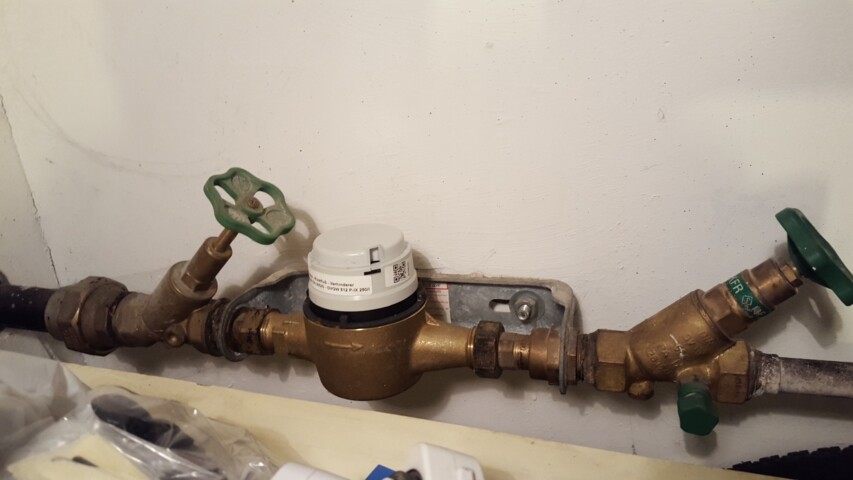
I wanted to try replacing the lever mixer in our shower because it’s leaking and I can’t reach the seal. I’ve already got a new one. So, I checked where to shut off the water in our basement (yeah, embarrassing 😀). There’s a shut-off valve before and one after the water meter. Which one do I need to close, or if both, in what order?
By the way: I think I can leave these adapter threaded parts on the shower lever and transfer them to the new lever, right? There are also some threaded parts included that I probably don’t need.
j.
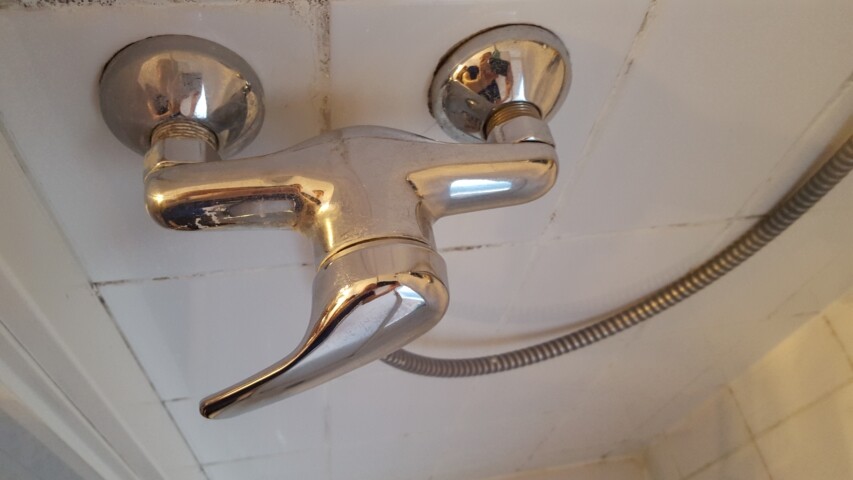
By the way: I think I can leave these adapter threaded parts on the shower lever and transfer them to the new lever, right? There are also some threaded parts included that I probably don’t need.
j.

It is sufficient to turn off just one of the two shut-off valves. There are two so that if your water meter needs to be replaced, the water supply can be shut off from both sides. For your purposes, it is enough to stop the water supply. You can also keep the adapter threads as they are if everything fits properly. However, if you have to twist them, I would be cautious about the seal tightness. In that case, I would rather ensure the new parts are well sealed, and then you should be fine for now. Although, looking at the picture, I have to say the rest of the bathroom might need renovation as well. 😉
Sunny schrieb:
Although I have to say, looking at the picture, the rest of the bathroom could use some renovation as well.I also see a lot of what looks like mold spores, at least that’s my guess. What else could it be? It seems like you have a moisture issue, and from your previous posts, it appears this is your property?! 🙁
Thanks, okay... I was thinking along the same lines—that just one drain should be enough.
Yes, I included the picture of the faucet because the grout seems to actually have mold spores (another issue). How do you get rid of that? Can you simply spray mold remover on the tiles/grout and wipe it off afterward? Ventilation is not that easy for us. We do ventilate often, but with frequent showers in the household, ventilating alone apparently isn’t enough in the long run.
jenne
Yes, I included the picture of the faucet because the grout seems to actually have mold spores (another issue). How do you get rid of that? Can you simply spray mold remover on the tiles/grout and wipe it off afterward? Ventilation is not that easy for us. We do ventilate often, but with frequent showers in the household, ventilating alone apparently isn’t enough in the long run.
jenne

My wife occasionally used anti-mold spray in the shower area in our old apartment. However, it didn’t look like mold was present.
Ventilation: First, you should place a hygrometer in the bathroom. You should also remind all family members to open the windows after showering or drying off. A rapid airing for 10-20 minutes should be enough to reduce the humidity to a “normal” level.
I was surprised at how quickly humidity rises above 85% when showering, after I placed the hygrometer in the bathroom.
Ventilation: First, you should place a hygrometer in the bathroom. You should also remind all family members to open the windows after showering or drying off. A rapid airing for 10-20 minutes should be enough to reduce the humidity to a “normal” level.
I was surprised at how quickly humidity rises above 85% when showering, after I placed the hygrometer in the bathroom.

Similar topics